The Archaeology of Architecture in the Piramal Archipelago
The Archaeology of Architecture in the Piramal Archipelago

Posted on 14th March, 2026 (GMT 05:42 hrs)
ABSTRACT
This article examines the ecological contradictions embedded in contemporary corporate development through a critical analysis of four interconnected cases linked to the activities of the Piramal Group. Situated within the broader environmental context of Mumbai—one of the world’s most climate-vulnerable coastal megacities—the study explores how industrial production, urban real-estate expansion, and superrich architectural consumption intersect with fragile ecosystems and emerging climate risks. The first case investigates allegations of groundwater contamination linked to pharmaceutical manufacturing in Digwal village in Telangana, where proceedings before the National Green Tribunal raised concerns about impacts on aquifers and agricultural landscapes. The second examines controversy surrounding a chemical manufacturing facility in Dahej in Gujarat, where the Gujarat Pollution Control Board ordered a plant shutdown after allegations that hazardous industrial waste had been discharged into a canal connected to the Narmada River system. The analysis then turns to Mumbai’s coastal urban landscape, where luxury developments by Piramal Realty illustrate the commodification of waterfront environments marketed through narratives of sustainability and “biophilic living.” Finally, the study examines the sea-facing residence Gulita as a symbolic expression of wealth concentration along a climate-exposed coastline. Drawing on environmental reports, regulatory proceedings, and urban climate research, the article situates these cases within a broader framework of coastal capitalism and urban ecological transformation, arguing that corporate sustainability narratives often coexist with environmental risks displaced onto rural landscapes, industrial waterways, and vulnerable urban coastlines.
In Critically Corroborated Continuation With
Prologue
“Modern” cities often present themselves through carefully curated images of prosperity, innovation, and ecological responsibility. Nowadays, we quite often witness massive corporate campuses celebrate sustainable architecture, luxury real-estate advertisements promise harmonious living with nature, and philanthropic foundations sponsor parks and environmental initiatives intended to enhance urban life. Yet behind these reassuring narratives lie complex and often paradoxical realities.
Few places illustrate these tensions more vividly than Mumbai, India’s financial capital and one of the world’s most densely populated coastal megacities. Situated along the Arabian Sea, the city’s economic dynamism has long depended on the interaction of global capital, industrial production, and strategic maritime geography. At the same time, Mumbai is increasingly recognized by climate scientists as one of the most environmentally vulnerable urban regions in the world during the ongoing anthropogenic climate crisis. Rising sea levels, intensifying monsoon rainfall, degraded coastal ecosystems, and expanding urban infrastructure together create a landscape in which corporate ambition and ecological fragility coexist in uneasy proximity. This needs our careful attention as well as systematic analysis.
Within this larger context, the activities of large corporate groups offer a revealing lens through which to examine the intersections of wealth, development, and ecological risk. Among these actors, the Piramal Group occupies a prominent position in India’s contemporary industrial and financial landscape, with business interests spanning pharmaceuticals, financial services, and luxury real-estate development. The group’s public profile frequently foregrounds themes of innovation, philanthropy, and sustainability—values prominently showcased through initiatives such as the Piramal School of Leadership in Bagar and the upcoming campus in Jaipur, as well as in the carefully crafted marketing narratives surrounding Piramal Realty’s luxury residential developments.
However, the environmental landscapes connected to the group’s activities reveal a far more complex picture.
Hereby, this article examines four interconnected questions that together illuminate the ecological contradictions embedded within contemporary corporate development. The first question emerges from the village of Digwal in Telangana, where residents and activists have alleged long-term groundwater contamination associated with pharmaceutical manufacturing activities. The second arises from the industrial corridor of Dahej in Gujarat, where regulatory action followed allegations that hazardous chemical waste had been discharged into a canal linked to the Narmada river system.
The third question shifts the focus from industrial production to urban real-estate development. Piramal Realty’s high-rise residential towers, many featuring expansive glass façades and panoramic sea views, represent a rapidly expanding segment of Mumbai’s luxury housing market. Yet these developments are frequently located in coastal districts that climate studies identify as increasingly vulnerable to flooding, sea-level rise, and extreme rainfall events. The architectural language of “biophilic living” and environmentally conscious design promoted in real-estate marketing therefore raises important questions about the relationship between ecological imagery and the environmental realities of coastal urbanization.
Finally, the article considers the symbolic dimension of superrich architecture through an examination of the private residences associated with the Piramal family, including the sea-facing mansion Gulita on Mumbai’s Worli Sea Face. These residences occupy some of the most valuable coastal land in the country and exemplify the concentration of wealth within landscapes simultaneously identified as highly exposed to future climate risks.
As a whole, these four cases reveal a broader pattern in which industrial production, luxury real-estate development, philanthropic environmental initiatives, and superrich private architecture intersect within the same ecological terrain. They illustrate how the narratives of sustainability and progress often associated with corporate modernity coexist with environmental controversies, regulatory conflicts, and growing climate vulnerability.
The analysis presented here does not seek merely to catalogue individual incidents or controversies. Rather, it aims to situate them within a larger framework of coastal capitalism, environmental governance, and urban ecological transformation. By examining the environmental implications of industrial activity, real-estate expansion, and architectural development, the article seeks to explore how contemporary corporate power interacts with fragile ecosystems and climate-exposed urban landscapes.
In doing so, it raises a fundamental question about the future of cities such as Mumbai: how sustainable is a model of development in which the pursuit of economic prestige and architectural spectacle continues to reshape coastal environments already under increasing ecological stress?
The answer to this question lies not only in the glass towers rising along the Arabian Sea, but also in the groundwater of rural villages, the industrial canals of western India, and the fragile coastal ecosystems that sustain one of the world’s most dynamic yet vulnerable urban regions.
Section-I
Introduction
Green Architecture and the Moral Landscaping of Corporate Power
There are many ways in which modern corporations attempt to “repair” their public image. Some issue sustainability reports thick enough to stop a bullet. Others hire consultants to produce carbon-neutrality roadmaps scheduled conveniently for the year 2050. And then there is the more elegant solution: build a beautiful campus filled with trees, courtyards, breathable brick walls, and shaded walkways—an oasis of ecological virtue rising serenely above the messy complexities of industrial modernity.
Architecture, after all, is wonderfully persuasive. A landscaped courtyard rarely argues back. A perforated façade does not testify before regulatory commissions. A shaded veranda does not file environmental complaints.
In the contemporary theatre of corporate sustainability, buildings often serve as the most eloquent spokespersons of conscience.
It is within this theatre that the proposed/upcoming/under construction yet widely advertised Piramal School of Leadership (PSL) campus in Jaipur enters the stage, as an extension of their already existing (since 2013) Bagar campus in Rajasthan. Intended to spread across the desert edge of Rajasthan and to be designed with considerable architectural sophistication, the campus, even before its “completion” (?), has often been widely celebrated as an exemplary model of climate-responsive design. Courtyards are intended to breathe. Brick lattices strive to filter the sun. Gardens are to soften the harsh desert winds. A sweeping super-roof to shield the complex from Rajasthan’s relentless heat.
Everything that has been widely advertised and/or promoted about the campus appears to whisper a reassuring message: “modern” corporations, it seems on the surface (from appearance), have finally learned how to live in harmony with nature.
And yet architecture can also perform another function—less discussed but equally powerful. It can act as a spatial narrative of moral restoration through guilt laundering. In an age when industrial expansion frequently leaves complicated ecological footprints scattered across landscapes and regulatory archives, carefully designed campuses offer a different story: one of renewal, responsibility, and enlightened stewardship.
Within such spaces, sustainability becomes visible, tangible, photographable. It grows in courtyards, flows through landscaped gardens, and appears in architectural magazines and international design festivals.
The Piramal School of Leadership campus (tracing the trajectory from Bagar to Jaipur) may therefore represent something more than a successful example of green architecture. It may also illustrate one of the most refined cultural strategies of contemporary philanthro-capitalism: the transformation of environmental responsibility into a carefully crafted architectural experience.
The paragraphs and sections that follow explore this remarkable landscape of corporate virtue—its courtyards, its ecological aspirations, its symbolic meanings, and the quietly persistent questions that hover just beyond its shaded corridors.
For in Jaipur, within thirty-two acres of carefully cultivated desert oasis, sustainability is seemingly finding an exceptionally beautiful home.
And beauty, as history repeatedly reminds us, can be a very persuasive argument.
(i) The Garden of Corporate Virtue: Ajay Piramal’s “Green Architecture” in Jaipur
And so we solemnly arrive at the Piramal School of Leadership campus itself—a landscape where architecture, climate, and corporate narrative converge with striking precision. The campus is “still not there” when viewed through Google Maps, yet it is very much present when encountered through Instagram, Youtube, official websites, and curated digital imagery. It becomes a kind of phantom presence for us: absent in one register, hyper-visible in another. We arrive at it physically, yet we have already arrived through a stream of carefully crafted images—each projecting a vision of transformation, purpose, and institutional spirit.
We therefore decide to not go into “a view from nowhere”, but “view from many somewhere-s”… Pardon us for this joke, Thomas Nagel!
The Google Maps View(s)
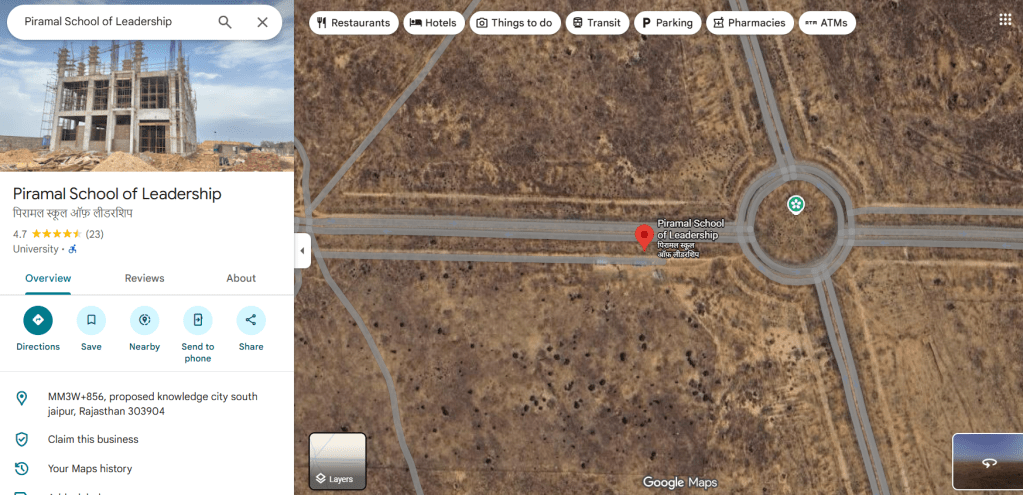
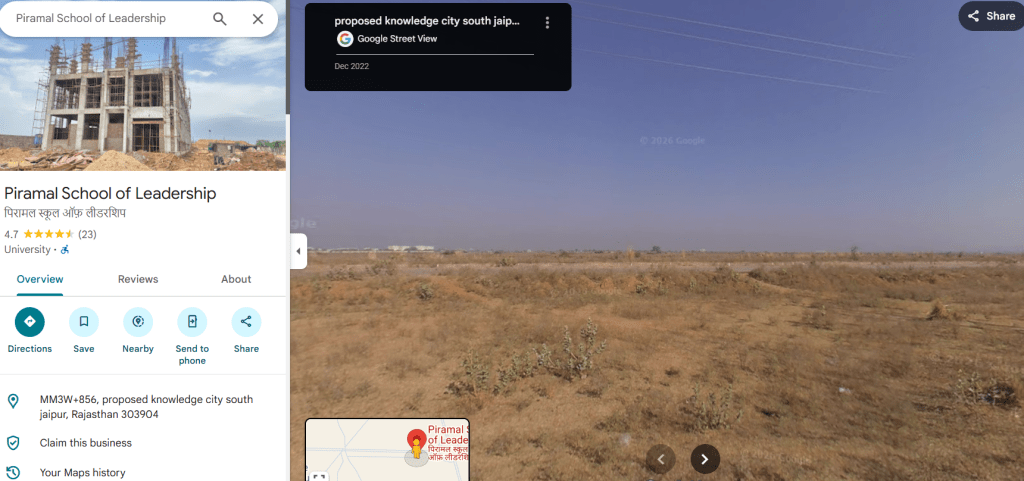
Images Taken from Google Maps as accessed on 14-03-2026 (GMT 04:18 hrs)
The “Other” View(s)

The connotation of “existence” in the digital age thus emerges as something of a surprise. Whether physically and tangibly (re)presented or not, imagery seeps into public perception, shaping opinion and manufacturing consent, desire, and expectation. In this sense, representation begins to precede presence.
Hence, in this essay we will discuss the “green” Jaipur campus as if it were already present. In one epistemic register, it exists in prāgabhāva—a state of prior absence—yet this absence is complicated by the proliferation of AI-generated renderings, architectural visualizations, and digital spatial figurations that circulate online. These images do not simply point toward a future building; they perform a presence of their own. Re-presentations increasingly represent themselves, while the supposed origin-al locus—the material site to which they refer—becomes difficult to locate.
Now, what exactly does this carefully cultivated oasis look like?
To understand that, one must walk (as if) through its courtyards, examine its breathable brick skin, and observe how an institution devoted to leadership training has chosen to express environmental responsibility in built form.
Oh, what surprising news! Bravo, Congrats Mr. Ajay Piramal. You have done it—Green architecture. Let us hug and give me your hands for shaking the Bharat Mata.. Haha, Hihi, Huhu..khi khi khi…..Sapna, Sapna, TCS, TCS…Laurena Bhojyam. Thanku, Thanku my friend, for this opportunity…!!!
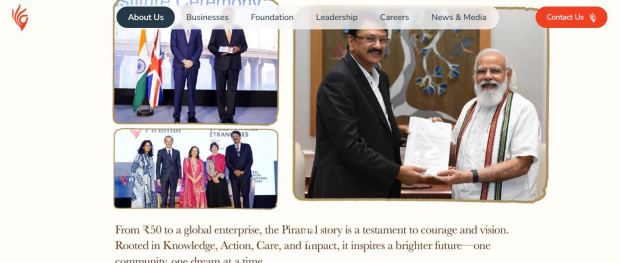
Crony relationships in plain sight? With reports of over ₹85 crore in electoral bonds to the BJP, ₹25 crore contributed to PM CARES, and business links such as Flashnet’s dealings with BJP minister Piyush Goyal, the question arises: what exactly should we expect in return?
The very same Ajay Piramal whom many critics describe as an environmental extortionist (as shall become visible soon) has apparently turned into a patron saint of ecological sensitivity. In the dry outskirts of Jaipur, amid Rajasthan’s harsh, unforgiving climate—scorching summers soaring to 50°C, relentless dust-laden winds, arid landscapes, and minimal rainfall—the Piramal empire has erected what is presented as a shining model of green, climate-resilient architecture: the Piramal School of Leadership (PSL) campus. One must admire the transformation. After all, few corporate figures can move so effortlessly between two starkly opposing ecological worlds: one shadowed by industrial effluents, regulatory hearings, environmental controversies, and resource-intensive operations, and another bathed in courtyards blooming with greenery, shaded gardens, perforated brick façades, and promises of deep harmony with nature.
The PSL campus, sprawling across roughly 32 acres within a larger landscape-rich masterplan (part of an emerging Piramal University complex), is described by its designers as an environmentally responsive learning landscape—a deliberate, almost poetic antidote to the vertical monumentality and glass-and-steel aggression of typical corporate campuses. Designed by the acclaimed Studio Lotus, the project consciously positions itself within the sophisticated language of biophilic architecture, climate-responsive design, adaptive thermal comfort, and ecological minimalism. Rather than rising imposingly skyward, the PSL stretches horizontally across the terrain in a long, sinuous 177-meter structure that steps gently, almost reverently, with the natural contours of the land. This terraced, low-rise configuration is far from mere aesthetic whim; it is engineered to minimize site disruption, preserve topsoil and existing vegetation wherever possible, enhance seismic flexibility in this earthquake-prone region, and allow the building mass to flow organically with the undulating site—creating a built form that feels embedded rather than imposed.
At first glance, the campus appears almost monastic in its ecological humility, a quiet rebuke to the excess often associated with corporate philanthropy. Concrete—the ubiquitous material that has come to symbolize modernity’s violent reconfiguration of landscapes, massive resource extraction, and carbon-heavy footprints—is reportedly minimized throughout the structural system. Instead of sprawling continuous raft foundations or deep piles that would scar the earth and demand vast quantities of material, the design employs isolated footings combined with slab-on-grade systems, dramatically reducing the ground-level concrete footprint by approximately 25–30 percent. The footings themselves are said to be 35–40 percent smaller than those in conventional approaches, thanks to strategic engineering from consultants like KMH Engineering. Paper joints and modular slab techniques further slash the need for excessive reinforcement bars, lowering embodied energy and construction waste while enabling the entire 177-meter-long form to shift and adapt seamlessly to the terrain.
The architectural envelope is meticulously calibrated for Rajasthan’s extreme desert climate. A perforated brick skin, evoking the timeless elegance of traditional jaali screens found in Rajasthan’s havelis and forts, wraps the campus structures in a double-layered, breathable façade. This porous outer layer filters harsh sunlight, tempers blinding glare, moderates solar heat gain, and invites cooling summer breezes to pass through while blocking dust and maintaining visual privacy. Above it all rests an expansive, insulated “super-roof”—a sweeping, unified canopy that shades the entire complex, shields interiors from the punishing desert sun, and dramatically enhances thermal comfort even during peak heat. Instead of defaulting to heavy reliance on energy-guzzling mechanical air-conditioning, the buildings are orchestrated around sophisticated passive cooling strategies: natural ventilation channels prevailing winds through strategically placed courtyards and corridors, abundant daylight floods interior learning spaces via thoughtful orientation and openings, and adaptive thermal comfort principles allow for higher indoor temperature tolerances rooted in cultural norms of resilience. Architectural descriptions and project claims suggest the campus may consume dramatically less energy than conventional institutional buildings in similar climates, with estimates placing annual energy demand near 34 kWh per square meter—a figure that would represent a substantial, even transformative reduction compared to typical educational infrastructure across India.
But perhaps the most celebrated—and symbolically loaded—aspect of the campus is its biophilic design philosophy, which elevates the project from mere sustainability to a near-spiritual manifesto. The entire campus is conceptualized as a grand “walled garden”, drawing inspiration from ancient Indian traditions of open-air, shared learning spaces under trees and in shaded enclosures. Rather than a single monolithic edifice, the PSL environment unfolds as a constellation of interconnected pavilions, fluid circulation paths, shaded corridors, and lush open areas. At its spatial and experiential heart lie five major courtyards, each symbolically aligned with elemental themes (earth, water, fire, air, space), functioning as the living, breathing core of the campus. These open-to-sky spaces—poetically described by the architects as “the unbuilt”—are deliberately crafted to encourage informal encounters, quiet personal reflection, spontaneous conversation, and serendipitous human connections among participants in training programs. Trees of native and drought-resistant species, landscaped gardens with regionally appropriate planting palettes, shaded pathways lined with stone and greenery, and intimate gathering areas create an immersive environment that blurs—almost dissolves—the boundary between built form and natural landscape.
The courtyards are not decorative afterthoughts; they operate as active climatic regulators, drawing cooling air currents deep into the complex, facilitating cross-ventilation, reducing heat accumulation in mass, mitigating urban heat island effects at site scale, and fostering a sensory, embodied connection to the elements. Water features subtly integrated into some courts further enhance evaporative cooling and auditory calm, while the overall landscape strategy emphasizes regenerative planting to support biodiversity and water percolation in an arid zone.
In this carefully curated “garden of corporate virtue,” Ajay Piramal’s Piramal Foundation appears to have achieved a remarkable feat: architecture that preaches transformation, seva bhaav (selfless service), and harmony with nature—while standing as a flagship emblem for training thousands of public servants annually in leadership rooted in empathy and systems change.
Yet the irony lingers in the dry Rajasthan air: green architecture may flourish here in poetic abundance, but elsewhere in the empire’s vast portfolio, that very green seems to have vanished into the blue—dissolved amid glass towers, industrial footprints, and the relentless pursuit of scale.
(ii) The Layout that Rejects Hierarchical Spatial Arrangements!
Yet the campus’s environmental story does not lie only in its materials, façades, or passive cooling strategies.
It is also embedded in the spatial philosophy of the project—the way buildings are arranged, the way people move through them, and the subtle architectural messages conveyed by the absence of towering authority structures.
For a school devoted to leadership, the layout itself appears to offer a lesson. Let’s go into it carefully.
Instead of centralized authority structures—towering administrative blocks looming over subordinate spaces, or rigid axial symmetries enforcing top-down order—the campus follows a low-rise, non-hierarchical planning logic, where learning spaces, discussion areas, residences, and communitarian zones flow laterally across the site in a democratic, distributed manner. Learning pavilions, seminar rooms, reflection nooks, and residential clusters interconnect fluidly via shaded corridors and open pathways, evoking the egalitarian ethos of traditional Indian educational environments: ancient gurukuls under banyan trees, open courtyards of madrasas where knowledge circulated freely among seekers, shaded verandas of village pathshalas, and collective gathering spaces of ashrams. These historical precedents are embedded within contemporary sustainability principles—adaptive thermal comfort, passive environmental modulation, and biophilic integration—creating a campus that feels less like an institution of power and more like a living, breathing landscape of shared inquiry.
The project’s ecological aspirations have not gone unnoticed in architectural circles. The PSL campus was shortlisted as a finalist for the 2025 World Architecture Festival in the prestigious “Future Projects – Education” category, marking Studio Lotus’s seventh WAF shortlist (with four prior wins), and underscoring global recognition for its bold attempt to merge climate-responsive design, cultural rootedness, and institutional architecture in service of public systems leadership.
To read these descriptions—one might imagine the campus as an oasis of ecological wisdom: a landscape where architecture listens attentively to wind patterns, brick breathes in rhythm with the desert climate, and leadership training unfolds serenely under canopies of native trees and vast open skies.
Indeed, the narrative surrounding PSL presents the campus as an environmentally regenerative educational ecosystem, one that seems to apparently harmonize architecture, landscape, and climate in a careful choreography of sustainability—where every element, from the sweeping insulated super-roof to the elemental courtyards, performs as both functional device and symbolic gesture.
And yet, as one wanders through this carefully curated ecological sanctuary—through shaded courtyards alive with breezes, across landscaped gardens planted with drought-resilient species, beneath perforated brick walls designed to breathe with Rajasthan’s hot, dust-laden air—a curious question begins to emerge.
How does such exquisite environmental sensitivity flourish within the philanthropic wing of a corporate empire whose industrial operations elsewhere have been repeatedly accused of ecological devastation?
For now, however, let us remain within the gardenized space as spectacle.
For in Jaipur, at least, the empire breathes through brick lattices and shaded courtyards, teaching the art of leadership beneath trees—while the winds of sustainability drift gently through a campus designed to embody corporate virtue in architectural form.
Let us now view certain mappings as well as images (AI/digitally generated) of this projected architecture:
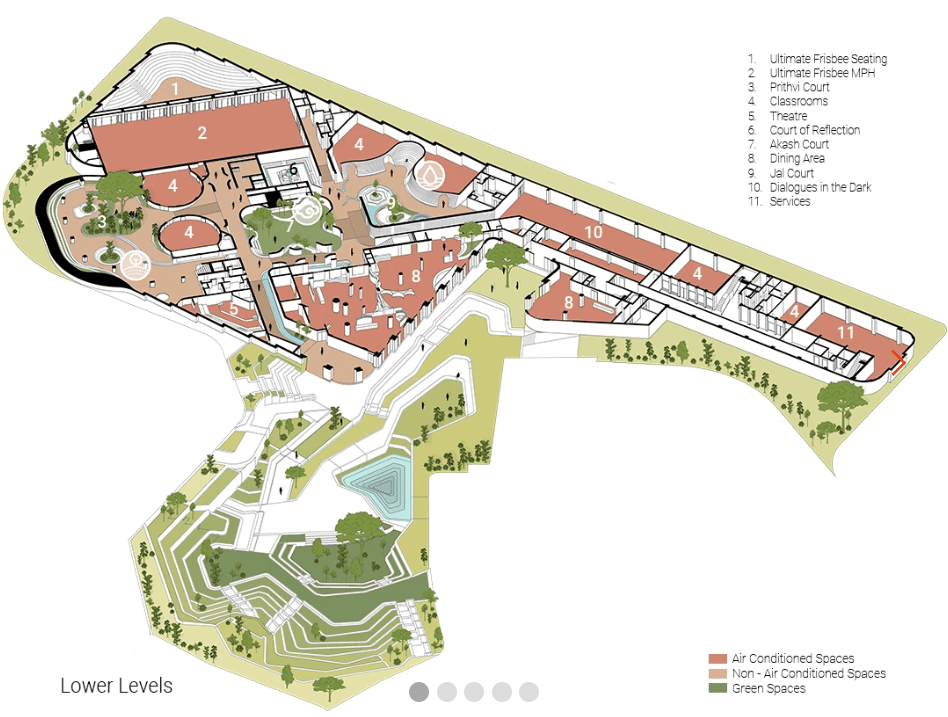
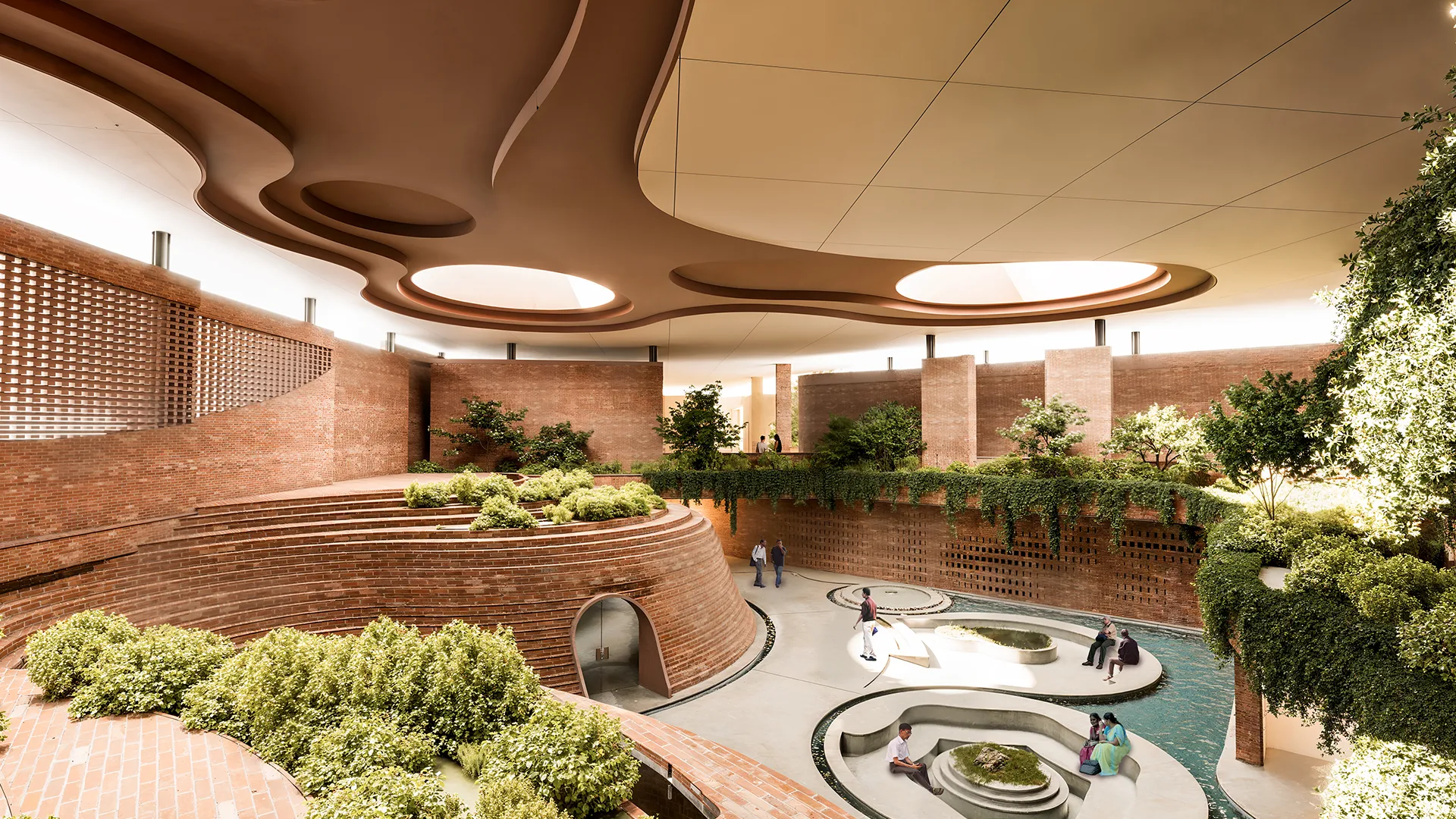

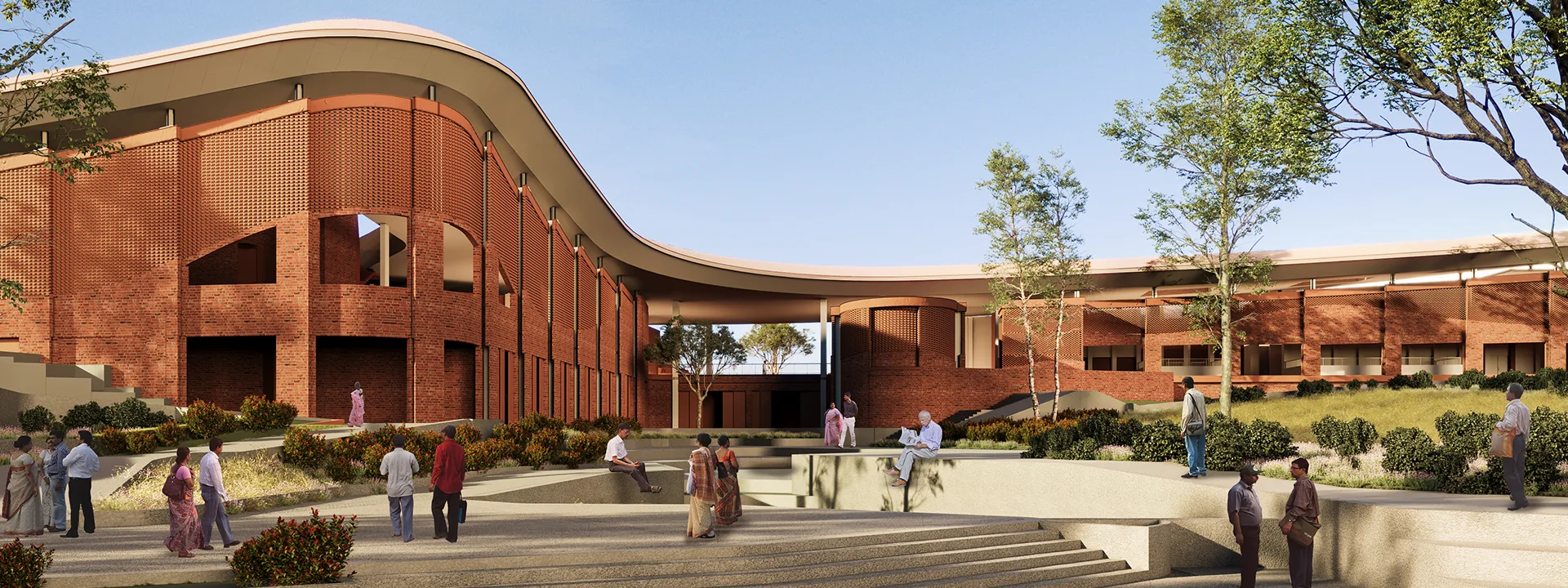
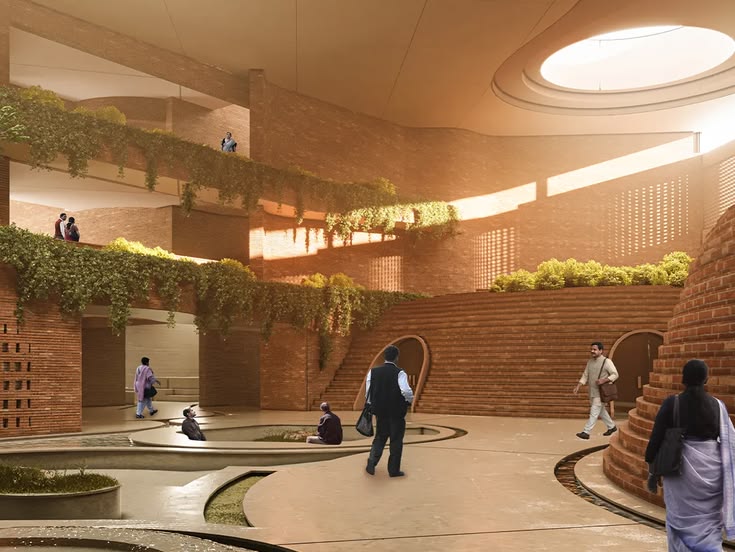
(iii) Piramal School of Leadership (PSL) Campus: The Miracle of Ecological Redemption?
Taken together, these design decisions produce a campus that feels less like a conventional institutional complex and more like a carefully composed ecological landscape.
But the symbolism of the project may extend even further.
For beyond passive cooling systems and egalitarian spatial layouts lies a more intriguing possibility: architecture here seems to perform a quiet act of moral storytelling.
In this sense, the PSL campus may represent something even more remarkable than green architecture. It gestures toward a new civilizational possibility: ecological redemption through architecture.
For centuries philosophers and theologians have wrestled with the problem of moral residue—how actions that generate harm might later be reconciled, purified, or symbolically redeemed. In religious traditions this problem often appears through the language of sin: a moral stain that lingers beyond the immediate act. Sin does not simply vanish once the event has passed; it persists as a rem(a)inder, demanding recognition, repentance, or restitution (See Section II).
Contemporary legal and economic systems, however, have gradually reinterpreted this ancient moral problem in institutional terms. In place of confession or penance, contemporary corporate governance has developed mechanisms through which liabilities may be reorganized, restructured, or extinguished. The past, in effect, can be administratively reset. Through legal transformation, the entity that emerges after restructuring is treated as distinct from the entity that once incurred the wrongdoing.
In such frameworks, the stain of past harm becomes detachable.
The sin remains historically real, yet the institution that carries it forward may claim renewal.
Architecture then enters this moral landscape in a subtle but powerful way.
For if moral debts can be juridically reconfigured, they can also be culturally reframed. Built form becomes one of the most visible instruments through which institutions narrate their transformation. A campus, a foundation building, or a philanthropic institute can function not merely as infrastructure but as a spatial declaration that a new ethical identity has emerged.
The PSL campus appears to participate in precisely such a symbolic economy. Here, redemption arrives not in confessionals but in perforated brick skins and passive cooling corridors.
If industrial modernity once scarred landscapes with smokestacks, pipelines, and effluent channels, the philanthropic wing of that same modernity now offers a gentler aesthetic therapy: shaded pavilions, breathable walls, stone pathways, and gardens carefully arranged to suggest reconciliation between capital and nature.
The logic is quietly elegant. Where aquifers have been poisoned elsewhere, one may cultivate courtyards here. Where rivers have absorbed chemical residues, one may install water features and shaded gardens. Where ecosystems have struggled under industrial expansion, one may construct a campus that teaches future leaders to “live harmoniously with nature.”
Thus the architecture itself performs an act of absolution.
Brick lattices filter sunlight as if filtering history. Courtyards circulate air as if circulating moral renewal. Even the pedestrian paths—laid in stone and gravel to allow rainwater to percolate gently into the soil—seem to whisper that the earth, at least within these thirty-two acres, has finally been treated with care.
One cannot help but admire the symbolic precision.
For if environmental destruction is often invisible—dissolved into groundwater, diluted in rivers, buried beneath regulatory paperwork—then ecological virtue must be made highly visible. It must be landscaped, photographed, shortlisted for international architecture festivals, and presented as the spatial embodiment of responsible leadership.
In this sense, the PSL campus represents one of the most refined cultural inventions of contemporary philanthro-capitalism: the transformation of sustainability into an architectural language of corporate conscience.
Here redemption is not proclaimed through doctrine but assembled through design—courtyard by courtyard, brick by brick, shadow by shadow—until the landscape itself appears to narrate a story of moral renewal.
(IV) Sustainability Rhetoric and the Aesthetic of “Biophilic Living”
If the PSL campus represents the philanthropic face of this ecological narrative, the corporate portfolio presents another fascinating dimension.
For the language of sustainability does not remain confined to leadership training campuses. It also travels—quite enthusiastically—into the world of luxury real estate marketing.
The marketing narratives surrounding Piramal Realty developments present the company’s residential towers as spaces of ecological harmony. Several flagship projects—including Piramal Mahalaxmi near Jacob Circle (South Mumbai), Piramal Revanta in Mulund, and Piramal Vaikunth in Thane—are promoted through a carefully constructed vocabulary of environmental sensitivity.
Brochures promise “nature-inspired harmony,” “biophilic design,” and the experience of living “in the lap of nature.” Architectural descriptions emphasize expansive daylighting through floor-to-ceiling glazing, cross-ventilation strategies, landscaped podium gardens, and curated green spaces designed to reconnect residents with natural rhythms.
At the Mahalaxmi development, marketing campaigns highlight nearly two acres of landscaped greenery within a four-acre footprint under the slogan “Back to Nature – Space to Grow.” Promotional material also emphasizes uninterrupted panoramic views of the Arabian Sea, transforming the surrounding coastal horizon into a premium aesthetic commodity.
Similarly, the Vaikunth development in Thane promotes open green spaces and community programmes under its “Biophilia Chapter,” including nature walks, sustainable gardening workshops, and symbolic tree-planting initiatives (such as publicized drives planting hundreds of saplings). Revanta in Mulund, located near the edge of the Sanjay Gandhi National Park, is presented as a “biophilic vision of Vana”—a forest-inspired residential sanctuary within the metropolis, boasting up to 30% open green spaces.
Certain projects also highlight green-building certifications such as IGBC Gold along with passive cooling strategies, rainwater harvesting systems, and landscaped buffers intended to soften the ecological footprint of dense urban construction.
Taken together, the message is unmistakable: Piramal’s towers promise to restore an intimate relationship between urban living and the natural environment.
Yet beneath this carefully curated narrative lies a deeper ecological question.
(v) The Pedagogy of Green Virtue: Paradoxes of Irresolution
Which brings us back to the campus itself.
For within the courtyards of the Piramal School of Leadership, these broader corporate narratives converge in a particularly instructive way. The architecture is not merely a setting for learning; it becomes part of the curriculum.
Here, sustainability is not only discussed.
It is staged.
Within these walls, future leaders will gather beneath trees and shaded verandas to reflect upon ethics, governance, and the responsibilities of power. They will walk along carefully designed stone paths where heat is moderated, water is absorbed, and the desert wind moves freely through the architecture.
The campus itself becomes a silent instructor.
Every courtyard teaches the value of openness.
Every perforated wall demonstrates humility before climate.
Every shaded walkway reminds the visitor that modern development must learn to tread lightly upon the earth.
One almost imagines the landscape offering its own lesson plan.
Here is sustainability. Here is harmony. Here is the architecture of ecological responsibility.
And perhaps, somewhere beyond the horizon of this carefully curated oasis, there exist other landscapes where the relationship between industry and ecology has been somewhat less harmonious.
But those are stories for another geography.
The desert air circulates freely through brick lattices, the courtyards remain tranquil, and leadership training unfolds within a campus that appears to embody the environmental conscience of a modern corporation. And what could possibly be more reassuring than that?
Yet this serene image is carefully curated illusion. The Piramal School of Leadership (PSL) Jaipur campus—32 acres of “walled garden” pavilions, perforated jaali skins, and sweeping super roofs designed by Studio Lotus—markets itself relentlessly as a triumph of biophilic, passive, climate-responsive architecture. Official descriptions emphasize adaptive thermal comfort, natural ventilation, shading, and cross-breezes that supposedly keep interiors livable up to 50°C with “primarily passive” strategies, slashing energy demand to an estimated 34 kWh/m² (an 80% reduction versus conventional buildings). Courtyards invite reflection; landscapes integrate into the fabric; concrete is “significantly reduced” via isolated footings, slab-on-grade with paper joints (25–30% less ground-level slabs, 35–40% smaller footings).
Peel back the promotional veneer, however, and contradictions emerge that fatally undermine any claim to genuine biophilic ethos or uncompromising ecological integrity.
Hard pavements and engineered hardscaping dominate circulation: a fluid but relentlessly concrete pedestrian terrain with 150 slab levels (-4.8m to +8.0m), ramps, and interconnected paths that step across the site. While the design boasts reduced concrete volume compared to rafts or deep foundations—and allows terrain adaptation—this remains high-embodied-carbon, heat-absorbing, heat-radiating concrete underfoot. In Rajasthan’s desert, such surfaces amplify urban heat-island effects, block natural infiltration and recharge of groundwater, and sever the unmediated, living connection biophilia demands. Gardens and courtyards exist, yes—but they are nested within, atop, or framed by this engineered hardscape, not truly permeable wild landscapes. This is not harmonious immersion in nature; it is manicured, photographable greenery staged around impermeable corporate infrastructure.
Cooling fares no better. Every architect and foundation statement qualifies the “passive” triumph with hedges: “primarily passive,” “significantly reduced reliance on mechanical cooling,” “reduced reliance.” No source claims zero mechanical systems. For a leadership institute hosting hundreds in enclosed pavilions year-round—especially during brutal summer training sessions—backup HVAC or hybrid mechanical cooling is implicitly (and pragmatically) incorporated to guarantee the predictable comfort modern institutions expect. True biophilic/passive design in the Thar would commit fully to elimination of compressors, fans, and refrigerants; this is a hedged hybrid at best, where “adaptive thermal comfort” serves as marketing cover for inevitable mechanical fallback. The vaunted 80% energy cut is relative to inefficient baselines—not absolute net-zero purity.
These are not trivial lapses; they strike at the project’s core hypocrisy. Biophilia requires direct, restorative contact with living systems—unfiltered, unmediated, without concrete barriers or humming backups. Passive sustainability demands uncompromising rejection of energy-intensive crutches, not “reduced” as a convenient escape clause. The result is performative green architecture: beautiful, shaded, latticed, but ultimately conventional in its compromises.
The PSL Jaipur campus functions more as architectural guilt laundering par excellence: a photogenic 32-acre prop that lets billionaire Ajay Piramal and his foundation broadcast “compassionate” regeneration while core profit engines externalize ecological devastation. Beauty persuades; pollution persists. In this theatre of corporate conscience, the campus is no hero of harmony—it is the most seductive distraction.
SEE ALSO:
Thus the campus stands as both classroom and metaphor—a landscaped testament to the idea that modern corporations can cultivate ecological responsibility alongside “developmental” leadership training. Or do they really?
And within this carefully designed oasis, the architecture performs its quiet lesson: that sustainability, when arranged with sufficient elegance, can look remarkably convincing.
Section II
II. (i) Beyond the Garden: Questions That Linger Beyond the Courtyard
Gardens, as every landscape designer knows, are defined not only by what they cultivate, but also by what they quietly conceal beyond their walls. Before moving deeper into the tranquil courtyards of the Piramal School of Leadership in Jaipur, four pressing and unsettling questions demand attention. These questions linger uneasily behind the polished narrative of ecological virtue and form the investigative spine of this section. Each concerns a distinct spatial manifestation of corporate influence and environmental impact.
Problem Question 1: What happened to the groundwater and surrounding ecosystems in Digwal, where Piramal Pharma’s operations have been repeatedly accused by residents and regulators of contaminating aquifers and agricultural lands through industrial effluents?
Problem Question 2: What explains the environmental controversy surrounding the Piramal facility in Dahej, where allegations of chemical discharge into a canal connected to the Narmada system raised serious concerns about aquatic ecosystems and public water sources?
Problem Question 3: How should one interpret the ecological claims and sustainability rhetoric of Piramal Realty, whose luxury developments frequently advertise green design, landscaped living, and environmental sensitivity while participating in the broader urban expansion that continues to transform fragile coastal and peri-urban ecosystems?
Problem Question 4: And finally, what does it mean when the personal residences associated with the Piramal family—such as the celebrated sea-facing mansion Karuna Sindhu and the high-profile residence Gulita in Mumbai—embody extraordinary concentrations of wealth, materials, and coastal real estate in a city already struggling with ecological precarity and climate vulnerability?
These issues set the stage for an examination of Mumbai’s broader coastal vulnerabilities, urban climate risks, and the paradoxical intersection of luxury, disaster risk, and maritime hazard.
To answer Problem Questions 3 as well as 4, we must first understand—carefully and comprehensively—the condition of the Mumbai coastal region. Only by examining this context in depth can we begin to decipher the apparent double standards in Piramal Realty’s positioning.
So, dear readers, a little patience is required. We are approaching a critical crossroads—one that demands sustained attention, close observation, and a care-ful process of knowing.
Section-III
Condition of the Mumbai Coastal Area
The Arabian Sea, Maritime Rescue, and the Illusion of Coastal Security
Mumbai’s coastline is a site of striking contradictions. From luxury skyscrapers and high-end waterfront developments, the Arabian Sea appears as a serene, glittering horizon—a symbol of prestige and urban prosperity. Yet beneath this polished image lies a far more volatile reality. Rising seas, intensifying monsoon storms, degraded mangroves, and decades of land reclamation have made the city’s interface with the ocean increasingly precarious.
This section examines the environmental and maritime dimensions of Mumbai’s vulnerability. It explores the city’s climate exposure, the recurring disasters that reveal weaknesses in urban and coastal infrastructure, and the complex operations undertaken by the Indian Navy and Coast Guard to manage maritime emergencies. Through this lens, we confront a critical paradox: the same sea that enhances the city’s economic and aesthetic value also represents an unpredictable frontier where human life, infrastructure, and ecology remain constantly at risk.
Situating our discussion within this broader environmental and maritime context is crucial, for it sharpens and informs our critical examination of Piramal Realty’s activities. By foregrounding the fragile conditions of Mumbai’s coastal zone, this analysis highlights the stakes of large-scale coastal development and underlines the tensions between corporate narratives of sustainability and the material realities of ecological vulnerability. In doing so, it provides the contextual groundwork necessary to interrogate Piramal’s claims, strategies, and spatial interventions with greater clarity and rigor.
III. (i) Mumbai as a Climate-Vulnerable Coastal Megacity
Any discussion of maritime safety along India’s western coast inevitably leads to the broader environmental question: the changing condition of Mumbai’s coastline. The risks encountered during maritime rescue operations in the Arabian Sea are not isolated events; they are deeply connected to the evolving ecological and climatic pressures shaping one of the world’s most densely populated coastal megacities.
Situated along the Arabian Sea, Mumbai has long functioned as India’s primary maritime gateway. Its deep natural harbour, extensive port infrastructure, and strategic location along major international shipping routes have historically made it a crucial centre of trade, finance, and migration. Yet the same geography that enabled Mumbai’s rise as a global port city now exposes it to significant environmental vulnerability.
Climate research consistently identifies Mumbai as one of the world’s most climate-exposed coastal megacities. Rising sea levels, intensifying monsoon rainfall, and the growing frequency of extreme weather events are increasingly threatening the city’s infrastructure, coastal ecosystems, and densely packed urban settlements.
Although these figures may appear modest in absolute terms, even small increases in sea level can have substantial consequences in low-lying coastal environments. Large portions of Mumbai lie only two to five metres above mean sea level, making them particularly sensitive to tidal surges, storm waves, and coastal flooding. Over the past century, extensive land reclamation projects have further complicated the city’s hydrology. Much of modern Mumbai has been constructed on reclaimed land that once consisted of marshes, tidal flats, and interconnected islands.
The consequences of these transformations have already become visible during extreme rainfall events. Mumbai’s monsoon system has shown clear signs of intensification over recent decades. Short-duration, high-intensity rainfall events—sometimes exceeding hundreds of millimetres within a single day—have become more frequent. Events such as the catastrophic 2005 Mumbai floods demonstrated how vulnerable the city’s drainage system becomes when extreme rainfall coincides with high tide.
Scientific assessments warn that these interacting pressures could reshape large sections of Mumbai’s coastline over the coming decades. Studies suggest that more than ten percent of the city’s land area may face inundation risks by 2040 if current sea-level trends continue. Critical infrastructure—including ports, coastal highways, transport corridors, and low-lying residential districts—may become increasingly exposed to recurrent flooding.
III. (ii) Mumbai as a Vulnerable Zone: Rising Sea Levels and Coastal Flooding
A growing body of research in climate science and urban risk assessment points to several interconnected threats facing Mumbai’s coastline. Sea-level rise represents one of the most significant long-term challenges. Projections for India’s western coast suggest a possible increase of approximately 0.24 to 0.50 metres by the middle of the twenty-first century, depending on emission scenarios and regional ocean dynamics. Even moderate increases in sea level can significantly intensify tidal flooding, storm surges, and coastal erosion in cities where large areas lie only a few metres above sea level.
Mumbai’s geography makes the city particularly sensitive to such changes. Much of the metropolitan area—including major residential districts, transport corridors, and commercial zones—lies only two to five metres above mean sea level. Historically, the city developed through a series of land reclamation projects that merged seven small islands into a single urban landmass. While these engineering interventions enabled the growth of one of Asia’s largest financial centres, they also altered natural drainage channels and reduced the capacity of wetlands and mangrove ecosystems to absorb excess water during storms.
Climate projections also indicate a steady rise in temperature extremes. Studies drawing on international climate models—including analyses referenced by the National Oceanic and Atmospheric Administration—suggest that by around 2040 nearly 60 percent of Mumbai’s days may experience temperatures exceeding 32 °C or more, increasing heat stress across the metropolitan region. Higher temperatures also intensify atmospheric moisture, which in turn can contribute to more powerful rainfall events during the monsoon season.
Coastal infrastructure faces additional risks. The Mumbai Port—one of the busiest maritime hubs on India’s western seaboard—has been assessed in several climate-risk studies as having one of the highest hazard exposure scores among major Indian ports, reflecting its vulnerability to sea-level rise, storm surges, and extreme weather disruptions.
Taken together, these trends indicate that Mumbai’s climate risks are systemic and city-wide, affecting transportation networks, coastal neighbourhoods, energy infrastructure, and port operations. They are not limited to any single institution, industry, or real-estate developer. Yet these environmental realities acquire particular significance when considered alongside the rapid expansion of high-end waterfront developments and luxury residential towers along the city’s coastline. In a city where the boundary between land and sea is becoming increasingly unstable, the promise of permanent ocean-view living must ultimately confront a more uncertain ecological future.
III. (iii) Climate Risk Indicators for Mumbai, The Financial Capital of India
To understand the environmental pressures shaping the coastal landscape of Mumbai, it is useful to go even deeper into the several key climate indicators documented in recent scientific assessments and policy studies. These indicators highlight the growing interaction between sea-level rise, extreme rainfall, and the city’s low-lying coastal geography along the Arabian Sea.
Table 1: Projected Sea-Level Rise Along India’s Western Coast
| Time Period | Projected Sea-Level Rise | Source |
|---|---|---|
| 2030 | ~0.10–0.20 metres | Regional climate projections, IPCC synthesis reports |
| 2050 | ~0.24–0.50 metres | IPCC Sixth Assessment Report |
| 2100 | ~0.50–0.80 metres (depending on emissions scenario) | Global coastal climate models and long-term ocean projections |
Even moderate sea-level rise can substantially increase flooding risk in low-lying coastal cities such as Mumbai. When rising ocean levels combine with high tides, storm surges, and heavy monsoon rainfall, coastal flooding can intensify rapidly across urban districts located only a few metres above sea level.
Table 2: Major Flood Events in Mumbai
| Year | Rainfall Event | Impact |
|---|---|---|
| 2005 | 944 mm in 24 hours | ~500 deaths, citywide paralysis |
| 2017 | Severe monsoon flooding | Railway suspension, widespread infrastructure damage |
| 2019 | Repeated intense monsoon events | Transport shutdown and emergency evacuations |
| 2021 | Multiple heavy rainfall episodes | Urban flooding across several districts |
Table 3: Elevation Vulnerability in Mumbai
| Area Type | Average Elevation |
|---|---|
| Coastal districts | ~2–5 metres above sea level |
| Reclaimed land areas | Often below 5 metres |
| Inland suburbs | ~5–15 metres |
Much of Mumbai’s historic urban core developed on reclaimed land that once consisted of tidal flats, marshlands, and small islands. In such conditions, even relatively small increases in ocean levels—or temporary rises caused by storm surges—can significantly amplify flood risk.
Overall, these indicators portray Mumbai as a city confronting a complex convergence of environmental pressures: rising seas, intensifying rainfall, stronger cyclones, degraded coastal ecosystems, and mounting heat stress.
III. (iv) Disaster Risk in a Coastal Megacity
On 26 July 2005, the city experienced an unprecedented rainfall event when approximately 944 millimetres of rain fell within 24 hours, the highest single-day rainfall ever recorded in Mumbai’s meteorological history. Transport systems collapsed, suburban railways halted, and vast portions of the city remained submerged for hours. More than 1,000 people lost their lives across Maharashtra, many in Mumbai and surrounding districts. The disaster revealed critical weaknesses in the city’s drainage infrastructure, urban planning, and emergency response systems.
A crucial factor that intensified the flooding was the coincidence of heavy rainfall with high tidal conditions in the Arabian Sea. When tides are elevated, stormwater drainage outlets cannot discharge effectively into the sea, causing water to accumulate inland. In such situations, the city experiences what climate scientists call compound flooding, where rainfall, tidal surges, and inadequate drainage interact simultaneously to produce widespread inundation.
In recent years, the risk profile has expanded further with the growing intensity of cyclonic activity in the Arabian Sea. Historically, this basin produced fewer severe cyclones than the Bay of Bengal, which remains a more enclosed bioregion. However, warming sea surface temperatures linked to climate change appear to be increasing both the frequency and strength of storms forming in the region.
Several structural factors intensify this exposure. First, Mumbai’s geography constrains evacuation and emergency response. The city occupies a narrow peninsula connected to the mainland by limited transport corridors. When extreme weather disrupts railways, highways, and airports simultaneously—as often occurs during severe monsoon storms—large segments of the population can become effectively isolated.
Second, rapid urbanization has placed enormous pressure on natural coastal defenses. Mangrove forests, wetlands, and tidal marshes that historically absorbed floodwaters have been reduced by land reclamation and infrastructure expansion. These ecosystems once functioned as natural buffers against storm surges and coastal erosion. Their degradation has made many coastal neighbourhoods more vulnerable to extreme weather.
Third, critical infrastructure itself lies within vulnerable coastal zones. Major transport arteries, oil terminals, port facilities, residential developments, and informal settlements are concentrated along low-lying shoreline areas. When heavy rainfall combines with high tides or storm surges, these systems face simultaneous stress, complicating emergency management.
The maritime dimension of risk is equally significant. Mumbai’s harbour supports intense activity ranging from international shipping and offshore energy installations to fishing fleets and passenger ferries. During severe weather events, vessels at sea or near offshore platforms may require rapid rescue operations, often under dangerous conditions. Limited visibility, high waves, and powerful winds can severely restrict the effectiveness of maritime search-and-rescue operations, even for well-equipped agencies.
Thus, the idea of coastal security around Mumbai often rests on a fragile assumption—that the city’s infrastructure and emergency systems can reliably manage the increasingly unpredictable forces of a warming ocean and intensifying monsoon climate. Reality suggests a more complicated picture.
III. (v) When the Sea Invades the City: Naval Rescue During the Mumbai Floods
For the residents of Mumbai, the Arabian Sea is often imagined as a serene horizon—a glittering blue line visible from luxury apartments, seaside promenades, and real-estate advertisements promising panoramic ocean views. Yet during extreme weather events, that same sea becomes a theatre of emergency operations.
During the 2005 flood crisis, the Indian Navy, the Indian Coast Guard, and disaster-response units were mobilised to conduct large-scale rescue operations. Helicopters carried out aerial reconnaissance while inflatable rescue boats navigated submerged streets and railway lines to evacuate trapped residents. Naval divers assisted emergency teams in reaching people stranded in flooded buildings, vehicles, and trains.
The events of July 2005 exposed a critical reality often absent from Mumbai’s urban imagination: when extreme environmental conditions overwhelm civilian infrastructure, the survival of the city depends heavily on maritime and military rescue systems.
Naval and Maritime Rescue Operations
- Indian Navy Helicopter Evacuation
- Search-and-Rescue Operations after Cyclone Ockhi
- VOA News Naval Rescue Operations
Beyond Mumbai’s flooded streets lies a far larger and more unpredictable zone of risk—the Arabian Sea itself.
The waters off India’s western coast form one of the most heavily trafficked maritime corridors in the Indian Ocean. Commercial shipping routes, offshore oil installations near Bombay High, fishing fleets, and passenger vessels operate continuously in this region. Extreme weather events—including monsoon storms, cyclones, and high-sea turbulence—frequently generate maritime emergencies.
Search-and-rescue operations across this vast maritime zone are coordinated through the Maritime Rescue Coordination Centre (MRCC) located in Mumbai. When distress signals are received, the centre directs rescue missions involving multiple agencies and platforms. These operations deploy naval destroyers and patrol vessels, maritime surveillance aircraft, helicopters equipped for winch rescue, trained search-and-rescue divers, and offshore support vessels assisting in evacuations. In severe weather conditions, rescue missions may cover hundreds of kilometres of open sea.
One of the largest maritime rescue missions in modern Indian history unfolded in May 2021 during Cyclone Tauktae, when several offshore construction barges and support vessels were caught in violent storm conditions near Mumbai. Among them was the offshore barge P‑305, carrying 273 workers. Powerful winds exceeding 150 km/h and extremely rough seas caused the barge to break loose from its moorings and drift helplessly before capsizing.
The Indian Navy and Indian Coast Guard coordinated an enormous search-and-rescue operation. Multiple warships, including INS Kolkata, INS Kochi, and INS Talwar, were deployed along with naval helicopters, maritime surveillance aircraft, and specialized rescue divers.
Despite cyclone-force winds and extremely poor visibility, rescue teams worked continuously for several days. Survivors described chaotic scenes: workers jumping into dark, storm-tossed waters, clinging to life jackets or floating debris while waiting to be spotted by rescue helicopters and naval ships.
The final outcome illustrated both the scale and difficulty of the operation:
- More than 180 workers rescued alive.
- Dozens of survivors airlifted by naval helicopters.
- Over 80 fatalities confirmed, making it one of the deadliest offshore accidents in recent Indian maritime history.
Smaller maritime emergencies, such as distressed fishing vessels, occur regularly. The ICGS Anagh, for example, rescued nine fishermen following a distress alert, highlighting the precarious conditions faced by thousands of fishing communities along India’s western coast.
III. (vi) A “Different” Image of the Sea and the City
The maritime rescue missions described above reveal a dimension of Mumbai’s coastline that rarely appears in the visual language of luxury real estate.
For property developers, the Arabian Sea is typically presented as a tranquil horizon—a shimmering expanse of blue water framed by glass façades, infinity pools, and private sky decks. Real-estate brochures often transform the sea into a symbol of prestige and exclusivity.
Yet for institutions responsible for maritime safety, the same waters carry a very different meaning. For the Indian Navy and the Indian Coast Guard, the Arabian Sea represents a zone of constant vigilance—an unpredictable environment shaped by monsoon storms, cyclonic disturbances, maritime accidents, and increasingly volatile climatic conditions. Rescue operations, surveillance patrols, and emergency evacuations form a routine part of their engagement with this maritime landscape.
Between these two contrasting images—the sea as luxury scenery and the sea as a frontier of rescue—lies the deeper ecological reality shaping Mumbai’s coastal future. That reality is defined by rising sea levels, intensifying storms, shrinking mangrove buffers, and accelerating coastal urbanization. The shoreline that appears serene from penthouse balconies is, in fact, a dynamic and increasingly fragile environmental boundary where climate change, urban expansion, and oceanic forces interact.hening preparedness for maritime contingencies.
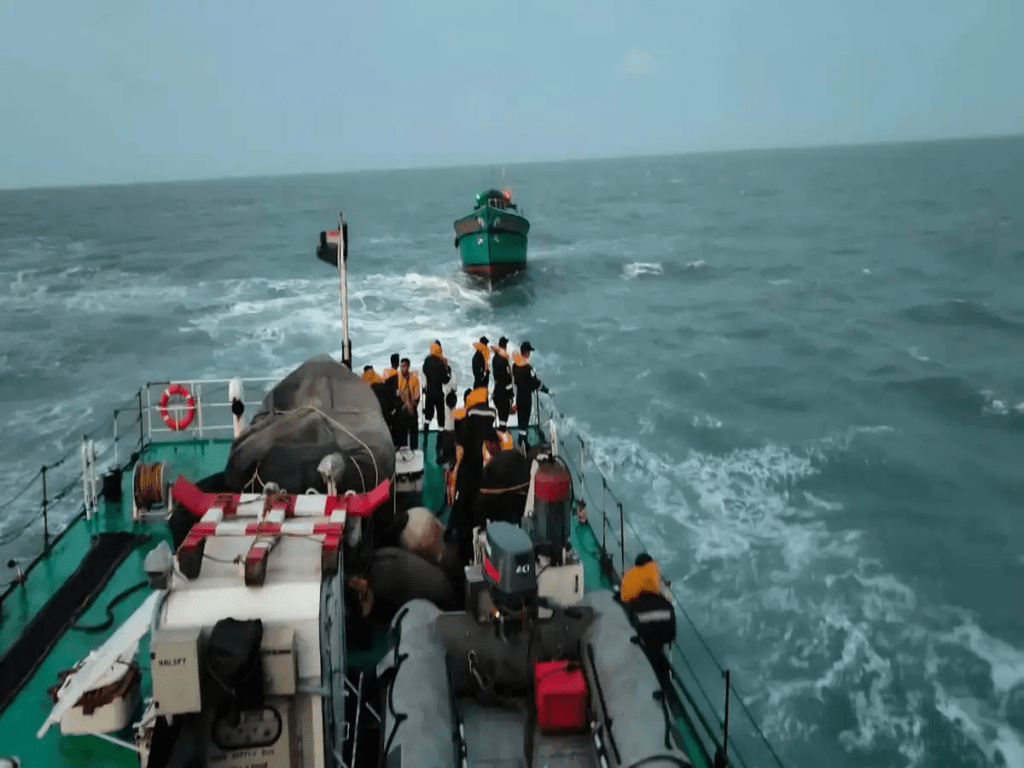
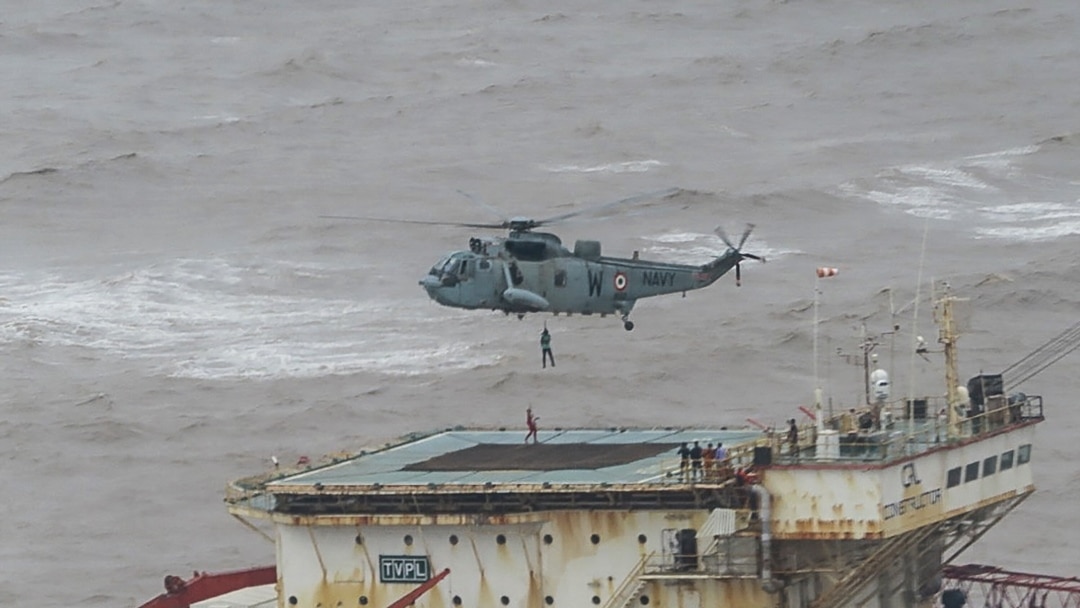
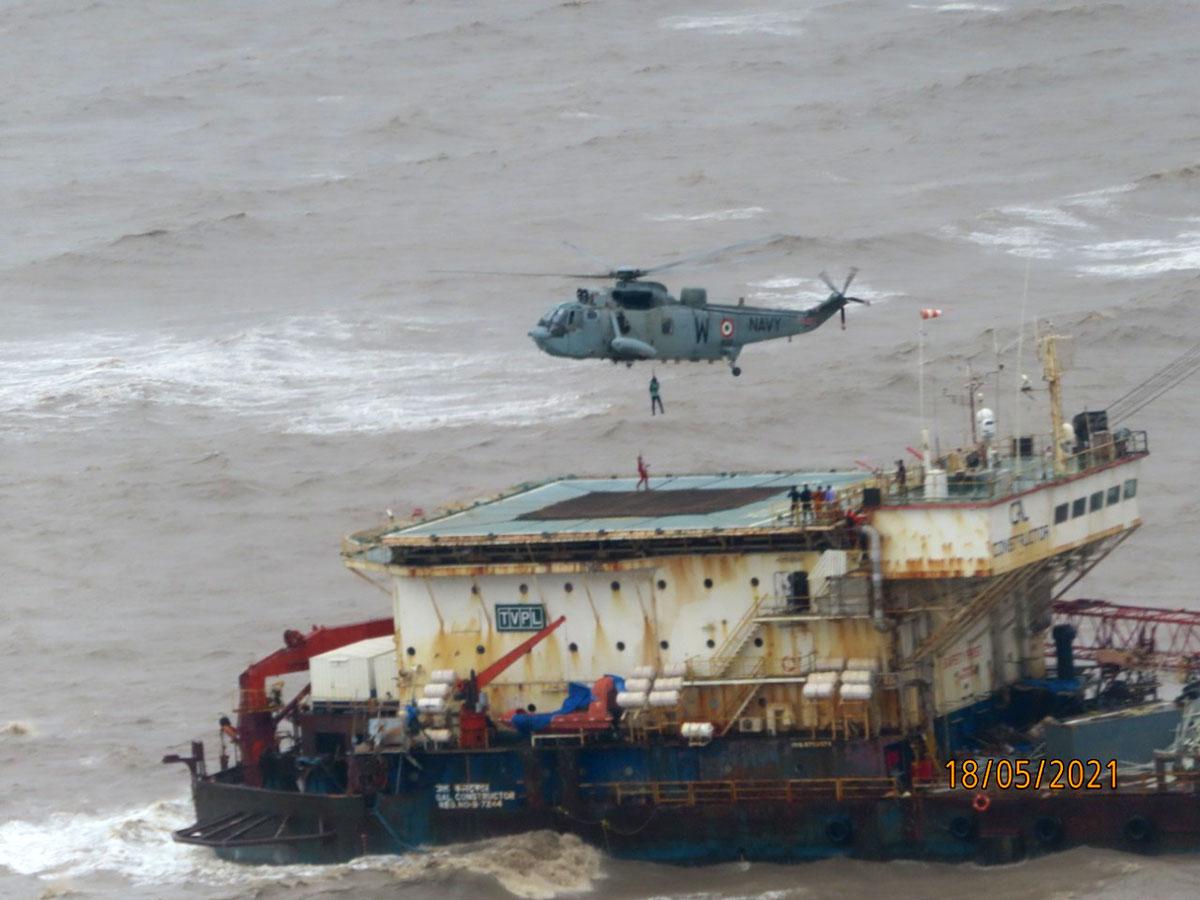


The above images illustrate typical Indian naval search-and-rescue operations, including helicopter evacuations, maritime rescue teams, and emergency airlifts from offshore structures during severe weather events in the Arabian Sea.
Along Mumbai’s coastline today, two different visions of the Arabian Sea coexist.
One belongs to the Indian Navy and Coast Guard, whose ships, aircraft, and rescue teams prepare for maritime emergencies across an increasingly unpredictable ocean.
The other belongs to the real-estate economy, which continues to transform the same coastline into a luxury lifestyle frontier.
Between these two realities lies the uncertain future of Mumbai’s coastal landscape.
The sea that today enhances property values may tomorrow become the force that most dramatically reshapes the city’s geography.
Section-IV
IV. Struggle With Four Research Questions: Environmental and Corporate Accountability in the Piramal Empire
Section II introduced four overarching questions concerning the Piramal Group’s ecological footprint, ranging from industrial effluents in rural India to luxury real estate developments along Mumbai’s climate-vulnerable coast. Section III then situated these concerns within the felt, lived realities of crisis—moments of disaster, rescue operations, and the constant presence of danger along the maritime frontier.
Section IV now turns to an extensive examination of those questions. Drawing together documented incidents, regulatory responses, and their wider ecological implications, it seeks to identify the broader patterns through which corporate activity intersects with environmental risk and governance.
IV. (i) The Digwal Question: A Violence of Slow Poisoning
The first and perhaps most disturbing question emerges from Digwal, a village in Sangareddy district, where the Piramal Group operates a pharmaceutical manufacturing facility producing active pharmaceutical ingredients for global markets. For decades, residents and activists have alleged that industrial effluents from the facility contaminated groundwater and surrounding soils, rendering wells unfit for drinking and irrigation.
Investigations triggered by citizen complaints led to scrutiny by India’s environmental regulators. In 2019, a joint committee of scientific agencies recommended environmental compensation of approximately ₹8.3 crore against the company for violations related to groundwater contamination, following proceedings under the National Green Tribunal and the “polluter pays” principle.
Reports and testimonies from villagers describe a more insidious reality: abandoned wells, failing crops, and rising incidences of dermatological and respiratory illnesses, symptoms often associated with prolonged exposure to polluted water sources. Activists have characterized this situation as a case of “slow violence,” in which ecological damage accumulates gradually over years rather than manifesting in a single dramatic disaster.
Critics argue that regulatory penalties, even when imposed, remain negligible compared to corporate revenues, raising the unsettling possibility that environmental fines function less as deterrents and more as routine costs of doing business. In this sense, Digwal becomes more than a local environmental dispute; it serves as a case study in how industrial modernity externalizes ecological harm onto rural landscapes while corporate expansion continues largely uninterrupted.
International attention has highlighted local resistance:
Digwal’s Defiance: Resisting Big Pharma VIEW HERE ⤡ @Fridays For Future International Newsletter
La rébellion de Digwal : résister aux géants pharmaceutiques VIEW HERE ⤡ @Fridays For Future International Newsletter (French Edition)
Digwal exemplifies the structural and ethical challenges of industrial pollution in rural India: the uneven distribution of harm, the slow accumulation of environmental damage, and the limited deterrent effect of regulatory penalties relative to corporate profits.
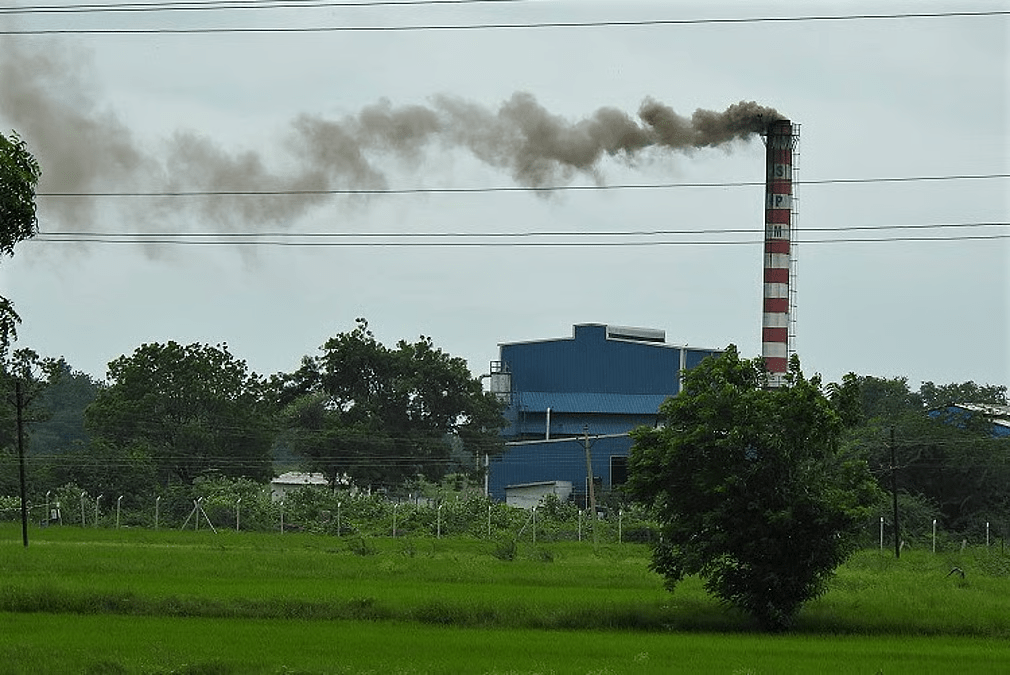
The Digwal Plant of Piramal Pharma
IV. (ii) The Dahej Question: Acid in the Canal
If Digwal represents the slow poisoning of aquifers, the controversy surrounding Dahej raises a different, though equally troubling, ecological question: the curious journeys of hazardous industrial waste in one of India’s most heavily industrialised coastal corridors.
In early 2026, the Gujarat Pollution Control Board (GPCB) ordered the closure of a Piramal Pharma manufacturing facility at Dahej after allegations surfaced that spent hydrochloric acid generated at the plant had been illegally discharged into a canal connected to the Narmada River system—a water network sustaining agriculture, fisheries, and millions of people across western India.
Regulatory findings indicate that a tanker tasked with transporting hazardous acid to a licensed treatment facility allegedly strayed from its authorized route and emptied the chemical contents into the canal. The GPCB invoked provisions of the Water (Prevention and Control of Pollution) Act, 1974, ordering the immediate shutdown of the facility and suspension of utilities such as electricity and water supply. This intervention temporarily disrupted the smooth functioning of a node in the vast pharmaceutical supply chain, highlighting the tension between industrial operations and environmental regulation.
Piramal Pharma presented a different narrative. Before the Supreme Court of India, the company argued that the Dahej unit was designed as a “zero-liquid-discharge” facility and that responsibility for the alleged dumping lay with the third-party transporter. In other words, the acid, it seems, acquired an “independence” once it left the factory gates. The Court nevertheless emphasized the gravity of the allegation, noting the potential contamination of a canal linked to the Narmada River, often described as Gujarat’s lifeline.
The Dahej episode raises deeper structural questions about industrial accountability. In a chemical economy where hazardous waste routinely travels long distances—from production floors to treatment facilities—who ultimately bears responsibility when that waste escapes into the environment? Is it the transporter who dumps it, the corporation that produces it, or the regulatory architecture responsible for monitoring thousands of such journeys across India’s industrial landscape?
Within the serene courtyards of the Piramal School of Leadership in Jaipur, leadership trainees may contemplate sustainability beneath shaded verandas and perforated brick façades designed to harmonize with desert winds. Yet in Dahej, the winds carry a very different lesson: that the infrastructures of modern industry—pipelines, tankers, effluent channels—sometimes blur the boundary between waste management and water systems. When that boundary dissolves, the consequences reach far beyond any carefully landscaped campus courtyard.
Interlude
From Maritime Rescue to Coastal Real Estate

“Take now . . . some hard-headed business man, who has no theories, but knows how to make money. Say to him: “Here is a little village; in ten years it will be a great city—in ten years the railroad will have taken the place of the stage coach, the electric light of the candle; it will abound with all the machinery and improvements that so enormously multiply the effective power of labor. Will in ten years, interest be any higher?” He will tell you, “No!” “Will the wages of the common labor be any higher . . . ? Will it be easier for a man who has nothing but his labor to make an independent living?” He will tell you, “No—the wages of common labor will not be any higher; on the contrary, all the chances are that they will be lower; it will not be easier for the mere laborer to make an independent living; the chances are that it will be harder.” “What, then, will be higher?” “Rent, the value of land. Go, get yourself a piece of ground, and hold possession.” And if, under such circumstances, you take his advice, you need do nothing more. You may sit down and smoke your pipe; you may lie around like the lazzaroni of Naples or the leperos of Mexico; you may go up in a balloon or down a hole in the ground; and without doing one stroke of work, without adding one iota of wealth to the community, in ten years you will be rich! In the new city you may have a luxurious mansion, but among its public buildings will be an almshouse.”
Excerpts from Progress and Poverty (1879) by Henry George
The recurring rescue missions conducted by the Indian Navy and the Indian Coast Guard reveal a stark dimension of Mumbai’s coastal geography that rarely appears in real-estate brochures or urban marketing narratives. For maritime authorities responsible for safeguarding liv7es at sea, the Arabian Sea is a dynamic and often hazardous environment—shaped by cyclones, sudden storms, industrial shipping accidents, and the growing unpredictability associated with climate crises, .
In contrast, within the language of luxury urban development, the same coastline is frequently portrayed as a landscape of serenity and prestige. High-rise residential towers facing the sea promise panoramic views, cool sea breezes, and an elevated lifestyle above the congestion of the city. Promotional imagery emphasises infinity pools merging visually with the horizon, landscaped terraces overlooking the water, and floor-to-ceiling glass façades framing uninterrupted views of the Arabian Sea.
This contrast between operational reality and aesthetic representation raises an important question for contemporary urban studies: how does a coastline that regularly demands large-scale rescue operations become simultaneously marketed as one of the most desirable residential frontiers in the city?
The answer lies partly in the political economy of coastal urbanisation. Over the past two decades, Mumbai’s real-estate sector has increasingly turned toward the coastline as a site of high-value development. The scarcity of land in the city’s historic core has pushed luxury projects toward reclaimed land, former industrial zones, and low-lying coastal districts.
Developers such as Piramal Realty have positioned several flagship projects within this emerging geography of luxury coastal urbanism. Towers associated with developments such as Piramal Mahalaxmi, Piramal Revanta, and Piramal Vaikunth are promoted through architectural narratives that emphasise biophilic design, landscaped podium gardens, and close visual relationships with nature.
Yet the same coastal proximity that produces these spectacular views also situates such developments within zones increasingly exposed to environmental risk. Climate projections for the western coast of India indicate rising sea levels, more intense rainfall events, and stronger tropical cyclones in the Arabian Sea basin.
Thus a striking paradox emerges: while maritime authorities prepare for escalating rescue operations and climate-driven emergencies at sea, coastal real-estate development continues to frame the same environment as a stable and desirable luxury landscape.
This tension between risk and representation forms the central problem explored in the following sections. The discussion now turns to the architectural and environmental contradictions embedded in contemporary luxury towers along Mumbai’s coastline.
IV. (iii) The Piramal Realty Question: Green(-washed) Anti-Green Towers on Fragile Grounds
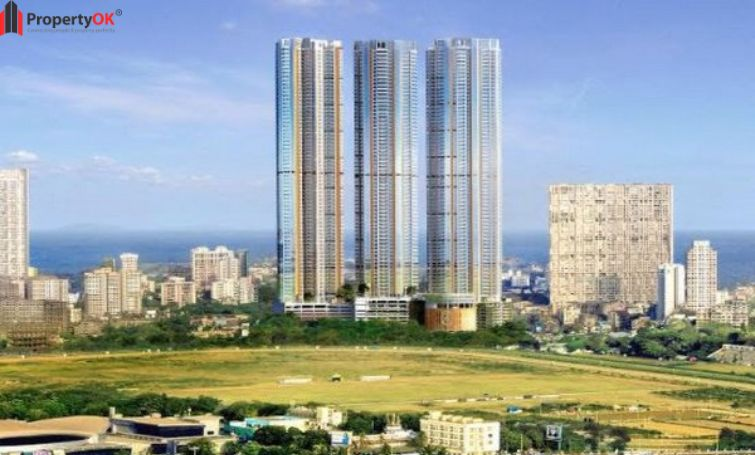
A. Coastal Capitalism and the Commodification of the Sea
Despite the well-documented environmental vulnerabilities discussed in Section III, Mumbai’s real-estate economy continues to treat proximity to the Arabian Sea as one of the most valuable urban commodities.
Waterfront views dramatically increase property values, allowing developers to capture premium market segments. The sea therefore becomes not merely a natural landscape but a financial asset embedded within urban real-estate speculation.
Urban geographers describe this phenomenon as part of “coastal capitalism,” a form of development in which waterfront landscapes are transformed into high-value property markets through the interaction of state policy, private capital, and global investment flows.
Over the past three decades, Mumbai’s coastal transformation has followed precisely this trajectory. Former textile mill lands, port-adjacent districts, and reclaimed waterfront zones have been redeveloped into luxury residential enclaves. Public investments in infrastructure—roads, sea links, drainage systems, and coastal defenses—often increase the profitability of surrounding private developments.
Within this framework, the Arabian Sea becomes a paradoxical urban object: simultaneously an ecological system undergoing climate transformation and a luxury commodity marketed through real-estate speculation.
B. The Arabian Sea as a Frontier of Risk
Beyond the carefully curated world of real-estate marketing, the Arabian Sea presents a far more volatile reality. The waters off India’s western coast form one of the busiest maritime zones in the Indian Ocean, where dense shipping routes, offshore infrastructure, fishing fleets, and extreme weather frequently generate emergencies requiring rapid rescue intervention.
Several recent incidents illustrate these dangers. In March 2026, the fishing vessel Sri Durgaparameshwari reportedly sank in rough waters in the Arabian Sea; the Maritime Rescue Coordination Centre in Mumbai dispatched the Indian Coast Guard patrol vessel ICG Anagh, which rescued nine fishermen while search operations continued for two missing crew members. In June 2025, the Singapore-flagged container ship MV Wan Hai 503 suffered a catastrophic explosion and fire while approaching Mumbai, prompting a coordinated Indian Navy–Coast Guard rescue that evacuated eighteen crew members using naval ships, aircraft, and helicopters. Earlier, during Cyclone Tauktae in May 2021, the offshore vessel Barge P-305 broke loose in the storm and drifted into the Arabian Sea with hundreds of workers aboard.
Together, these incidents reveal a dimension of the Arabian Sea rarely visible in luxury real-estate imagery: the same waters marketed as tranquil panoramas also constitute a volatile ecological frontier where industrial activity, extreme weather, and heavy maritime traffic converge.
C. Piramal Realty Projects and Coastal Risk
When viewed against this environmental background, the locations of several Piramal Realty developments raise important questions about long-term climate exposure.
A 2022 investigative blog by consumer activist Krishnaraj Rao compiled elevation data for several Piramal projects and noted that some are situated in relatively low-lying districts of Mumbai:
| Project | Approximate Elevation | Location |
|---|---|---|
| Piramal Mahalaxmi | ~3 metres above sea level | Central Mumbai |
| Piramal Byculla | Near sea-level elevation | South Mumbai |
| Piramal Revanta (Mulund) | ~11 metres above sea level | Northeastern suburb |
The article referenced various climate studies suggesting that Mumbai is among the coastal cities projected to face increasing climate-related impacts in the coming decades, including intensified flooding, storm surges, and extreme rainfall events.
It could therefore be argued that marketing narratives emphasizing sea views, landscaped terraces, and ecological harmony may not fully communicate the long-term environmental risks associated with such locations.
Some consumer activists have also raised concerns about contractual practices within certain real-estate projects, alleging that developer–buyer agreements may contain provisions that disproportionately favor the developer. These claims have circulated within public debates surrounding Mumbai’s housing market, although they remain contested and subject to ongoing discussion.
As noted earlier, the rapid expansion of luxury residential towers in Mumbai’s coastal and low-lying districts coincides with troubling climate projections, including sea-level rise of roughly 0.24–0.50 metres by mid-century and increasingly intense monsoon rainfall. The 2005 Mumbai floods—when nearly 944 millimetres of rain fell within 24 hours, causing massive disruption and economic losses—remain a stark reminder of how extreme rainfall, high tides, and inadequate drainage can combine to produce severe urban flooding.
In this context, critics contend that the construction of ultra-luxury residential towers in low-elevation districts may shift long-term environmental costs beyond private developments. Flood mitigation, pumping systems, coastal defenses, and disaster management infrastructure are frequently financed through public expenditure, meaning that the risks associated with climate-exposed development can ultimately be distributed across the broader urban population.
From this perspective, the marketing of panoramic sea views and “biophilic living” environments reflects a deeper paradox within Mumbai’s urban development. The same coastline that generates enormous real-estate value is also the ecological boundary most vulnerable to climate transformation.
Luxury towers thus embody a broader tension between urban aspiration and environmental reality: the sea is simultaneously the source of aesthetic prestige, economic profit, and an increasingly unpredictable force capable of reshaping the city itself.
D. The Politics of Eco-Branding
Alongside the rapid expansion of luxury residential towers in Mumbai’s coastal districts, real-estate developers have increasingly adopted the language of environmental sustainability. Promotional materials for high-end projects frequently emphasize themes such as “biophilic living,” “green architecture,” “nature-inspired harmony,” and “harmonious integration with nature.”
Piramal Realty’s developments similarly highlight landscaped terraces, open green courtyards, podium gardens, rooftop greenery, vertical landscaping, energy-efficient building systems, rainwater harvesting, wastewater recycling, and architectural designs intended to reconnect urban residents with natural elements. In marketing brochures, campaigns, and events (such as the Biophilia Chapter at Piramal Vaikunth), such features are presented as evidence that luxury real estate can coexist with ecological responsibility, often framed as “living in the lap of nature” or community-driven sustainability through nature trails and tree plantation drives.
This rhetorical shift reflects a broader trend within global real-estate markets. As climate awareness grows among urban consumers, environmental imagery and sustainability language have become powerful marketing tools capable of enhancing property values and attracting environmentally conscious buyers. Green terraces, rooftop gardens, vertical landscaping, water features, and curated “urban forests” are increasingly incorporated into architectural design, producing an aesthetic of ecological sensitivity even within dense urban environments.
At one level, many of these features represent genuine improvements over older models of purely concrete urban construction. They can contribute to urban biodiversity, reduce heat-island effects, and improve residential well-being.
Yet critics and urban scholars caution that the ecological meaning of such features should be interpreted carefully. Landscaped terraces, ornamental greenery, podium gardens, and rooftop parks—while visually appealing—do not necessarily compensate for the large-scale environmental transformations associated with high-density urban construction. Luxury towers require substantial quantities of concrete, steel, glass, and energy-intensive infrastructure, all of which carry significant environmental footprints throughout their life cycles.
Moreover, the ecological symbolism of “green living” may obscure the broader environmental context in which these developments occur. In cities such as Mumbai—where wetlands, mangroves, and low-lying floodplains historically functioned as natural buffers against storm surges and monsoon flooding—urban expansion into coastal zones can alter hydrological systems that previously mitigated environmental risk. Projects in flood-prone or low-elevation areas (e.g., Piramal Mahalaxmi in Jacob Circle at ~3 meters above sea level) promote panoramic Arabian Sea views and “Back to Nature” campaigns, yet occupy sites exposed to rising seas, intensifying monsoon rainfall, and increasing urban heat stress.
The tension between sustainability rhetoric and environmental reality becomes particularly visible when luxury developments are located in climate-sensitive regions. Architectural greenery and landscaped courtyards may function more as symbolic gestures than as structural solutions to ecological vulnerability. Urban theorists have described this phenomenon as a form of “green aestheticization,” “eco-branding,” or “environmental symbolism,” in which environmental imagery becomes integrated into the marketing language of luxury consumption. Within this framework, ecological features enhance the symbolic value of real estate without necessarily addressing the systemic environmental pressures affecting the surrounding urban ecosystem.
For prospective buyers, the appeal is obvious. A sea-facing apartment framed by lush gardens, rooftop terraces, and panoramic views offers the promise of refuge from the noise, congestion, and pollution of the city below. The architecture presents itself as a sanctuary—an island of calm within a turbulent metropolis.
Yet the broader ecological reality remains unchanged. The same coastline that provides these spectacular views is also the zone most exposed to climate transformation. Rising seas (projected ~25–30 cm by 2050 in high-emission scenarios, with even modest increments amplifying flood and health risks), increasingly intense rainfall events, degraded natural buffers, and subsidence continue to reshape the environmental future of Mumbai’s coastal districts.
In this sense, the marketing language of “biophilic living” reveals a deeper paradox within contemporary urban development. Luxury architecture seeks to recreate fragments of nature within private residential enclaves, even as the larger ecological systems sustaining the city—wetlands, mangroves, coastal floodplains, and marine ecosystems—face mounting pressure from urban expansion. The result is a striking contrast between the private aesthetics of environmental harmony and the public reality of ecological vulnerability.
If luxury towers represent the commodification of coastal landscapes through large-scale real-estate development, an even more concentrated expression of this phenomenon appears in the private residences associated with some of India’s wealthiest industrial families. Among these are the sea-facing properties linked to the Piramal family in Mumbai, including the residence known as Karuna Sindhu and the high-profile mansion Gulita in Worli. These homes occupy some of the most valuable coastal land in the country, where extraordinary concentrations of wealth intersect with the same ecological risks confronting the broader city.
The examination of these residences therefore raises a final question: what does it mean when extreme private luxury occupies the very coastal landscapes that climate crises may one day transform most dramatically? Can biophilic marketing and green aesthetics meaningfully address the deeper climate vulnerabilities of coastal megacities like Mumbai?
This raises a difficult question: are buyers of luxury coastal real estate being misled? Legally, the answer is complicated. Real-estate developers operate within regulatory frameworks that include approvals from authorities such as the Maharashtra Real Estate Regulatory Authority (RERA), the Municipal Corporation of Greater Mumbai, and the Ministry of Environment, Forest and Climate Change. Projects that receive these approvals are considered legally permissible for construction.
However, long-term climate risks—such as sea-level rise expected by the second half of the century—are rarely communicated explicitly in real-estate marketing, not only in Mumbai but in coastal property markets around the world. Thus the core issue may not be deception in a legal sense, but the absence of meaningful climate risk communication within the contemporary real-estate economy.
E. The Uncomfortable Convergence
Ultimately, the problem reflects a deeper contradiction within contemporary urban capitalism—one that undermines the possibility of harmonizing urban ecologies with social ecology. Cities expand toward waterfronts and scenic landscapes because people desire proximity to nature. At the same time, climate change renders those very landscapes increasingly unstable.
This tension is visible across global coastal cities—from Miami and Dubai to Shanghai, Jakarta, and Mumbai. Along Mumbai’s coastline today, two futures seem to unfold simultaneously. On one side, the Indian Navy and Coast Guard prepare for a future of intensifying maritime emergencies. On the other, the real-estate market continues to monetize proximity to the sea as a premium lifestyle aspiration. The sea itself, meanwhile, continues to rise.
And somewhere between rescue helicopters hovering above storm-tossed waters and glass towers advertising panoramic ocean views lies the uneasy truth of Mumbai’s coastal future.
F. Green Aesthetics and the Political Economy of Luxury Sustainability
Alongside the spread of global glass urbanism, contemporary luxury real-estate development has increasingly adopted what scholars describe as green aesthetics—the strategic incorporation of environmental imagery, ecological vocabulary, and landscaped design elements into high-end urban projects.
In recent decades, the language of sustainability has become a powerful marketing tool within global property markets. Developers frequently promote projects through concepts such as “biophilic living,” “nature-inspired architecture,” “urban forests,” and “wellness landscapes.” Podium gardens, rooftop greenery, vertical landscaping, and tree-lined terraces are presented as evidence that high-density urban development can coexist harmoniously with nature.
Yet critics within urban studies and environmental sociology have noted that such design elements often operate simultaneously within a broader political economy of luxury sustainability. In this framework, environmental aesthetics become embedded within the financial logic of high-end property markets. Green features enhance the symbolic value of residential developments, allowing projects to appeal simultaneously to environmental consciousness and lifestyle aspiration. Landscaped podium gardens, infinity pools overlooking natural vistas, and curated “urban forests” become part of a carefully staged environmental narrative that increases a project’s market desirability.
In the promotional literature of Piramal Realty, the Arabian Sea appears not as an unpredictable ecological force but as an aesthetic amenity. Developments such as Piramal Mahalaxmi invite residents to gaze upon “panoramic sea views,” presenting the coastline as a tranquil backdrop to leisure-class urban life. Marketing campaigns promise “nature-inspired harmony,” landscaped podium gardens, and biophilic living within towers rising from some of Mumbai’s most flood-prone districts.
The contrast between these two visions of the sea could hardly be sharper. For the Indian Navy and Coast Guard, the Arabian Sea is a theatre of emergency response—a domain where distress signals trigger the rapid deployment of ships, aircraft, and rescue teams. For luxury real-estate marketing, the same sea becomes a lifestyle accessory: a shimmering horizon framed through glass façades and advertised as the ultimate symbol of metropolitan prestige.
Urban scholar Isabelle Anguelovski and others have described related dynamics through the concept of green gentrification, in which environmental improvements and green infrastructure projects can contribute to rising property values and the displacement of lower-income communities. In luxury residential developments, however, the relationship between sustainability and market value takes a slightly different form. Rather than displacing existing residents, green aesthetics often function as a premium branding strategy, allowing developers to present their projects as environmentally responsible while simultaneously targeting affluent buyers.
This phenomenon is closely linked to the rise of international green-building certification systems such as LEED, IGBC, and other sustainability rating frameworks. While these certifications establish important standards for energy efficiency and environmental management, critics argue that they sometimes focus more heavily on technological solutions—efficient lighting systems, water recycling, energy-efficient glazing—than on deeper questions about the ecological location of developments, urban density, or long-term climate risk.
In coastal cities such as Mumbai, this distinction becomes particularly significant. A building may achieve high sustainability ratings through energy-efficient technologies and landscaped open spaces, yet still occupy a site that faces increasing exposure to sea-level rise, storm surges, or intensified monsoon flooding.
Within this context, greenery and sustainability branding can begin to function as visible markers of ecological responsibility that coexist with deeper structural tensions between urban expansion and environmental limits. Landscaped podium gardens, rooftop parks, and biophilic design elements create a powerful visual narrative of ecological harmony. Yet these curated landscapes often exist within highly engineered architectural environments dependent on complex technological systems: centralized air-conditioning, mechanical ventilation, pumped water systems, and reinforced coastal infrastructure.
The result is a paradox characteristic of contemporary urban environmentalism. Nature is increasingly incorporated into luxury architecture as an aesthetic experience—something to be viewed, curated, and consumed—while the broader ecological processes shaping the surrounding landscape remain largely beyond the scope of architectural design.
Seen from this perspective, the sustainability narratives surrounding luxury coastal developments in Mumbai form part of a wider global phenomenon in which environmental language, architectural symbolism, and real-estate capital converge. Green spaces appear within towers rising along fragile coastlines. Podium gardens flourish above underground parking structures. Rooftop forests overlook seas whose waters continue to rise.
In this sense, the politics of sustainability in contemporary real-estate development is not simply a question of whether buildings include green features. It is also a question of how environmental imagery is mobilized within systems of urban capital accumulation. And it is precisely within this intersection—between ecological aspiration and economic speculation—that the deeper contradictions of luxury coastal urbanism become visible.
IV. (iv) The Piramal Sustainability Paradox
An additional dimension of the debate emerges when comparing Piramal Realty’s residential projects with other initiatives associated with the Piramal Group.
The proposed Piramal School of Leadership (PSL) campus in Jaipur, for example, reflects a markedly different architectural philosophy. The campus incorporates climate-responsive design strategies such as shaded courtyards, perforated “jaali” brick façades that reduce solar heat gain, super-insulated roofing systems, and passive ventilation techniques designed to minimize reliance on mechanical cooling. These design choices draw heavily on traditional Indian architectural principles that evolved specifically to function effectively in hot climates.
This architectural language contrasts sharply with the glass-dominated typology of many contemporary luxury towers along Mumbai’s coastline. Critics have described this contrast as a form of selective sustainability—an architectural duality in which environmentally sensitive design appears prominently within educational or philanthropic initiatives while profit-driven real-estate developments rely on high-energy high-rise construction models.
The contrast raises broader questions about how environmental risk and sustainability are communicated within coastal real-estate markets.
Developers operating in Mumbai must comply with regulatory frameworks including the Maharashtra Real Estate Regulatory Authority (RERA) and environmental clearance procedures. These mechanisms ensure legal transparency regarding land ownership, project approvals, and financial disclosures. Yet long-term climate projections—particularly those extending toward the middle and end of the twenty-first century—rarely appear prominently within real-estate marketing narratives.
This disconnect reflects a global pattern. From Miami to Jakarta, coastal property markets continue to attract substantial investment even as climate scientists warn of rising seas and intensifying storms. In such contexts, the economic value of waterfront landscapes often overshadows their environmental vulnerability.
The Arabian Sea therefore appears simultaneously as a symbol of urban prestige and as a rem(a)inder of ecological exposure.
IV. (v) Glass Architecture and the Climate Paradox of Coastal Luxury
A further dimension of contemporary luxury real-estate development in Mumbai lies in the widespread adoption of glass-dominated architectural design. High-rise residential towers increasingly incorporate extensive glazing systems—including floor-to-ceiling windows, curtain-wall façades, and glass-edged balconies intended to maximise daylight and panoramic views.
Several Piramal Realty developments prominently feature such architectural elements.
Among the most visible examples is Piramal Aranya in Byculla, whose towers incorporate floor-to-ceiling glass panels within curtain-wall systems designed to optimise daylight penetration while offering uninterrupted views of the surrounding cityscape and the Arabian Sea. Similarly, Piramal Mahalaxmi near the Mahalaxmi Racecourse employs extensive glazing and glass-edged balconies to frame panoramic views of both the racecourse and the coastal skyline. Another example is Piramal Revanta in Mulund, where high-rise towers incorporate partial glass façades reflecting the aesthetic vocabulary of contemporary global skyscraper design.
In promotional narratives, such architectural features are often associated with modernity, luxury, and visual openness. Large glazed surfaces increase natural illumination within apartments and visually connect interior spaces with surrounding urban and coastal landscapes.
Yet these design strategies raise important environmental questions, particularly in tropical coastal cities such as Mumbai.
Glass architecture is widely associated with increased solar heat gain, which can significantly raise indoor temperatures in hot and humid climates. In buildings with extensive glazing, maintaining comfortable indoor conditions often requires intensive mechanical cooling systems. Consequently, fully air-conditioned glass towers can demand substantially higher energy consumption than structures designed with traditional shading devices, thicker walls, or climate-responsive materials.
Urban climatologists have therefore noted a paradox within many contemporary skyscraper developments: architectural forms originally popularised in temperate climates are increasingly reproduced in tropical regions where their environmental performance is less suitable without extensive technological intervention.
Mumbai’s historical architecture illustrates a very different climatic logic. Colonial-era buildings, traditional courtyard houses, and vernacular urban forms frequently relied on thick masonry walls, shaded verandas, cross-ventilation, and deep overhangs to mitigate tropical heat and monsoon rainfall. These strategies evolved over centuries as adaptive responses to the region’s climate.
Glass-dominated skyscrapers represent a contrasting design philosophy. Rather than relying primarily on passive climate adaptation, they depend heavily on advanced engineering systems—including high-performance glazing, mechanical ventilation, and centralized air-conditioning—to regulate internal environments.
From a broader urban perspective, this shift raises questions about the long-term environmental sustainability of high-rise architecture in tropical coastal megacities already facing rising temperatures and increasing energy demand.
In this sense, glass façades function simultaneously as symbols of modern luxury and as markers of a deeper architectural paradox. They promise visual openness to nature—views of the sea, the sky, and the city—while relying on energy-intensive systems to shield interior spaces from the very climate outside.
The glass wall thus becomes an architectural metaphor for contemporary coastal urbanism: a transparent boundary between privilege and environment.
IV. (vi) Global Glass Urbanism and Architectural Imperialism
The proliferation of glass-dominated skyscrapers in tropical cities such as Mumbai can also be interpreted through the concept of global glass urbanism—the worldwide diffusion of architectural forms developed in temperate Western financial centres into radically different climatic contexts.
Since the late twentieth century, curtain-wall skyscrapers have become dominant visual symbols of corporate modernity. Cities such as New York, London, Hong Kong, and Singapore established a powerful architectural aesthetic characterized by reflective glass façades, sealed interiors, and vertically stacked urban density. Over time this design language evolved into a standardized global model replicated across cities regardless of climate or ecological conditions.
When this architectural vocabulary migrated to tropical and subtropical regions, however, it often conflicted with local environmental realities. Large glass façades amplify solar heat gain in hot climates, increasing reliance on mechanical cooling systems and raising overall energy consumption.
Traditional architectural systems across South Asia historically addressed such climatic conditions through very different strategies—shaded courtyards, thick masonry walls, ventilated verandas, lattice screens (jaalis), and urban layouts designed to channel cooling winds. These approaches enabled buildings to regulate temperature passively while minimizing dependence on artificial cooling.
From this perspective, the spread of glass towers in tropical megacities reflects not merely an aesthetic preference but a broader cultural and economic phenomenon. Glass skyscrapers signal participation in global networks of capital, projecting an image of cosmopolitan modernity attractive to investors and affluent urban consumers.
Real-estate developers therefore operate within powerful symbolic incentives. Glass towers sell not only apartments but also an architectural image of global prestige.
Yet this design logic creates a subtle form of architectural imperialism, where globally dominant architectural aesthetics override locally adapted building traditions that evolved specifically to manage regional climates.
IV. (vii) The Vertical Mirage: Height and the Illusion of Climate Security
The concentration of glass-clad luxury towers along Mumbai’s coastline also produces what might be described as a vertical mirage of climate security.
High-rise living can create the perception of insulation from environmental risk. Elevated apartments appear removed from flooded streets, congested drainage channels, and the disruptions that accompany extreme weather events.
However, the infrastructure sustaining these towers remains deeply interconnected with the ground-level systems of the city. Electricity supply, water pumping systems, sewage networks, stormwater drainage, transportation access, and emergency services all depend on urban infrastructures that themselves remain vulnerable to flooding and extreme weather.
When monsoon floods disrupt road networks, power systems, or drainage infrastructure, even the tallest towers remain embedded within the same urban ecosystem.
Elevation may protect individual apartments from rising water, but it cannot isolate entire buildings from systemic climate stress.
In this sense, vertical luxury can obscure the complex interdependence between high-rise developments and the broader urban environment. The resilience of luxury towers ultimately depends not only on their architectural design but also on the resilience of the surrounding city.
IV. (viii) Green Branding and the Politics of Luxury “Lifestyle Sustainability”
Against this architectural backdrop, the sustainability rhetoric surrounding luxury real-estate development acquires additional complexity.
Marketing narratives associated with Piramal Realty developments frequently emphasise “biophilic living,” landscaped podium gardens, rooftop greenery, and curated green spaces intended to reconnect urban residents with nature. Projects such as Piramal Mahalaxmi, Piramal Revanta, and Piramal Vaikunth highlight features including landscaped gardens, tree-planting initiatives, community nature programmes, and green-building certifications such as IGBC Gold.
These features can indeed contribute to improved urban environmental performance in certain respects. Landscaped spaces may reduce local heat-island effects, improve residential well-being, and support limited urban biodiversity.
However, critics argue that such elements sometimes function primarily as green branding—a visual language of sustainability embedded within luxury property marketing.
Podium gardens, rooftop greenery, and symbolic tree-planting initiatives can create powerful imagery of ecological harmony even when the broader environmental implications of large-scale coastal development remain unresolved.
This phenomenon has been described by some scholars as executional greenwashing, where environmental imagery enhances corporate credibility without fundamentally altering the underlying development model.
The paradox becomes particularly visible when such developments occupy low-lying coastal districts of Mumbai already identified as vulnerable to sea-level rise, storm surges, and intensified monsoon flooding.
Parts of South Mumbai—including the Mahalaxmi–Jacob Circle belt—sit only a few metres above mean sea level. Climate projections suggest sea levels along India’s western coast could rise approximately 0.24–0.5 metres by mid-century, while extreme rainfall events during monsoon cycles continue to intensify.
Against this environmental background, the marketing of “panoramic sea views” begins to acquire a darker ecological irony.
What is presented as aesthetic privilege may also represent long-term vulnerability.
IV. (ix) The Question That Remains
The contrast between climate-responsive campus architecture in Jaipur and luxury glass towers along Mumbai’s coastline ultimately reveals a deeper contradiction within contemporary urban development.
If ecological responsibility forms a central component of the Piramal Group’s public narrative, how should one interpret a development model in which sustainability appears prominently within educational or philanthropic projects while profit-driven real-estate ventures rely on energy-intensive architectural forms within climate-sensitive coastal landscapes?
This question extends beyond any single corporation.
Across global coastal cities—from Miami and Dubai to Shanghai and Jakarta—urban expansion continues to move toward waterfront landscapes even as climate change renders those same geographies increasingly unstable.
The tension therefore reflects a broader structural contradiction within modern urban capitalism.
Cities seek proximity to nature because it generates value, prestige, and desirability. Yet the environmental systems sustaining those landscapes are simultaneously undergoing transformation.
In Mumbai, this contradiction becomes visible along the narrow boundary between land and sea.
The glass towers rising above the Arabian Sea promise spectacular views and metropolitan luxury. Yet the same waters that frame those horizons remain dynamic, unpredictable, and increasingly shaped by global climate change.
Nature, unlike architecture, does not recognize property lines.
Groundwater flows beneath factory walls. Storm surges ignore real-estate boundaries. Rising seas do not distinguish between luxury towers and informal settlements.
And if the Arabian Sea ultimately redraws Mumbai’s coastline—as climate science increasingly suggests it may—the courtyards of Jaipur and the glass towers of the coast will confront the same elemental truth:
Nature is not a marketing language.
It is a force that eventually rewrites every architecture built against it.
IV. (x) Private Coastal Palaces: Karuna Sindhu, Gulita, and the Architecture of Dynastic Power
If luxury real-estate towers represent the large-scale commodification of Mumbai’s coastal landscape, the private residences associated with crony industrial families reveal an even more concentrated expression of this phenomenon. The intersection of dynastic wealth, symbolic architecture, and climate-vulnerable coastal land becomes particularly visible in the residences connected to the Piramal family and their alliance with the Ambani business dynasty.
The marriage of Anand Piramal and Isha Ambani in 2018 created one of the most visible alliances within India’s corporate elite, linking the Piramal and Ambani families through both economic and social networks. This dynastic union also symbolically connects two parallel trajectories in Mumbai’s contemporary urban landscape: the rapid expansion of luxury real-estate development and the rise of philanthropic environmental branding associated with large corporate foundations.
In 2025, the Reliance Foundation, led by Nita Ambani, announced plans for a large 130-acre “Coastal Road Garden” along Mumbai’s newly constructed coastal road corridor. Promoted as a future “green lung” for the city, the project proposes landscaped promenades, cycling tracks, and urban green spaces built on reclaimed coastal land.
Supporters present such initiatives as examples of environmental stewardship within an increasingly dense metropolis. Critics, however, interpret them differently. Environmental activists and urban scholars have pointed out that many of these projects occur in landscapes already transformed by large infrastructure projects, land reclamation, and the removal of natural coastal ecosystems such as mangroves and tidal wetlands. In this interpretation, the creation of ornamental green spaces can sometimes function as a form of symbolic ecological repair, replacing complex natural ecosystems with landscaped environments designed primarily for urban recreation and visual appeal.
Within this broader context of urban development, the Piramal family’s own residences offer a revealing architectural case study.
A. The Mansion at Worli: Gulita / Karuna Sindhu
The most prominent of these properties is Gulita, a sea-facing residence located along Worli Sea Face in Mumbai. The residence, reportedly spanning approximately 50,000 square feet across multiple floors, was gifted by Ajay Piramal and Swati Piramal to their son Anand Piramal and his wife Isha Ambani following their wedding.
Architecturally, the mansion is notable for its distinctive diamond-inspired glass and steel façade. Structural engineering for the building was reportedly undertaken by the London-based firm Eckersley O’Callaghan, using advanced computational modelling techniques to create a reflective geometric structure designed to maximise sea views and natural light.
The residence incorporates many of the spatial features commonly associated with ultra-luxury coastal homes: landscaped terraces, private lawns, ornamental water features, swimming pools, and multi-level basements accommodating parking and service infrastructure. Interiors reportedly include extensive glazing, chandeliers, temples, and carefully curated gardens—among them a landscaped terrace garden sometimes referred to in media accounts as the “Chelsea Garden.”
Like many contemporary luxury residences, the building has been described as incorporating certain environmentally conscious technologies, including high-performance glazing, climate-control systems, and rainwater harvesting. However, publicly available documentation provides limited evidence regarding the overall environmental certification or measurable sustainability performance of the structure.
B. Architectural Symbolism and Coastal Power
Beyond its physical features, Gulita invites interpretation as a symbolic architectural object within Mumbai’s evolving coastal geography.
The building occupies one of the city’s most valuable urban landscapes: the Worli Sea Face, a narrow strip of coastal land exposed directly to the Arabian Sea. This same coastline lies within zones that climate studies frequently identify as vulnerable to rising sea levels, intensified monsoon rainfall, and storm surge events over the coming decades.
For critics of such superrich urban development, such residences illustrate the concentration of wealth within precisely those coastal landscapes most exposed to long-term environmental risk. In this sense, the architecture becomes part of a broader narrative about power, privilege, and control over urban space.
Some scholars have interpreted such monumental residences through theoretical frameworks developed by thinkers such as Edward Said, who described forms of cultural and spatial domination through the concept of imperial representation. In this reading, monumental architecture can function as a display of symbolic authority over landscapes and communities.
Similarly, urban historian Lewis Mumford warned that modern megastructures—particularly those associated with technological spectacle and superrich power—often risk severing architecture from its ecological and social context. For Mumford, the healthiest cities were those whose built environments remained organically connected to their surrounding landscapes and regional ecosystems.
Seen through this lens, glass-fronted coastal mansions and luxury towers may represent not only wealth but also a particular vision of urban modernity: one in which technological architecture asserts mastery over nature while relying on extensive energy and infrastructure systems to maintain that control.
C. A Landscape of Contradictions
The juxtaposition of philanthropic environmental initiatives, luxury real-estate expansion, and private coastal palaces illustrates the complexity of contemporary urban development in Mumbai.
Corporate foundations may sponsor new parks, green corridors, and urban gardens, while real-estate developers simultaneously transform nearby coastal districts into dense clusters of high-value residential towers. Private residences occupy some of the most privileged coastal vantage points, offering panoramic views of the Arabian Sea.
Yet the environmental risks discussed in earlier sections of this study—rising sea levels, intensifying monsoon rainfall, and increasingly fragile coastal ecosystems—remain part of the same urban landscape.
The result is a city in which ecological vulnerability and extraordinary concentrations of wealth coexist within the same narrow coastal geography.
SEE ALSO:
Epilogue
The four cases examined in this study—Digwal, Dahej, Piramal Realty’s coastal developments, and the private residences of the Piramal family—reveal different facets of a single underlying pattern. Industrial production, urban real-estate expansion, philanthropic initiatives, and corporatized architecture are often presented as separate domains of corporate activity. In reality, they are deeply interconnected within the same economic and ecological landscape.
At Digwal, pharmaceutical manufacturing raises concerns about groundwater contamination and the vulnerability of rural ecosystems. In Dahej, allegations surrounding hazardous waste disposal highlight the regulatory challenges of governing complex industrial supply chains. In Mumbai, luxury real-estate developments demonstrate how global capital continues to reshape fragile coastal environments, even as architectural narratives of sustainability and “biophilic living” attempt to frame these projects as ecologically harmonious.
The examination of private coastal residences such as Gulita reveals an even more concentrated expression of this dynamic. Here, the symbolic architecture of wealth occupies precisely those coastal landscapes that climate science increasingly identifies as environmentally exposed.
Taken together, these cases illuminate a broader contradiction within contemporary capitalism. Economic expansion is frequently framed through narratives of technological progress and environmental responsibility, yet the ecological consequences of industrial production and urban development are often displaced onto vulnerable ecosystems and communities.
In Mumbai, this contradiction is particularly visible along the meeting point between land and sea. The Arabian Sea—marketed in real-estate imagery as a symbol of prestige and tranquillity—is also a dynamic environmental force shaped by rising seas, intensifying storms, and accelerating climate change.
The glass towers rising along the city’s shoreline promise permanence and prosperity. Yet beneath their reflections lie aquifers, canals, mangrove forests, and tidal waters whose ecological limits cannot be permanently engineered away.
In the end, the same ocean that frames Mumbai’s most luxurious horizons may also become the force that most clearly reminds the city of those limits.
References
Anguelovski, I., Connolly, J.J.T., & Brand, A.L. (2016). From environmental justice to urban climate adaptation: Lessons from green gentrification in US cities. Urban Studies, 53(12), 2345–2363.
Checker, M. (2011). Wiped Out by the “Greenwave”: Environmental gentrification and urban inequality. City & Society, 23(2), 52–79.
Davis, M. (2006). Planet of Slums. London: Verso.
Hallegatte, S., Green, C., Nicholls, R.J., & Corfee-Morlot, J. (2013). Future flood losses in major coastal cities. Nature Climate Change, 3(9), 802–806.
Harvey, D. (2010). The Enigma of Capital and the Crises of Capitalism. Oxford University Press.
IPCC. (2021). Sixth Assessment Report: Climate Change 2021 – The Physical Science Basis. Geneva: Intergovernmental Panel on Climate Change.
Léon, S., & Anguelovski, I. (2019). The aesthetics of urban sustainability: Green design, commodification, and urban marketing. Journal of Urban Affairs, 41(6), 821–839.
Mumford, L. (1934). Technics and civilization. Harcourt, Brace and Company.
Mumford, L. (1938). The culture of cities. Harcourt, Brace and Company.
Mumford, L. (1961). The city in history: Its origins, its transformations, and its prospects. Harcourt, Brace & World.
Said, E. W. (1994). Culture and imperialism. Vintage Books.


Comments
Post a Comment