Letters of Blood and Fire: “Terrorism”, Dispossession, and the Distorted Mirrorings of Domination
Letters of Blood and Fire: “Terrorism”, Dispossession, and the Distorted Mirrorings of Domination
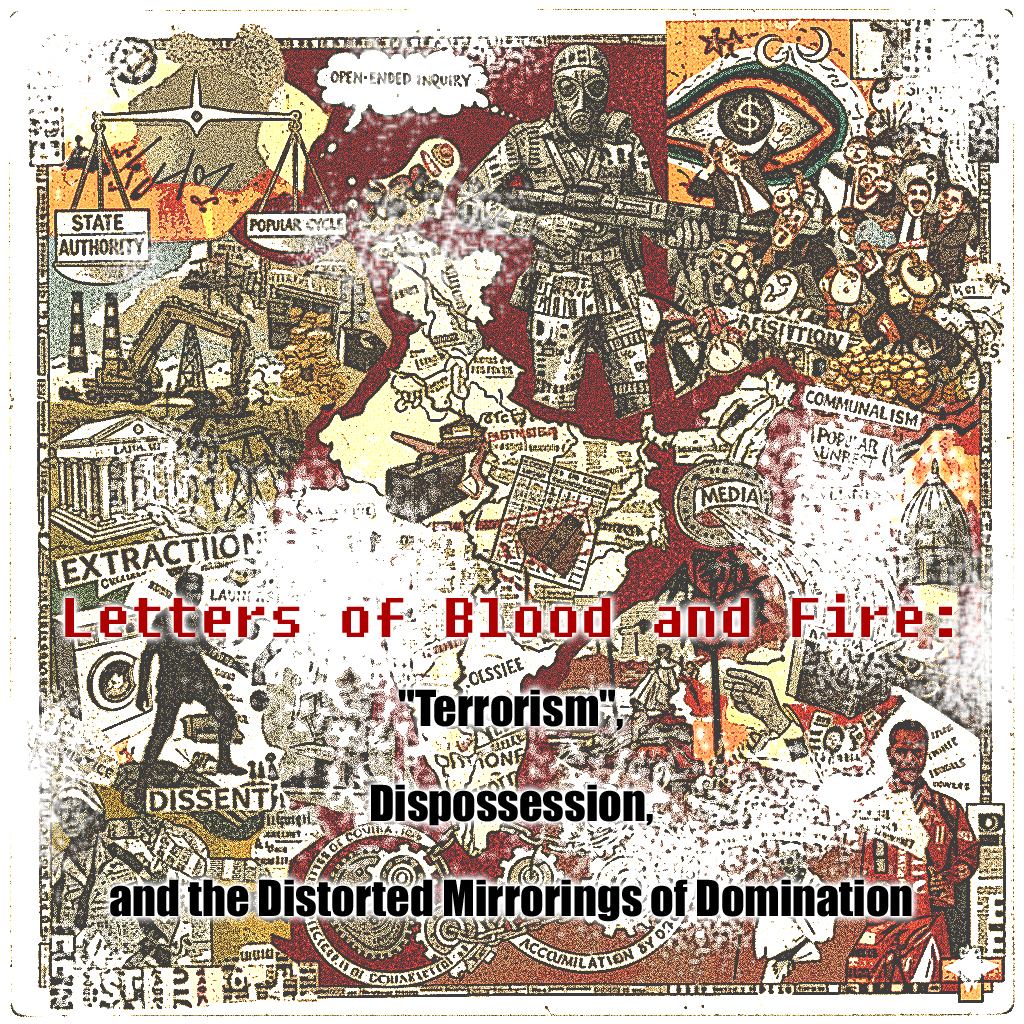
Posted on 28th December, 2025 (GMT 09:36 hrs)
ABSTRACT
This article critically dissects “terrorism” as a politically contested and asymmetrically applied category, wielded to delegitimize subaltern and non-state violence while normalizing far greater state and corporate terror through legal, discursive, and institutional mechanisms. Drawing on an anarchist methodological lens amid India’s contemporary Islamophobic conjuncture, it provisionally defines terrorism as deliberate civilian-targeted violence intended to induce widespread fear for political, ideological, or social ends, exposing how state practices—from aerial bombings to militarized dispossession—evade the label via sovereign privilege. Integrating Marx’s primitive accumulation, Harvey’s views on accumulation by dispossession, and Toussaint’s analysis of debt-driven imperialism, the analysis frames terrorism as a systemic instrument embedded in neoliberal resource extraction, where conflict in mineral-rich zones (Afghanistan’s lithium, India’s Adivasi belts, Congo’s coltan) functions as both symptom and enabler of corporate plunder, preempted by advanced technologies like remote sensing and veiled by selective narratives that hyper-amplify “Islamic terrorism” while muting Hindutva extremism, Zionist settler violence, and BJP’s hypocritical Taliban engagement amid alleged terror-funding ties. Employing Sāṃkhya’s anyonyapratibimba to reveal power’s projection of its own predation onto the “other,” and balancing economic determinism with religion’s irreducible psychological role in motivating warriors, the piece ultimately reframes terrorism not as pathological or civilizational but as an intrinsic modality of unequal global orders, calling for discriminative clarity (viveka) to dismantle its intertwined logics of capital, technology, ideology, and domination.
“Hence, the historical movement which changes the producers into wage-workers, appears, on the one hand, as their emancipation from serfdom and from the fetters of the guilds, and this side alone exists for our bourgeois historians. But, on the other hand, these new freedmen became sellers of themselves only after they had been robbed of all their own means of production, and of all the guarantees of existence afforded by the old feudal arrangements. And the history of this, their expropriation, is written in the annals of mankind in letters of blood and fire.” — Karl Heinrich Marx, “The Secret of Primitive Accumulation”, Capital: Volume I
Prologue: Why This Article
This article neither seeks to define nor to conclude. Its modest ambition is clarification—of critique itself—through every possible register that might allow open-ended inquiry to breathe. It is written in the present conjuncture, as the Indian subcontinent endures a sustained fever of Islamophobia, unidirectional hatred, intolerance, and routinized violence. This moment compels a rethinking and re-visualization of “terrorism” as a category, along with the political, juridical, and affective arrangements that sustain it.
Our intervention proceeds from an anarchist consciousness—not as doctrine, but as method—to expose the ideological character of dominant narratives and the fetishisms through which power renders itself natural, necessary, and unquestionable. Crucially, this method is deployed to uncover the deeper structural logics that animate all forms of fundamentalism and extremism, irrespective of theological content or civilizational location. Rather than treating religious violence as aberrant belief or cultural excess, the analysis traces how any and every organized religion—when entangled with state power, capital-relations, patriarchy, and “nationalist” (?) projects—become vehicles through which domination, exclusion, and coercion are moralized, ritualized, and normalized. In this sense, the critique does not target any particular religion as such, but the institutional and political infrastructures that transform any kind of system of faith into an instrument of governmentality fear, and disciplined hatred.
I. Introduction
“Terrorism” is a deeply contested term, wielded more as a political weapon than a neutral descriptor. No universal definition exists; states, scholars, and mass media craft versions that serve their interests, often delegitimizing subaltern violence while normalizing or legalizing the far greater terror inflicted by powerful actors. Non-state militants are swiftly branded terrorists, yet state practices—aerial bombings, blockades, collective punishment, enforced displacement—that produce widespread civilian fear are reframed as security, counterterrorism, or collateral necessity.
For analytical purposes, terrorism may be provisionally understood not as mere violence but as a strategic modality: the deliberate use or threat of violence against civilians to produce disproportionate fear, coerce populations, and advance political, ideological, or social objectives. This definition, however, reveals an internal contradiction. Numerous state practices satisfy these criteria in substance, yet escape the designation of “terrorism” by virtue of institutional authority and legal normalization. The resulting asymmetry is not moral but structural—embedded in regimes of power that determine who may name violence and who must endure it.
This article contends that terrorism is not an external pathology but an instrument embedded in systems of domination, extraction, and accumulation. Building on Marx’s “primitive accumulation” and Harvey’s “accumulation by dispossession” as well as Toussaint’s understanding of pre-debt-or capitalism, it locates terror in the underlying logic of resource expropriation under neoliberal capitalism. In mineral-rich zones—Afghanistan’s lithium deposits, India’s Adivasi forests, Congo’s coltan belts—insurgency and “terrorism” often serve as both symptom and enabler of corporate access, debt entrapment, and profit flows, masked as security imperatives.
Discursive selectivity amplifies certain threats (especially “Islamic” militancy) while downplaying others (Hindutva extremism, settler violence, state terror), reflecting geopolitical utility, media economies, and alliance preservation rather than empirical harm. Historical evidence of intra-sectarian predation and syncretism in pre-modern South Asia further reveals contemporary communalism as a political invention homogenizing diverse traditions for advancing entrenched hegemony.
Advanced technologies—remote sensing, hyperspectral imaging, AI prospecting—create an invisible prelude to dispossession, mapping wealth long before communities sense the threat. Sāṃkhya’s anyonya pratibimba tattva (mutual reflection) illuminates how dominant powers project their own violence onto the resisting other, misrecognizing the mirror as the cause. While grounded economistic analysis remains central, religious indoctrination and faith (ideology) provide indispensable psychological motivation—moral justification, transcendent reward, resilience—that economic determinism (or economic reductionism) alone cannot explain.
Ultimately, this article dismantles the distorted mirrorings sustaining domination: the false innocence of power when it names its own reflection “terror.” Refusing state exceptionalism, civilizational framings, and identity distractions, it reframes terrorism as a systemic modality interwoven with capital, technology, ideology, and the perpetual reproduction of dispossession in an essentially unequal world.
II. The Problem of Definition: Terrorism as a Contested Concept
There is no single, universally agreed-upon definition of terrorism. Across international law, political science, sociology, criminology, and security studies, terrorism remains a deeply contested and politically charged concept. States, international organizations, scholars, and media institutions define terrorism differently, often reflecting strategic, ideological, and legal interests rather than neutral description. As a result, terrorism functions not merely as an analytical category but as a normative label—one that delegitimizes certain forms of violence while normalizing or legalizing others within a given taxonomic order.
Despite this definitional plurality, most scholarly and legal frameworks converge around a provisional set of core elements that distinguish terrorism from ordinary crime, interpersonal violence, or conventional warfare.
IIA. Core Elements of Terrorism: Beyond General Violence
While keywords such as violence, harm, assault, weapons, physical attack, and verbal abuse accurately capture the instrumental means often employed in acts labeled as terrorism, they seem to be analytically insufficient as defining criteria for “terrorism”, generally speaking. These elements are equally present in a broad spectrum of so-called non-terroristic behaviour, including criminal violence, riots, domestic abuse, and hate crimes. Terrorism cannot be reduced to the mere occurrence of violence or harm; rather, it is distinguished by its intentionality, target selection, and communicative effect. What renders an act terroristic is not only what is done, but why it is done, to whom it is directed, and how it is designed to influence a wider audience beyond the immediate victims. In this sense of the provisional definitional spectrum, terrorism functions as a strategic form of violence, aimed at producing fear, coercion, and political or ideological leverage rather than solely physical injury.
A refined definition could therefore integrate the following dimensions:
(a) Violence or Threat of Violence
Terrorism involves the actual use or credible threat of violence, which may include:
- Physical attacks (bombings, shootings, assassinations, arson)
- Use of weapons or improvised means
- Kidnappings, hostage-taking, or destruction of infrastructure
While verbal abuse alone rarely qualifies as terrorism, threats can constitute terrorism when they are intended to instill fear in a wider population or compel political action.
(b) Harm to Persons, Property, or Civilian Life
The violence is typically directed at civilians, non-combatants, or symbolic targets, rather than military opponents engaged in active combat. Harm may be:
- Physical (death, injury, disability)
- Material (damage to infrastructure, public spaces, economic systems)
- Psychological (fear, trauma, collective anxiety)
This civilian orientation is central to most academic definitions and is what differentiates terrorism from conventional warfare.
(c) Intent to Terrorize, Intimidate, or Coerce
What transforms violence into terrorism is intent. Terrorist acts are designed not merely to harm immediate victims, but to:
- Create fear disproportionate to the act itself
- Intimidate a broader population
- Coerce or compel a government, institution, or society to change behavior, policy, or ideology
The victims are often instrumental, while the true target is a wider audience.
(d) Political, Ideological, Religious, or Social Motivation
Terrorism is fundamentally instrumental and purposive. It is committed in pursuit of a broader cause—political, ideological, religious, ethnic, or social. This element distinguishes terrorism from:
- Statistically usual criminal violence (e.g., robbery, personal revenge)
- Spontaneous or purely emotional acts of aggression
Without a claim—explicit or implicit—to a larger cause, violence remains criminal but not terroristic.
(e) Psychological Amplification and Publicity
Terrorism relies on symbolism and spectacle. Its power lies less in its immediate destructive capacity and more in its ability to:
- Generate mass fear through media circulation
- Produce a climate of insecurity
- Amplify its impact beyond the site of violence
In this sense, terrorism is as much a communicative act as a physical one.
IIB. A Working Definition
On the basis of the above, terrorism may be (provisionally/temporarily/for the time being/for argument’s sake) defined as:
The deliberate use or threat of violence against civilians or non-combatants, causing physical, material, or psychological harm, with the intent to generate widespread fear and to coerce a population, government, or institution in furtherance of political, ideological, religious, or social objectives.
This definition incorporates violence, harm, assault, weapons while embedding them within the intentional, political, and psychological architecture that seemingly distinguishes terrorism from other forms of violence.
IIC. Critical Perspectives and Pervasive Debates
(a) Terrorism vs. State Violence
A central critique in terrorism studies concerns the asymmetry of labeling. While non-state actors are readily described as terrorists, state violence—such as aerial bombardment, collective punishment, enforced disappearances, or extrajudicial killings—is often framed as “security,” “counter-terrorism,” or “law and order,” despite producing comparable or greater civilian terror. This raises the unresolved question:
Can states also commit terrorism?
Critical scholars argue that excluding state actors from terrorism definitions reflects political power privileges rather than moral or analytical consistency.
(b) The Elasticity and Abuse of the Term
“Terrorism” is frequently deployed as a discursive weapon to criminalize dissent, delegitimize resistance movements, or suppress political opposition. Broad or vague definitions risk collapsing:
- Protest into extremism
- Civil disobedience into terrorism
- Dissent into national security threats
This definitional elasticity enables authoritarian or totalitarian misuse and legal overreach.
(c) Terrorism, Resistance, and Moral Ambiguity
Another enduring debate concerns the boundary between terrorism and resistance or liberation struggles. Historical actors once labeled terrorists have later been reclassified as freedom fighters, liberation leaders, or even national leaders. This demonstrates that terrorism is not only a legal category but also a historically contingent moral judgment.
IID. Dimensions of Terrorism
A multidimensional understanding of terrorism requires attention to:
- Legal dimension: criminalization, international law, human rights
- Political dimension: power, legitimacy, state interests
- Sociological dimension: radicalization, identity, grievance
- Psychological dimension: fear, trauma, violence as metaphor
- Media dimension: spectacle, amplification, narrative control
Only through such an integrated approach can terrorism be analyzed without reducing it either to mere violence or to ideological abstraction.
Analytical Note Terrorism appears not to be synonymous with violence, harm, or assault per se. It is a strategic form of violence, distinguished by its intent to terrorize a broader audience and to achieve political or ideological ends through fear. Any rigorous definition could therefore balance analytical precision with critical vigilance, recognizing the reported reality of terroristic violence and the political power-structures embedded in the act of naming or categorizing it.
III. State Terrorism and Non-State Terrorism
State terrorism refers to the deliberate use or threat of violence by state agents—such as the military, police, intelligence services, or other organs of government (repressive state apparatuses as per Althusser)—against civilians or non-combatants with the intent to instill fear, suppress dissent, or coerce populations in pursuit of political, militaristic, ideological, or strategic objectives. Unlike mere “warfare”, state terrorism targets civilian life as a means rather than an unintended consequence. The concept remains contested, largely because dominant legal and policy frameworks restrict the label “terrorism” to non-state actors, while analogous state practices are reframed as counterterrorism, internal security, or law enforcement.
A critical examination of terrorism therefore requires a comparative lens that places state terrorism alongside non-state terrorism, including religiously framed terrorism, without collapsing their differences or reproducing normative hierarchies that privilege state violence.
IIIA. Structural Power, Military Budgets and the Politics of Definition
A defining feature of state terrorism lies in its inscription within sovereign power. As Foucault reminds us, sovereignty is not merely the capacity to wield force but the authority to define “legitimate” (?!) violence, to apparently/seemingly distinguish law from crime, security from terror, necessity from atrocity. Contemporary states monopolize not only the means of violence but also the epistemic power to name their coercive practices as defense, counterterrorism, or national security. This produces a profound definitional asymmetry: acts of violence that are readily classified as terrorism when perpetrated by non-state actors are redescribed, when committed by states, as collateral damage, operational excesses, policing failures, or at most human rights violations—rarely as terror itself. The asymmetry, therefore, is not rooted in analytical coherence or moral distinction but in political authority and institutional power.
From a Foucauldian perspective, this asymmetry is sustained through regimes of governmentality in which violence is diffused, normalized, and rendered administrative. Terror need not appear as spectacular brutality; it can operate through surveillance architectures, preventive detention, militarized policing, and counterinsurgency doctrines that regulate populations through uncertainty, visibility, and fear. In this sense, state terrorism often functions not through episodic acts but through what Foucault might have described as a permanent security apparatus, where coercion is continuous, routinized, and bureaucratized. Fear becomes ambient rather than event-based.
IIIB. Defense Budgets and the Materialization of “Sovereign” Power
Defense budgets, though not formally included in conventional definitions of terrorism, are analytically central because they materialize structural asymmetries of power. Expansive military and security expenditures do not merely prepare for external threats; they construct enduring coercive infrastructures—surveillance systems, crowd-control weaponry, paramilitary forces, algorithmic policing, intelligence fusion centers, and hybrid internal–external deployments. As militarization deepens, the boundary between foreign threat and domestic governance erodes. Capacities developed for war are redeployed inward, targeting protests, marginalized populations, political opposition, and dissenting publics. Surplus force generates institutional pressure to identify enemies, often discovering them within society itself.
This dynamic intensifies during crises of legitimacy—economic distress, political unrest, ecological conflict, mass movements, or declining ideological consent. In such moments, states pivot from persuasion to coercion. Anarchist theory does not interpret this as a deviation from democratic norms but as the revelation of the state’s core logic: legitimacy ultimately rests on the monopoly of violence, and repression expands precisely when hegemonic narratives falter. Defense spending thus functions as a barometer of governance shifting from consent-based authority to domination by force.
Nomenclature plays a crucial legitimating role in this process. The United States offers a paradigmatic example. From 1789 until 1947, the institution responsible for military power was explicitly named the Department of War. Its rechristening as the Department of Defense during the post–World War II reorganization did not signal a reduction in violence but a linguistic reframing suited to Cold War optics. Imperial projection, intervention, and global force deployment were recoded as reactive protection. Under this euphemism, military budgets expanded to extraordinary levels—now approaching US$900 billion annually—while offensive wars, drone campaigns, covert operations, and domestic militarized policing were normalized as defensive necessities.
The symbolic reversal initiated in September 2025, when President Trump issued Executive Order 14347 authorizing “Department of War” as a secondary, ceremonial and non-statutory title, exposes rather than resolves this contradiction. The redirection of defense.gov to war.gov, the adoption of “Secretary of War,” and related branding shifts—though lacking congressional authority for full legal renaming—signal an ideological embrace of militarism framed as honesty and strength. Proponents celebrated a restored “warrior ethos,” while critics warned of reckless bellicosity amid global instability. Yet whether cloaked in defensive euphemism or asserted through overt war language, the apparatus itself remains intact. The change recalibrates legitimacy without dismantling coercive power.
India illustrates how this structure operates beyond the U.S. context and within formally democratic, postcolonial states. India is now among the world’s largest military spenders, allocating approximately ₹6–6.5 lakh crore annually (roughly US$75–80 billion) to defense, alongside vast but often fragmented expenditures on paramilitary forces, internal security, intelligence agencies, police modernization, digital surveillance, and border–internal security convergence. When aggregated, India’s coercive capacity rivals that of major military powers, despite the absence of an active interstate war.
Significantly, India’s militarization is predominantly internal. Over a million personnel across the Central Armed Police Forces are routinely deployed against civilian populations—Adivasi communities in resource-rich regions, Kashmiris under permanent counterinsurgency, students and workers protesting policy decisions, farmers’ movements, and religious minorities increasingly framed through security discourse. Technologies and tactics associated with warfare—drones, facial recognition, internet shutdowns, predictive policing, preventive detention, and militarized crowd control—have become ordinary tools of governance.
Here too, legitimacy crises accelerate coercion. Economic precarity, unemployment, agrarian distress, ecological degradation, and democratic erosion thin consent, prompting the state to substitute ideological persuasion with securitized discipline. Nationalism and “national security” operate as moral alibis, converting dissent into threat. India’s official nomenclature retains the language of defense, but policy practice increasingly adopts a war grammar: “surgical strikes,” “hybrid warfare,” “internal enemies,” “urban Naxals,” “anti-national elements.” As in the U.S. case, language does not merely describe violence; it produces the conditions under which violence becomes administratively normal and politically acceptable.
Taken together, these cases clarify the deeper argument: state terrorism does not announce itself as terror. It is legalized, bureaucratized, and budgeted. It evades the label because the power to define terrorism belongs to the very institutions that exercise sovereign violence. What emerges is a normalized fear economy—securitized budgets, routinized coercion, and permanent preparedness for enemies, internal or external. Whether violence is masked by euphemism (“defense”) or asserted with candor (“war”), the underlying structure endures.
The question, then, is not whether renaming demystifies power, but whether it merely recalibrates legitimacy for the next cycle of crisis. In both cases, the answer appears sobering: the language may shift, but the machinery of sovereign terror—embedded within democratic forms, activated by militarization, and sustained by eroding consent—remains firmly in place.
IIIC. Comparative Dimensions of State and Non-State Terrorism
Table 1: Core Comparative Characteristics
| Dimension | State Terrorism | Non-State Terrorism (Religious/Islamist) |
|---|---|---|
| Primary Actor | Government institutions and agents | Subnational groups or networks |
| Relation to Power | Preservation and consolidation of existing power | Challenge to or overthrow of state authority |
| Ideological Frame | Secular, nationalist, developmental, security-oriented | Religious absolutism, theocratic or jihadist |
| Mode of Violence | Sustained, normalized, often covert | Episodic, spectacular, symbolic |
| Legal Framing | National security, counterterrorism | Criminalized as terrorism |
| Accountability | Shielded by sovereignty | Subject to international sanctions and prosecution |
This comparison reveals that the distinction between state and non-state terrorism is not moral but institutional. Both forms instrumentalize civilian fear; what differs is their position within global systems of legitimacy.
IIID. Scale, Visibility, and Civilian Impact
Historically, state terrorism has produced civilian harm on a scale far exceeding that of non-state terrorism, particularly in cases of totalitarian repression, colonial counterinsurgency, and mass political purges. Yet contemporary terrorism discourse, datasets, and media narratives overwhelmingly prioritize non-state actors. This produces a visibility bias in which non-state terrorism appears dominant, while state terror recedes into the background of legality and normalization.
Table 2: Scale and Visibility
| Dimension | State Terrorism | Non-State Terrorism |
|---|---|---|
| Duration | Long-term, continuous | Short-term, event-driven |
| Aggregate Harm | Historically massive | Lower cumulative totals |
| Media Visibility | Low to moderate | High |
| Data Representation | Often excluded | Systematically recorded |
This representation illustrates a central paradox of terrorism studies: the greater the institutional power of the perpetrator, the lower the likelihood that violence will be recognized as terrorism.
IIIE. Religion, Secularism, and Moral Framing
Religious and state-based forms of terrorism differ less in their effects than in the language games through which violence is justified. Non-state religious terrorism—whether articulated through Islamist, Hindutva, or other theological registers—draws upon narratives of divine command, martyrdom, civilizational purification, and sacred duty. Violence is framed as obedience to a higher “moral” order that transcends positive law, rendering civilian suffering meaningful as sacrifice, redemption, or necessity.
State terrorism, by contrast, typically disavows overt theological justification and instead operates through propaganda—national security, counterterrorism, public order, development, or sovereign self-defense. Far from moderating violence, this secular framing frequently intensifies its terrorizing effects by embedding coercion within legal architectures, bureaucratic routines, and administrative normalcy. Violence becomes authorized in advance, insulated from moral scrutiny, and reproduced through policy rather than passion.
Israel’s Zionist conduct in Gaza offers a stark illustration of this logic. Mass civilian killing, infrastructural annihilation, forced displacement, siege warfare, and the systematic destruction of life-support systems are justified not through religious appeal but through technocratic and legalistic vocabularies of security necessity, proportionality, and deterrence. Genocidal outcomes are thus rendered administratively legible and politically defensible, even as civilian fear, trauma, and death are produced at scale. Terror, in this configuration, is neither episodic nor spectacular; it is procedural, sustained, and depersonalized—executed through targeting matrices, military doctrines, and bureaucratic decision-chains that diffuse responsibility while maximizing harm.
What distinguishes such state violence is not its moral restraint but its institutional insulation. The very mechanisms that claim to civilize violence—law, expertise, and administration—become the instruments through which terror is normalized, rendered lawful, and denied its name.
The crucial distinction, therefore, is not between rational and irrational violence, nor between religious fanaticism and secular reason, but between competing discursive regimes of (im-)moral legitimation. Hindutva violence, for instance, fuses religious symbolism with statist nationalism, recasting vigilante attacks and pogromic episodes as acts of cultural defense. Islamist militant violence sacralizes resistance and martyrdom against perceived occupation or humiliation, translating political grievances into divine mandates. Zionist state violence—particularly in its ethnonationalist and securitized forms—invokes myths of historical trauma, existential threat, and legal-military necessity to justify practices that systematically produce civilian fear and dispossession.
Across these cases, moral necessity operates as a shared grammar through which violence is rendered legitimate. Human—and other-than-human—harm is displaced, reframed as collateral damage, tragic inevitability, civilizational defense, or redemptive suffering, while the perpetrators’ violence is elevated as defensive, purifying, or historically unavoidable. What differs, therefore, is not the ethical structure of justification but the configuration of authority that authorizes it.
Non-state actors typically invoke transcendental authority—divine command, sacred duty, or eschatological promise—to “legitimate” violence beyond positive law. States, however, rarely rely on law alone. In cases such as Zionist Israel, moral legitimation emerges through a fusion of juridical sovereignty, securitized rationality, and ethno-religious narrative. Biblical claims to land, civilizational trauma, and existential threat are woven into legal discourse, military doctrine, and administrative procedure, producing a form of violence that is at once sacred, legal, and bureaucratic.
Terror, in this configuration, does not arise from moral excess or irrational fanaticism but from moral certainty consolidated through institutions. When law absorbs theology, and bureaucracy operationalizes historical myth, violence becomes uniquely insulated from ethical disruption. The result is a regime in which terror is normalized, responsibility is diffused, and destruction is enacted not as transgression but as duty.
IIIF. Ethical Implications
From an ethical standpoint, terrorism cannot be meaningfully evaluated by the imposed identity of the actor alone. If terrorism is understood as the deliberate production of fear among civilians for political ends, then state violence cannot be categorically excluded. At the same time, collapsing state and non-state terrorism into a single category risks ignoring power asymmetries and structural violence. A critical framework must therefore hold both positions simultaneously: rejecting state exceptionalism while recognizing unequal capacities and consequences.
State and non-state terrorism should be understood as interconnected modalities of political violence produced within unequal global political and economic orders. The distinction between them lies less in intent or effect than in form and institutional location. State terrorism operates through sovereign institutions, legal normalization, and routinized coercion; non-state terrorism operates through decentralized networks, symbolic transgression, and spectacular violence.
While defense budgets shape the scale and durability of coercive capacity, terrorism itself is not a fiscal category. It is a strategic deployment of fear within political struggle, mobilized to discipline populations, restructure consent, and foreclose alternatives. The critical task for terrorism analysis, therefore, is not merely to catalogue violent acts but to interrogate the asymmetries of power that determine which forms of violence are named as terrorism, which are legalized as security, and which are rendered invisible through institutional legitimacy.
IV. Selective Terror Narratives, Political Economy of Conflict, and the Manufacturing of Extremism
The persistent singling out of “Islamic terrorism” in global discourse, while marginalizing or relativizing other forms such as Hindu majoritarian violence in India or Zionism elsewhere, cannot be explained solely by differences in ideology or morality. Rather, this asymmetry emerges from an intersection of scale metrics, geopolitical power, media economies, financial/corporate interests (especially oil lobby), and narrative convenience. Terrorism, as a category, is not merely descriptive; it is actively produced, circulated, and hierarchized through institutions that benefit from certain violence being hyper-visible and others rendered banal, domestic, or “apolitical”.
IVA. Discursive Selectivity and the Construction of “Islamic Terrorism”
The term “Islamic terrorism,” despite sustained scholarly critique, has achieved global circulation because many non-state violent groups indeed explicitly deploy Islamic symbols, theological vocabularies, and sacred narratives. This explicitness renders such violence immediately legible within Western security frameworks already structured by Orientalist epistemologies and post–Cold War threat imaginaries, where Islam is pre-scripted as a civilizational risk. Naming, in this context, is not descriptive but disciplinary.
Samuel Huntington’s “clash of civilizations” thesis was not a neutral diagnosis of post–Cold War geopolitics but a normatively charged intervention that reoriented Western strategic imagination toward culturalized enemies. By displacing political economy, imperial history, and state violence with civilizational identity as the primary explanatory variable, Huntington effectively naturalized conflict involving Muslim societies as cultural inevitability rather than historically produced antagonism. His repeated characterization of Islam as possessing “bloody borders” condensed diverse political struggles into a monolithic civilizational pathology, reinforcing long-standing Orientalist tropes under the guise of strategic realism. Functioning less as theory than as agenda, the thesis supplied Western security and policy establishments with a ready-made interpretive framework that legitimated militarization, exceptionalism, and preemptive intervention while obscuring the role of Western power in generating the very conflicts it claimed merely to observe.
Hindu extremist violence in India is not misclassified by accident; it is deliberately shielded from the terrorism label. Pogroms, coordinated riots, targeted demolitions, lynchings, and organized campaigns of intimidation are systematically rebranded as “communal clashes,” “law-and-order problems,” or “isolated vigilantism,” even when they meet every standard criterion of terrorism: clear ideological motivation, organized networks, political patronage, and the intentional production of fear among civilian populations. This is not semantic slippage—it is political protection.
The principal actors are well known. The Rashtriya Swayamsevak Sangh (RSS) and the broader Sangh Parivar constitute an ideologically unified, organizationally disciplined system of terrorism that has, for decades, cultivated ethnographic Hindu majoritarianism as a political project. Violence emerging from this ecosystem is neither spontaneous nor marginal; it is structurally embedded, morally sanctioned, and periodically activated. The historical record is unequivocal. Nathuram Godse—an RSS-trained Hindu militant—assassinated Mahatma Gandhi in 1948 in a premeditated, ideological act intended to terrorize a pluralist nation into submission. If terrorism is understood as politically motivated violence aimed at reshaping collective life through fear, Godse stands as independent India’s first terrorist. That this designation remains unspeakable is itself evidence of power.
This foundational denial has normalized a broader regime of impunity. Hindutva violence is individualized, psychologized, or erased, while Muslim violence—real or alleged—is immediately collectivized, securitized, and civilizationally framed. The result is a grotesque asymmetry: the dominant ideology escapes the terror frame precisely because it controls the institutions that define terror. Terrorism, in contemporary India, is not identified by acts but by actors—and those aligned with state power are structurally exempt.
India’s strategic incorporation into the contemporary global order—as a preferred counterterrorism partner, a pivotal Indo-Pacific security node, and a high-growth market for capital and arms—produces strong international incentives to systematically depoliticize, normalize, and effectively de-terrorize Hindu majoritarian violence. This is not a failure of evidence but a function of alignment. Violence associated with Hindutva networks is rarely apprehended through the terrorism frame because doing so would disrupt strategic partnerships, arms sales, intelligence cooperation, and the broader geopolitical project of balancing China.
The persistent reluctance to designate Hindutva-linked organizations as terrorist entities thus reflects a deeper structural pattern in global security governance: violence consonant with dominant geopolitical interests is rendered exceptional, cultural, or law-and-order related rather than terroristic. Just as white supremacist violence in Western states is frequently individualized as extremism, lone-wolf pathology, or free-speech excess, and settler-colonial violence is reframed as security or self-defense, Hindu majoritarian violence is absorbed into the language of internal stability and democratic politics. The terrorism label is selectively withheld not because the acts lack ideological motivation, organizational structure, or civilian targeting, but because naming them would implicate allied states in practices indistinguishable from those condemned elsewhere.
This selective classification reveals terrorism not as an objective category of violence but as a geopolitical technology of power. It functions to criminalize adversaries while immunizing allies, to moralize violence when it threatens the global order and to neutralize it when it sustains that order. The persistent global focus on “Islamic terrorism” must also be situated within this political economy of naming. In energy-rich regions of the Middle East, where fossil-fuel extractivism underwrites corporate profitability, arms markets, and strategic alliances, the terrorism frame has proven especially functional: it legitimates militarized intervention, regime management, and securitized access to oil and gas while deflecting scrutiny from the structural violence of extraction, occupation, and environmental devastation. Violence emerging from these contexts is thus over-religionized and dehistoricized, rendered as civilizational pathology rather than as conflict embedded in resource control and imperial entanglements.
In this sense, the treatment of Hindutva violence is not an anomaly but a paradigmatic case within a broader architecture of selective terror naming. Just as majoritarian violence aligned with India’s strategic value is depoliticized, so too is violence in extractive zones selectively framed to stabilize corporate and geopolitical interests. Terror, here, is politically produced, differentially named, and strategically silenced—its visibility calibrated to the needs of global security regimes and fossil-capital accumulation. A more detailed examination of the oil–security–terrorism nexus will be taken up later.
In such contexts, terrorism is not defined by the magnitude of human or more-than-human fear or harm, but by its capacity to disrupt hegemonic orders. Violence that stabilizes existing power relations is rendered exceptional, accidental, or cultural; violence that threatens them is named, spectacularized, and criminalized. Terror, therefore, emerges not as an objective category of violence, but as a politically curated label—allocated according to alignment, utility, and power.
IVB. Connecting Link: From Selective Narratives to Historical Heterogeneity in “Hindu” Traditions
This emphasis on the selective framing of “Islamic terrorism” versus the downplaying of Hindu majoritarian violence invites a deeper examination of the very construction of “Hinduism” as a category. Delving deeper into the differentiation between “community” and “communalism,” historical evidence from medieval India reveals that what is now retrospectively labeled “Hinduism” was far from a monolithic entity, consisting instead of diverse margas (paths) and panthas (sects) with frequent internal conflicts as well as syncretic exchanges. Kalhana’s Rajatarangini (12th century), a chronicle of Kashmir’s kings, documents the reign of Harsha (r. 1089–1101 CE), a Hindu ruler who, facing economic and political crises, systematically desecrated temples across sects. He appointed an official known as devotpatana-nayaka (variously rendered as “debapatalautpataka” in some interpretations), tasked with uprooting divine idols from Shaivite, Vaishnavite, and even Buddhist shrines to melt them for metal and revenue. This was not interfaith violence but intra-tradition predation driven by state exigencies, where followers of one sect ravaged the sacred sites of others. Similar patterns appear in South Indian records, such as Chola-era inscriptions noting Shaivite kings destroying Vaishnavite temples (and vice versa) in bids for doctrinal dominance and royal favor. These episodes underscore that pre-modern “Hindu” communities were heterogeneous networks marked by rivalry, where violence stemmed from power struggles rather than a unified religious identity.
Yet, alongside conflict, syncretism flourished at both privileged and grassroots levels, further highlighting the fluidity absent in modern communalism. In Bāṇabhaṭṭa’s Harshacarita (7th century), which chronicles the life of Emperor Harsha Vardhana (a different Harsha from Kashmir), the king emerges as a patron of multiple traditions—Shaivism, Vaishnavism, and Buddhism—hosting assemblies that promoted inter-sectarian dialogue and tolerance. This reflected popular religiosity, where devotees blended practices: Shaivites adopting Vaishnavite bhakti elements, shared pilgrimage sites, and philosophical exchanges evident in texts from Kashmir to Tamil Nadu. Such organic coexistence and borrowing demonstrate communities as dynamic, adaptive spaces of negotiation, not the rigid, antagonistic blocs constructed by communalism.
In the contemporary context, ultra-Hindu ideologies often project a false narrative of eternal Hindu unity threatened only by external “others,” erasing these historical internal fractures and synergies. By revisiting sources like Rajatarangini and Harshacarita, we expose communalism as a colonialism-induced political invention that homogenizes diverse traditions for hegemony, while authentic community embraces heterogeneity—with its tensions and resolutions—as a historical norm. This historical nuance directly undermines the discursive selectivity that portrays Hindu majoritarian violence as mere “clashes” while hyper-amplifying Islamist threats, revealing how power asymmetries in labeling persist not just across religions but within them.
IVC. Scale, Spectacle, and Media Political Economy
Quantitative data frequently invoked to justify the outsized focus on “Islamic terrorism”—higher global fatalities, transnational networks, or spectacular attacks—are not inherently false, but they are deliberately partial, selective, and politically conditioned. These metrics fetishize episodic, high-visibility violence while erasing the chronic, low-intensity terror that saturates everyday life under majoritarian regimes. Lynching squads, vigilante policing of religious norms, caste- or faith-based intimidation, and coordinated pogroms inflict sustained fear, trauma, and social control, yet they rarely register as “events” in global media logic. Their violence is infrastructural, endemic, and normalized—precisely the forms that statistical counts and headline-driven moral attention are designed to overlook.
Media economies amplify this distortion. Islamist attacks in Western or globally symbolic spaces satisfy the twin demands of spectacle and transnational shock value, producing viral narratives, policy urgency, and lucrative security markets. Hindu extremist violence, by contrast, is domestically contained, politically shielded, and institutionally legitimated. It rarely disrupts global consumption, investment flows, or the anxieties of Western publics, and is therefore systematically deprioritized, minimized, or euphemized. The result is a grotesquely warped moral cartography: visibility, not scale or structural harm, dictates which lives are counted, which deaths matter, and whose terror is officially recognized. The statistical focus on “Islamic terrorism” is thus not evidence-neutral; it is a willful exercise in selective moral attention, rendering invisible the terror of dominant, majoritarian actors while amplifying the perceived threat of subordinated populations.
IVD. Funding, Sponsorship, and the Cost of Non-State Terror
Expensive non-state terrorism—territorial control, coordinated attacks, transnational propaganda, and technological sophistication—cannot be sustained by ideology alone. Even groups that cultivate a messianic or religious appeal require robust financial and logistical systems to operate at scale. While self-funding through oil smuggling, extortion, trafficking, and illicit taxation contributes, the operational durability of organizations such as ISIS, Hamas, Hezbollah, Lashkar-e-Taiba, and the Taliban is inseparable from state tolerance, covert sponsorship, neo-imperialist patronage, and systemic loopholes in global finance.
Here, hypocrisy becomes structural. States that publicly condemn terrorism often enable it indirectly. Pakistan’s intelligence agencies have historically supported Lashkar-e-Taiba in Kashmir while officially denouncing it; Gulf monarchies and Western-aligned donors have financed Hamas under the guise of humanitarian aid; and U.S. and allied interventions in Iraq and Syria destabilized the region, inadvertently bolstering ISIS recruitment and funding networks. Central to this ecosystem is U.S. neo-imperialism, which sustains the global arms trade, guarantees strategic patronage for allied regimes, and underwrites the very military-industrial networks that allow non-state actors to acquire weapons, logistics, and operational capacity.
Terror financing does not operate outside the global economy; it exploits informal remittance systems, charities, shell corporations, cryptocurrencies, trade-based laundering, and regulatory blind spots in national and international banking. The line between “state-sponsored” and “non-state” terrorism collapses when sponsorship is outsourced, deniable, or filtered through ostensibly legitimate humanitarian, commercial, or charitable channels. Understanding terrorism without tracing these financial and geopolitical circuits risks moralizing violence selectively. Only those actors outside sanctioned state and corporate networks are criminalized, while groups embedded in tolerated or strategically useful ecosystems—through intelligence support, indirect funding, or legal loopholes—appear anomalous. In reality, their survival and impact are codified within the very architecture of global finance, militarism, and neo-imperial strategy.
IVE. Conflict, Debt, and the Political Economy of Endless War
Eric Toussaint’s reflections on the World Bank and international financial institutions offer a powerful lens for understanding modern conflict as a self-perpetuating system of economic control. In his analyses, the World Bank operates less as a neutral development actor than as an instrument of structural intervention—a “never-ending coup d’état” in which debt, conditionalities, and project lending continuously reshape state sovereignty. By framing loans as development aid while imposing fiscal discipline, institutional oversight, and governance “reforms,” the Bank secures political influence over recipient countries, ensuring that crises are both managed and reproduced. Toussaint emphasizes that these mechanisms do not merely respond to instability; they actively generate the conditions—poverty, institutional fragility, corruption, and dependence—that make prolonged intervention profitable and necessary.
The International (2009) film dramatizes these dynamics in cinematic terms. The film depicts a global banking system that facilitates arms trafficking, money laundering to stage violent coups, and state-sanctioned assassinations—all while cloaked in legality and ostensibly neutral financial processes. Toussaint’s critique parallels this narrative: wars, insurgencies, and non-state violence are not aberrations but structural outputs of international financial architectures. Loans, reconstruction contracts, and military assistance embed countries in cycles of obligation that create both the means and justification for continued intervention. In Afghanistan, for example, decades of World Bank and IMF–backed programs reinforced institutional hollowing, graft, and aid dependence, producing a context in which the U.S. and allied military presence, rather than resolving instability, became the vehicle through which economic and political control was maintained.
Viewed through Toussaint’s lens, contemporary conflict is not episodic but systemic. Terrorism, insurgency, and post-conflict fragility are not only byproducts of ideology or local grievances; they are the predictable outcomes of global financial strategies that monetize instability. The combination of debt, militarized aid, and structural reform programs functions as an ongoing, invisible coup d’état—an architecture that simultaneously legitimates intervention, generates profit, and ensures that the very crises it purports to resolve are never fully resolved.
IVF. Forged by Empire: U.S. Responsibility in the Rise of the Taliban
The Taliban did not emerge spontaneously; they were forged, armed, and empowered by U.S. strategy. During the Cold War, the CIA, working through Pakistan’s ISI, provided weapons, funding, and tactical guidance to Islamist militias in Afghanistan—networks deliberately cultivated to fight the Soviet-backed government. Without this direct material and logistical support, the Taliban as a coherent fighting force could not have existed. Hence, Washington built the organizational, military, and ideological infrastructure that the Taliban inherited.
After 9/11, the same pattern repeated on a larger scale. U.S. military occupation, reconstruction contracts, and security aid created a perverse economic logic: instability became profitable. Private contractors, intelligence agencies, and allied militias thrived while Afghan institutions hollowed out, militarized, and became dependent on foreign patronage. Weapons, training, and strategic planning left behind over two decades entrenched the very insurgent capacity the U.S. purported to destroy. The 2021 withdrawal, leaving billions in equipment and operational knowledge, was the predictable outcome of a system designed to sustain perpetual conflict.
This is not mismanagement; it is structural culpability. The U.S. did not fail to prevent the Taliban—it enabled, financed, and weaponized them. Chaos, insurgency, and terrorism were not accidental side effects but inevitable products of policies that monetized conflict, militarized society, and exported instability. Framing the Taliban’s rise as an unforeseen consequence is a deliberate obfuscation: the architects of intervention remain unaccountable, while the costs of their strategic and financial designs are borne in Afghan blood.
IVG. BJP’s Islamophobia: What “Lies” Beneath?
Interestingly enough, India’s continued financial and diplomatic engagement with Afghanistan—even as it publicly condemns “Islamist extremism”—reveals how ideological posturing is subordinated to strategic interests. New Delhi has steadily allocated aid to Afghanistan under Taliban rule, including ₹100 crore for 2025‑26, following prior allocations of ₹200 crore in earlier fiscal cycles. India has also delivered humanitarian consignments—wheat, medical supplies, vaccines, and medicines—directly handed over to Taliban officials, and hosted high-level diplomatic meetings, including engaging Taliban representatives in New Delhi and upgrading its Kabul mission to a full embassy.
These aid flows and diplomatic gestures, though framed as humanitarian, serve clear strategic objectives: countering Pakistani and Chinese influence, preserving access to regional transport corridors such as Chabahar, maintaining economic footholds, and containing refugee or militancy spillovers. Even modest aid becomes a tool of influence: by sustaining basic economic functions under a regime that cannot govern independently, India cements dependencies and extends its geopolitical footprint. The pattern reveals a deliberate coexistence of internal majoritarian consolidation and external “humanitarian diplomacy.” This is not an anomaly; ideology flexes in the face of regional instability and global legitimacy, enabling extractivist engagement while projecting a veneer of moral concern. Year-after-year allocations of ₹100–200 crore, coupled with diplomatic recognition and logistical support, demonstrate that India’s approach is less humanitarian pragmatism than calculated geostrategic extraction.
This duality exposes the BJP’s Islamophobic posturing as a strategic façade. While loudly condemning “Islamist terror,” the party simultaneously benefited from funds allegedly linked to underworld Islamic networks. Investigations into the DHFL scam⤡ ⤡ reveal that RKW Developers, promoted by the Wadhawan family controlling DHFL, donated ₹10 crore in 2014‑15—one of BJP’s largest single-company contributions that year. RKW allegedly facilitated property deals worth hundreds of crores for Iqbal Mirchi, a key aide of fugitive don Dawood Ibrahim and accused in the 1993 Mumbai blasts, with the ED probing money laundering and potential terror-funding links.
DHFL itself extended a ₹2,186‑crore loan to Sunblink Real Estate, a shell entity tied to Mirchi’s Mumbai properties, with funds reportedly routed overseas through hawala channels. Other Wadhawan-linked firms, including Darshan Developers (₹7.5 crore) and Skill Realtors (₹2 crore), also contributed to the BJP, while electoral bond opacity funneled ₹2,760 crore to parties, about 60% to BJP, without disclosure.
Amid this, the Wadhawans’ role in the ₹4,355-crore PMC Bank collapse reveals a deeper form of violence best understood as financial terrorism—the large-scale weaponization of financial systems to dispossess civilians while insulating crony power. The DHFL fraud did not merely represent corporate misconduct; it resulted in the systematic expropriation of ordinary depositors’ savings, producing fear, prolonged uncertainty, medical crises, and irreversible economic harm. Crucially, the majority of these financially abused victims were Hindus from middle-class and lower-middle-class backgrounds, exposing the hollowness of communal narratives that frame “terror” as an external or religious threat. While ordinary Muslims are routinely demonized, surveilled, and criminalized through Islamophobic discourse, superrich networks implicated in large-scale financial harm—operating through banks, political finance, and regulatory capture—are normalized, legalized, and even monetized. Chronologies indicating ₹27.5 crore received by the BJP from DHFL via these terror-networks during investigative periods underscore how political finance can function as moral laundering, converting funds linked to mass civilian harm into institutional legitimacy. This inversion—where communal fear distracts from crony economic violence—allows financial terror to remain unnamed, victims to remain invisible, and accountability to be indefinitely deferred, even as the majority population bears the material cost.
IVH. Toward a More Critical Position
Taken together, these dynamics demonstrate that the privileging of “Islamic terrorism” in global discourse is not the outcome of neutral threat assessment but of a deeply structured alignment between narrative production, geopolitical strategy, and financial interest. Violence linked to Hindu extremism, settler-colonial projects, state repression, and majoritarian nationalism is systematically muted—not because it is rare or inconsequential, but because acknowledging it as terrorism would disrupt strategic alliances, imperil market flows, and challenge domestic political hegemonies. The selective visibility of violence is itself an exercise of power, producing moral hierarchies that obscure the structural conditions enabling terror.
Terrorism, therefore, cannot be understood outside the political economy of conflict, the asymmetric capacity to define, name, and legitimize violence, and the financial architectures that sustain both state and non-state actors. Any serious analysis must move beyond civilizational or religio-cultural frames, resist event-centric sensationalism, and interrogate the structural circuits—militarization, extractive finance, global aid regimes, arms flows, and statecraft—that produce and reproduce terror. Far from being a pathology localized in one religion, region, or set of actors, terrorism emerges as a systemic instrument embedded in modern governance, transnational finance, and war economies, deployed strategically to manage dissent, secure markets, and enforce political hierarchies across scales.
V. Elaborating the Covert Agenda: Primitive Accumulation, Terrorism, and Resource Extraction
The persistence of terrorism in resource-rich regions cannot be adequately explained by ideology, religion, or “radicalization” alone. A growing body of critical political economy situates contemporary terror within the material dynamics of extractive capitalism, militarized governance, and state–corporate collusion. In this framework, terrorism is neither spontaneous nor purely conspiratorial; it is structurally produced, recurring where mineral wealth, fossil fuel reserves, and strategic infrastructure converge. At its core, terrorism functions as a mechanism of primitive accumulation—an updated form of expropriation adapted to neoliberal capitalism.
VA. Marx’s Primitive Accumulation: Violence at Capitalism’s Genesis
Karl Marx (Capital, Vol. 1, Chapter 26) described primitive accumulation as the violent, pre-capitalist expropriation that lays the foundations for capitalism proper. This was not a natural economic evolution but a “secret moment of expropriation,” written “in letters of blood and fire,” where peasants were forcibly separated from land, resources were seized via colonial conquest, and populations were subordinated into wage labor or slavery. Key elements include:
- Terror as a Tool: Violence was essential. The Spanish conquest of the Americas and Potosí silver mines illustrate how indigenous labor was enslaved to extract wealth for European capitalists.
- Resource Extraction at the Core: Minerals, land, and water were appropriated, displacing communities and eroding local ecologies.
- Human and Ecological Costs: Subsistence farmers, indigenous peoples, and local communities were transformed into exploitable labor, while forests, rivers, and soil were ravaged.
In colonial contexts, this extended to “primitive religious accumulation”, where religious conversion, missionary education, and cultural erasure were intertwined with resource theft. Terror was simultaneously material and symbolic, justifying exploitation under the guise of salvation or civilization.
VB. David Harvey and Accumulation by Dispossession (ABD)
David Harvey reframes primitive accumulation as accumulation by dispossession (ABD), emphasizing its ongoing relevance under neoliberalism. Rather than a one-off historical event, ABD is continuous, manifesting through state and corporate mechanisms in the Global South:
- Privatization: Public assets, forests, water, and land are commodified, often under debt pressure or trade agreements.
- Financialization: Debt crises and IMF/World Bank structural adjustment programs force governments to sell public assets to foreign corporations.
- Crisis Exploitation: Wars, natural disasters, or insurgencies are leveraged to secure profitable contracts or land concessions.
- State Redistribution: Subsidies, legal exemptions, and regulatory easing funnel wealth to corporations while disempowering communities.
ABD is therefore a mechanism for profit maximization, overaccumulation relief, and geopolitical leverage. Resource-rich territories, already vulnerable, are systematically rendered accessible through displacement, destabilization, and legalized expropriation. Violence and terror—whether insurgent, state-sponsored, or criminalized—function as both a catalyst and justification.
VC. The State-Corporate Crony Nexus
A central component of this model is the state-corporate crony nexus, where governments and multinational firms co-produce instability to facilitate extraction:
- Destabilization as Strategy: Invasions, sanctions, and proxy conflicts create conditions for insurgencies and chaos, which are then labeled as “terrorism” to legitimize military occupation and control.
- Low-Cost Extraction: Armed instability ensures lax environmental oversight, cheap labor, and fire-sale asset acquisition.
- Proxy Management: Past alliances (e.g., U.S. support to Afghan Mujahideen) generate armed actors who later emerge as “terrorists,” perpetuating cycles of dependency and insecurity.
Corporations profit indirectly: terrorism is rarely created by them, but conditions for it are deliberately cultivated or opportunistically exploited. The ABD framework shows how neoliberal reforms—privatization, deregulation, and security laws—become instruments for systematic dispossession masked as counterterrorism or “development.”
VD. Case Studies in Resource-Linked Terror, Conflict and Dispossession
Afghanistan (Lithium, Copper, Rare Earths): Afghanistan’s estimated mineral wealth—lithium, copper, and rare earths valued between $1–3 trillion—has been a central driver of geopolitical and corporate interest. The U.S. occupation (2001–2021), framed as counterterrorism, secured strategic access to these resources while displacing local communities and consolidating control over extraction sites. Post-withdrawal, Western and Chinese corporations have entered the market, often operating in zones where local populations continue to face famine, displacement, and environmental contamination, as exemplified by the Aynak copper mines. Here, militarization and corporate intervention are intertwined, transforming resource control into a mechanism of social and ecological dispossession.
Iraq (Oil): The 2003 U.S.-led invasion, justified by WMDs and counterterrorism narratives, facilitated the privatization of state oil reserves. The ensuing power vacuum and destabilization directly contributed to the rise of ISIS, producing a dual outcome: multinational oil firms gained access to lucrative contracts while local populations endured violence, humanitarian crises, and systematic dispossession. The Iraq case illustrates how armed conflict is leveraged to secure strategic resources, embedding terror within the political economy of extraction.
Democratic Republic of Congo (Coltan): Coltan, essential for global electronics, has been a flashpoint for armed conflict and systemic exploitation. Militia control of mines is routinely labeled “terrorist,” yet these networks are deeply embedded in global supply chains. UN peacekeeping and corporate-backed interventions frequently prioritize resource security over community protection, producing accumulation by dispossession (ABD) at both human and ecological levels. Local labor is exploited, ecosystems degraded, and resistance criminalized—all while global markets reap the benefits.
India (Adivasi Belts: Chhattisgarh, Odisha, Jharkhand): In India, over 60% of mining and industrial projects intersect with areas designated as “Left Wing Extremism” or “Maoist” zones (though these “Maoists” are mostly unaware about Mao). Forests are cleared, villages displaced, and environmental activists criminalized under the pretext of Maoist insurgency. Operations such as Operation Green Hunt exemplify how paramilitary deployments serve corporate extraction rather than purely security objectives. Regions like Dantewada, Bastar, Kalinganagar, Niyamgiri Hills, and Singhbhum reveal a persistent pattern: indigenous resistance is framed as extremism, while corporate and state actors consolidate profit and resource control. Following David Harvey’s concept of ABD, these zones demonstrate the convergence of state protection, corporate profit, and local dispossession, illustrating how militarized governance and resource exploitation are inseparable.
Across these cases, a clear pattern emerges: terrorism, insurgency, and conflict are frequently instrumentalized to secure resource flows. Whether through occupation, invasion, militia governance, or paramilitary enforcement, control over minerals, land, water, and energy is tightly bound to social, environmental, and political dispossession. Violence is not incidental; it is structurally embedded in the global political economy of extraction, where local populations bear the brunt of profits, geopolitical positioning, and strategic control. The deliberate framing of resistance as “terrorism” or “insurgency” provides a moral and legal cover for such extraction, criminalizing communities that challenge displacement or ecological degradation.
In each instance, a critical question arises: are these regions genuinely conflict-ridden, or are they deliberately destabilized to facilitate resource appropriation, secure corporate profit, and reinforce strategic dominance while suppressing indigenous and local resistance? Afghanistan’s Aynak copper fields, Iraq’s privatized oil reserves, Congo’s coltan mines, and India’s Adivasi belts suggest the latter: instability and violence are systematically cultivated, normalized, and instrumentalized, producing a landscape where terror, conflict, extraction, and state-corporate power converge to perpetuate inequality, ecological destruction, and social dispossession.
VE. The Human and Environmental Toll
- Communities: Indigenous peoples, Adivasis, and other marginalized populations disproportionately shoulder the costs of resource-driven conflict. Displacement, impoverishment, and forced migration are compounded by criminalization and militarized surveillance. Armed insurgency often arises organically as a form of resistance, yet it is simultaneously instrumentalized by the state and corporate actors as justification for intensified repression, paramilitary deployment, and legal harassment, creating a feedback loop of dispossession and violence.
- Ecology: Extractive operations—mining, oil drilling, damming, and deforestation—devastate local ecosystems, destroy biodiversity, and contaminate water and soil, with cascading effects on climate stability, fitting the proposed definition of ecocide as “unlawful or wanton acts committed with knowledge that there is a substantial likelihood of severe and either widespread or long-term damage to the environment.” Conservation and environmental protection initiatives are frequently co-opted as pretexts for eviction, militarized “protected areas,” and exclusionary development—often termed “fortress conservation” or “green militarization”—further entrenching accumulation by dispossession (per David Harvey), whereby neoliberal capitalism displaces communities to commodify land and resources, prioritizing corporate profit over ecological and human integrity. This ecological destruction is inseparable from socio-political domination, producing intertwined human and environmental precarity: indigenous and local populations face forced evictions, loss of livelihoods, and cultural erasure, while ecosystems suffer irreversible harm, accelerating biodiversity collapse and climate instability. Designating these practices as ecocide underscores their criminal severity, aligning with growing international momentum (e.g., proposals to amend the Rome Statute, national laws in several countries, and ICC policy advancements as of 2025) to hold perpetrators accountable and deter such systemic violence.
- Global Inequality: Wealth and strategic advantage concentrate in the hands of transnational corporations, financial institutions, and local elites, reproducing imperial hierarchies and reinforcing the asymmetry of power. The suffering of local populations is reframed as a security risk—through labels such as “terrorist,” “insurgent,” or “extremist”—thereby legitimizing continued exploitation, extraction, and militarized governance. Resource conflicts, far from being local anomalies, are embedded in the architecture of global capital, producing systemic inequality and perpetuating the structural subordination of vulnerable communities.
VF. Terrorism as a Symptom and Tool
Terrorism, in this reading, is not an anomalous pathology but a structural product and instrument of accumulation by dispossession:
Structural Functionality: Across these cases, violent instability is functional rather than incidental. Terrorism emerges as both a symptom and a tool of capitalist accumulation, linking dispossession, militarized governance, and financial exploitation in a global circuitry of power. By combining Marx, Harvey, and Toussaint, it becomes clear that terrorism is embedded in the systemic architecture of extraction, debt, and domination, rather than merely a discrete moral or security problem.
Justifying Militarization: Violence, insurgency, and the threat of terrorism legitimize state and paramilitary interventions, creating conditions for corporations and external actors to access land, minerals, water, and energy. Security becomes a pretext for expropriation, echoing Marx’s notion of primitive accumulation, where dispossession is enforced through coercion and terror.
Masking Economic Extraction: Ideological framings—whether religious, ethnic, or civilizational—obscure the material logic of exploitation. Wars, counterinsurgencies, and anti-terror campaigns serve as a veil over resource plunder, financial predation, and infrastructural appropriation, reflecting Harvey’s accumulation by dispossession (ABD), where dispossession is legalized, militarized, and normalized.
Generating Blowback and Debt Dependencies: Instability and conflict are not accidental; they produce enduring social, economic, and political dependencies. Reconstruction loans, security contracts, and “aid” programs lock communities and states into cycles of debt and control, as theorized by Toussaint. Blowback—insurgent resurgence, civilian harm, or social unrest—reproduces the conditions for further extraction, militarization, and profit.
VG. Critical Reflections Unleashed
From Marx to Harvey, the framework suggests that terrorism is embedded within the political economy of extraction. It is not merely ideological; it is materially and structurally (re-)produced. The state-corporate nexus leverages instability to secure profits, extract resources, and control populations. Religious, ethnic, or ideological narratives often function as smokescreens, obscuring the underlying economic motives.
In this sense, terrorism is both a symptom of ABD and a tool for its perpetuation, where global capitalism reproduces the “letters of blood and fire” Marx identified centuries ago—now reconfigured for neoliberal times, masking primitive accumulation as security, development, or counterterrorism.
VI. The High-Tech Eye of Accumulation: Remote Sensing, Image Processing, and the Invisible Cartography of Extraction
In the era of neoliberal capitalism, the extraction of subterranean wealth—minerals, oil, gas, and coal—has evolved into a technologically mediated apparatus of dispossession. Contemporary corporations and mining conglomerates no longer rely solely on labor-intensive geological surveys; instead, they deploy remote sensing, AI-driven image processing, and predictive mapping to locate and pre-claim resources, often before local populations are aware. This is not merely a technological advance—it is a structural instrument of accumulation, social displacement, and ecological erasure, embedded in global market imperatives.
VIA. Remote Sensing as Non-Contact Prospecting
Remote sensing captures electromagnetic data from satellites, drones, and aircraft. Mineral and rock formations exhibit distinct spectral signatures, allowing corporations to identify ore deposits, hydrothermal zones, and geological fault lines without physically entering the land.
Case Example – India’s Red Corridor: Using NASA’s Landsat (30m) and ESA’s Sentinel-2 (10m) imagery, corporations map bauxite, iron ore, and coal in Jharkhand, Chhattisgarh, and Odisha, identifying extraction sites well before local communities are informed. Forest stress, soil anomalies, and topographical features are digitized, enabling preemptive legal and bureaucratic claims.
Critical Insight: Remote sensing transforms land into digitalized asset grids, abstracting social and ecological realities. Displacement, deforestation, water pollution, and cultural disruption are invisible until extraction has already begun, producing a precarity engineered by data.
VIB. Multispectral, Hyperspectral, LiDAR, and SAR Imaging
Modern exploration employs precise sensors:
- Multispectral Imaging: Flags vegetation or soil anomalies across broad wavelength bands.
- Hyperspectral Imaging: Differentiates mineral signatures with hundreds of narrow bands (kaolinite, magnetite, alunite).
- LiDAR: Generates high-resolution 3D terrain models, revealing faults, drainage, and subtle topography.
- Synthetic Aperture Radar (SAR): Maps geological features through dense vegetation or cloud cover.
Operational Impact: Surveys (PRISMA, Hyperion, 2023) report 90% accuracy in identifying mineral indicators across Africa, Australia, and India. This allows companies to prioritize extraction with minimal social visibility, effectively pre-legitimizing dispossession. Harvey’s accumulation by dispossession is digitally enacted: land, ecology, and livelihoods are monetized before communities can resist.
VIC. Image Processing, AI, and Predictive Mapping
Satellite data are processed through GIS, AI, and predictive algorithms:
- Spectral Matching: Pixels are cross-referenced with mineral libraries to flag ore zones.
- Supervised/Unsupervised Classification: Algorithms separate land into extractable and non-extractable areas.
- Time-Series Analysis: Historical imagery tracks geomorphological or vegetation changes indicative of mineralization.
Emerging Trends (2025): AI now predicts rare-earth element deposits with unprecedented efficiency. Firms like Rio Tinto and BHP automate anomaly detection, reducing exploratory risk while amplifying the speed and certainty of profit extraction.
Critical Insight: Land is depersonalized; indigenous knowledge, ecological stewardship, and community claims are treated as metadata anomalies. Technology becomes an instrument of social erasure, ecological destruction, and structural violence, seamlessly aligning with neoliberal accumulation logic.
VID. Remote Sensing as Conflict Engineering
The consequences extend beyond efficiency:
- Foreclosure of Consent: Pre-mapped mineral wealth accelerates corporate lobbying and environmental clearance, bypassing local governance.
- Conflict as Infrastructure: Displaced populations are channeled into insurgencies or branded “Maoist/Naxal,” legitimizing militarized state interventions.
- Ecological Erasure: Remote sensing facilitates staged clearing of forests, wetlands, and water systems, masking environmental degradation until extraction is underway.
Evidence: ISRO satellite data (2015–2022) show a 35% decline in forest cover in Jharkhand’s coal belt, directly linked to open-cast mining, while paramilitary forces suppress community resistance.
VIE. Economic and Ideological Dimensions: Market Fundamentalism Veiled by Religious Fundamentalism
Remote sensing, image processing, and predictive mapping do more than identify resources—they function as instruments of neoliberal accumulation and ideological camouflage, enabling extraction while concealing dispossession:
- Capital Accumulation: Communal land, indigenous territories, forests, and water systems are transformed into corporate assets before resistance can coalesce. Legal claims, mining leases, and environmental clearances are preemptively secured, converting ecological and social commons into quantifiable units of capital. Indigenous knowledge, local stewardship, and communal use are treated as obstacles or metadata errors, systematically erased in the service of profit.
- Ideology as Smokescreen: Religious, ethnic, or insurgency narratives are strategically foregrounded as existential threats. “Maoist insurgency,” “terrorist cells,” or religiously framed extremism provide the state and corporations with a moral and legal justification for militarization, surveillance, and displacement. Meanwhile, the underlying driver—resource capture and market integration—is rendered invisible, allowing dispossession to masquerade as security, morality, or law enforcement.
- Global Financial Integration: Remote sensing data feeds speculative finance, commodity futures, and global market circuits, linking local extraction sites to transnational capital flows. Minerals, metals, and hydrocarbons are commoditized before local communities see any benefit, while ecological destruction and human suffering are abstracted into balance sheets and risk assessments. The local becomes global: dispossession is capitalized, environmental collapse is priced, and resistance is treated as a market risk rather than a human or ecological concern.
Critical Insight: Market fundamentalism relies on ideological and technological scaffolding to naturalize dispossession. By rendering communities, ecosystems, and social networks invisible until extraction is complete, neoliberal capitalism co-opts ideology and technology to preempt consent, suppress resistance, and legitimize structural violence. Religious and insurgent narratives are not mere distractions—they are integral mechanisms that mask the extractive logic of global capital.
VIF. The Digital Veil of Extraction
Remote sensing and image processing constitute an invisible cartography of neoliberal predation. Tycoons, states, and global financial actors use these tools to:
- Locate resources efficiently, invisibly, and preemptively.
- Secure legal and bureaucratic control over extraction zones.
- Minimize early social and environmental resistance.
- Convert displaced populations and ecosystems into calculable instruments of profit.
Within this framework, ideology, insurgency, or religion are strategic smokescreens: the real drivers are accumulation, dispossession, and ecological plunder. The mineral beneath the soil becomes a digitized asset, while local communities, biodiversity, and democratic accountability are sidelined—made invisible by the structural logic of neoliberal capitalism, Harvey’s ABD, Marx’s primitive accumulation, and Toussaint’s war-debt circuits.
VII. Terrorism, Neoliberal Capitalism, and The Facts of Collusion: An Extended Structural Critique
Mainstream discourse frames terrorism as an irrational, pathological eruption, external to the “civilized” global order. This framing is politically convenient and analytically false. Terrorism is neither detached from capitalism nor opposed to oligarchical power. It is selectively criminalized violence, embedded within and often facilitated by neoliberal globalization, imperial strategy, financial opacity, and the global arms economy.
The question is not whether terrorism exists, but why some forms of organized violence are labeled “terrorism” while others—state-sanctioned, geopolitically “useful” (?), or market-aligned—are legitimized as policy, collateral damage, or security operations.
VIIA. From Conspiracy to Structure: System, Not Individual Villainy
Popular conspiracy theories alleging personal links between George H.W. Bush and Osama bin Laden are analytically shallow, though they point to some important aspects. However, such linkages attempt to locate systemic violence in individual culpability, obscuring the broader political-economic architecture.
Key Actors in the Systemic Cartography:
- Western political actors
- Gulf monarchies
- Multinational oil firms
- Defense contractors
- Private equity funds
- Banksters
- Intelligence agencies
These actors coexist, co-invest, and co-govern, while militant violence is weaponized, tolerated, or condemned depending on strategic utility. Terrorism here is not aberration—it is a disposable instrument within a regime of accumulation and geopolitical control.
VIIB. Capital, Not Ideology, as the Common Denominator
Table 1: Overlapping Domains of Capital, State Power, and Militant Violence
| Domain | Key Actors | Function | Relation to “Terrorism” |
|---|---|---|---|
| Oil & Energy | Bush family firms, Saudi Aramco, Arbusto Energy | Resource extraction, geopolitical leverage | Oil wealth underwrites both Western militarism and Gulf patronage networks |
| Finance & Private Equity | Carlyle Group, Saudi Binladin Group | Capital circulation, defense investments | Profits from war economies regardless of “enemy” identity |
| Arms & Defense | Lockheed Martin, Raytheon, Boeing | Militarization, security markets | Endless war sustains revenue streams |
| Intelligence Operations | CIA, ISI, MI6 | Proxy warfare, regime management | Militants armed or abandoned as interests shift |
| Ideological Cover | “War on Terror,” civilizational rhetoric | Moral legitimation | Masks state violence while isolating non-state violence as absolute evil |
Critical Insight: The Carlyle Group episode is not anomalous; it is normal architecture. Neoliberal canni-ballistic savage pre-debt-or capitalism routinely profits from perpetual war. The scandal is not that Osama bin Laden attended the table—he probably did not—but that the table itself exists to profit from chaos and violence.
VIIC. Terrorism as Selective Criminalization of Violence
Table 2: Asymmetries in the Label “Terrorism”
| Act | Actor | Civilian Deaths | Legal Label |
|---|---|---|---|
| Drone strike on wedding party (Yemen, Pakistan, Afghanistan) | US-led coalitions | Dozens | Counter-terrorism |
| Shock-and-awe bombing (Iraq, 2003) | US–UK | Hundreds of thousands (long-term) | War |
| Suicide bombing | Non-state militant | Dozens | Terrorism |
| Economic sanctions causing humanitarian collapse | State actors | Millions (Iraq, Venezuela) | Policy |
Insight: Terrorism is not a moral category but a juridical weapon. Violence becomes “terrorism” only when it escapes state monopoly or threatens dominant geopolitical interests.
VIID. The Afghan Crucible: State-Engineered Militancy
The Afghan conflict of the 1980s exemplifies state incubation of non-state violence:
- CIA’s Operation Cyclone armed Islamist fighters via Pakistan’s ISI.
- Saudi Arabia matched U.S. funding dollar-for-dollar.
- Radical clerics framed war as sacred duty.
- Osama bin Laden’s logistical network (Maktab al-Khidamat) emerged.
This was not accidental. It was Cold War strategy. After the Soviet withdrawal, these fighters became surplus assets—some absorbed into state power, others rebranded as terrorists. The West disowned the Frankenstein it helped assemble, retaining (im-)moral authority to bomb its remnants.
VIIE. Documentary Narratives
Films such as Fahrenheit 9/11 or Bush Family Fortunes puncture official innocence, but often stop short of structural critique. However, they still focus on:
- Did Bush know beforehand?
- Did Saudis influence policy?
Rarely do they ask:
- Why does global capitalism require the construction of permanent enemies?
- Why is violence profitable only when perpetual?
- Why are financial secrecy, offshore wealth, and arms trading legal while militant violence is moralized?
Focus on individuals distracts from structural complicity.
VIIF. Terrorism as a Byproduct of Neoliberal Order
As evident by now, terrorism is not an isolated aberration but a structural product of neoliberal capitalism. Economic dispossession through land grabs, structural adjustment, and resource extraction creates permanent zones of vulnerability, while states arm, train, and discard militants as strategic proxies. Market fundamentalism hollows social meaning, making extremist ideologies appealing, and the normalization of state violence fuels cycles of radicalization. In this sense, terrorism is the shadow economy of violence inherent to global capitalism—an instrument of control and profit, not a disruption of the status quo order it serves.
Claims that capital-relations have no connection to terrorism are a cynical fig leaf. The truth is not hidden in secret meetings or conspiracies—it is woven into the open, legal structures of global capitalism. Terrorism thrives because the system routinely institutionalizes violence, launders money, and monetizes human suffering. The real scandal is not what is hidden; it is what is fully legal and normalized:
- Massive arms sales to authoritarian regimes, justified as commerce.
- Wars engineered to generate profit through reconstruction contracts, defense contracts, and financial speculation.
- Millions of civilian deaths treated as collateral, policy, or “unfortunate side effects.”
In this light, terrorism is not an external disruption but a structural instrument of neoliberal capitalism. It is selectively condemned when inconvenient, tolerated when expedient, and celebrated when it generates wealth. The system does not require secrecy; it legalizes destruction, abstracts human life into capital calculations of state-statistics nexus, and transforms violence into a perpetual, profitable enterprise.
VIII. State–Corporate Terrorism as Mirrored Despotism: Anyonyapratibimba Tattva and the Politics of Othering
The recurrent tendency of colonial empires, contemporary states, and corporate–security regimes to label opponents as “terrorists,” “savages,” or “barbarians” demands a philosophical lens sharper than moral critique alone. Dominant powers systematically project their own violence, coercion, and predatory impulses onto those they seek to dominate, transforming resistance into pathology. This phenomenon—pervasive in colonial rule, counterinsurgency doctrines, and contemporary security discourse—can be framed through the Sāṃkhya principle of anyonyapratibimba (mutual reflection), as articulated by Īśvarakṛṣṇa in the Sāṃkhya Kārikā and elaborated by Vācaspati Miśra in the Tattva Kaumudī.
VIIIA. Colonial Terror and the Inversion of Violence
British colonial rule in India exemplifies this mechanism. Anti-colonial revolutionaries—from the 1857 insurgents to Bhagat Singh, Chandrashekhar Azad, and Ghadar activists—were routinely branded “terrorists” or “criminals,” while the colonial state perpetrated mass violence on a far greater scale:
- The Jallianwala Bagh massacre (1919)
- Engineered famines, most notably Bengal (1943)
- Collective punishments, public floggings, and village burnings
- Suspension of civil rights under legislation such as the Rowlatt Act… and so many other countless instances of constant exploitation, repression and oppression by the British colonial rule.
The East India Company and later the Crown extracted vast wealth—estimated over $40 trillion in today’s value—while depicting colonized populations as irrational, violent, and uncivilized. Resistance became the mirror in which imperial savagery was displaced. The colonizer misrecognized its own predatory actions as pathology in the colonized. This pattern was not only violent but also economic: the systematic deindustrialization of India, dismantling of artisanal and textile sectors, and suppression of local manufacturing ensured that wealth, raw materials, and labor were drained to feed the factories of Manchester and other industrial hubs in Britain. Across Algeria, Kenya, the Congo Free State, and Palestine, repression and plunder were normalized, while insurgent violence was moralized as terror, masking the structural expropriation, economic extraction, and long-term impoverishment imposed on colonized societies.
VIIIB. Anonyapratibimba and Political Misrecognition
Sāṃkhya philosophy elucidates this dynamic in a different context. In Sāṃkhya Kārikā (kārikās 19–21), Īśvarakṛṣṇa explains that puruṣa (consciousness) and prakṛti (material nature) appear mutually implicated due to proximity (sāṃnidhya). The activity of prakṛti is falsely attributed to puruṣa, creating the illusion of causality where none exists. Vācaspati Miśra, in the Tattva Kaumudī, emphasizes that this reflection is non-transformative: each misrecognizes itself in the image of the other, like a face seeing distortions in a mirror as its own.
Applied to modern power, state and corporate actors project their own rājasic–tāmasic violence onto subaltern populations, producing a cognitive mirror in which resistance appears pathological:
- Anti-mining Adivasi movements in Chhattisgarh and Jharkhand are branded “Maoist terror,” while paramilitary-backed corporate land grabs proceed unabated.
- Palestinian protests are framed as “terrorism,” while occupation, blockade, and bombardment are rendered invisible as structural violence and genocide.
- Islamist militancy is isolated from decades of foreign intervention, sanctions, and proxy wars that generated the conditions for its emergence across the Middle East and elsewhere.
The mirror, in other words, is mistaken for the source.
VIIIC. Contemporary Indian Examples of Epistemic Projection
This misrecognition is not merely theoretical; it manifests in high-profile criminalization of dissent:
- Umar Khalid, whose surname alone has been weaponized to brand him a terrorist, never engaged in violence. His advocacy for non-violent satyagraha and critique of state policies became a pretext for incarceration under anti-terror laws.
- Sonam Wangchuk, an engineer and education activist, was labeled “anti-national” merely for speaking on Ladakh’s political and cultural autonomy, despite no action violating law.
- Stan Swamy, the Jesuit priest and Adivasi rights activist, was accused of links to Maoist terrorism for defending tribal land and forest rights, ultimately dying in custody—highlighting how structural violence is projected onto marginalized advocates.
- Disha Ravi, climate activist, faced sedition charges for co-authoring a toolkit supporting non-violent global climate protests, showing criminalization of solidarity with peaceful international movements.
In all these cases, the state’s coercive apparatus—legal overreach, media vilification, surveillance—projects existential threat onto citizens, while the structural, coercive, and extractive policies of the state itself remain invisible. Misrecognition becomes a tool to neutralize dissent, delegitimize critique, and consolidate hegemonic power, particularly when activism challenges resource extraction, majoritarian ideology, or authoritarian governance.
VIIID. From Counterterrorism to Ontological Anxiety
Through the lens of anyonyapratibimba, terrorism discourse expresses a deeper ontological insecurity. The state does not merely fear physical harm; it fears exposure: the reflection of its own illegitimacy, predation, and arbitrariness. Naming the other “terrorist” stabilizes an illusion, much as puruṣa clings to misidentification to avoid confronting its own dependence on prakṛti.
Key questions arise for critical inquiry:
- If terrorism frequently surfaces where extraction, militarization, and dispossession intersect, is it a discrete pathology—or a symptom of systemic violence?
- When empires label opponents with traits they themselves enact, does “terrorism” serve as a moral category, or as a mirror sustaining domination?
- If Sāṃkhya teaches that liberation arises through viveka (discriminative clarity), political viveka would demand confronting false reflections and dismantling the mirror, not merely chasing abstractions of threat.
The innocence claimed by power becomes increasingly untenable when its own reflection—resistance—is criminalized, and when pacifist dissenters are cast as terrorists. Terrorism is thus revealed not as an external eruption, but as the state and corporate apparatus encountering its own shadow, codifying it into law, ideology, and media spectacle.
IX. Invaders and Terrorists as Agents of Economic Imperatives
Violence, conquest, and terrorism are often interpreted through the lenses of religion, ethnicity, or racial identity. Yet these frameworks are misleading smokescreens. An alternate reading reveals that such categorizations obscure the real driver: economic imperatives. Invaders and terrorists—whether Bhaskar Pandit, Genghis Khan, Islamic terrorists, or Hindutva militants—deploy terror not out of doctrinal zeal or ethnic animus but as a functional tool to accumulate wealth, control resources, and secure market dominance. Ideology, faith, or ethnic identity is instrumental, a convenient moral mask for predation.
IXA. De-Labeling Violence: The Ideological Smokescreen
Categorizing violence by religion or ethnicity—Islamophobia, Hindutva chauvinism, Aryan supremacy, anti-Jewish tropes, Zionism—serves privileged power-relations. It legitimates punitive campaigns, military invasions, and state repression, while diverting attention from the structural exploitation underpinning these conflicts. Marx would term this false consciousness: societies fight over identities while the real looting of land, labor, and resources continues unabated. Identity becomes a tool for camouflage; violence is reframed as moral or civilizational, even when it is a mechanism of capital accumulation.
Analytical Implication: To understand terror historically or contemporarily, one must strip away ideological decoration and focus on material objectives: resource control, tribute, labor expropriation, and fiscal dominance. Labels like “jihadist,” “Maoist,” or “Hindutva extremist” function as convenient smokescreens.
IXB. Market Fundamentalism as the Primary Driver
“Market fundamentalism”—the relentless pursuit of capital circulation—renders violence instrumental, not ideological. Across history and geography:
- Terror, invasions, and insurgencies are deployed to secure resources, labor, and territories.
- Apparent diversity of actors—Maoists, jihadists, colonial armies, Hindutva militias—is irrelevant; their function is economic extraction.
- David Harvey’s accumulation by dispossession (ABD) confirms the logic: instability, displacement, and conflict are profitable, transforming commons, land, and labor into commodities.
Historical Illustrations:
- Bhaskar Pandit (18th-century Maratha general): Campaigns in Bengal (1741–1751) plundered agrarian wealth, exacted tribute (chauth), and displaced populations. Framed as Hindu-Muslim conflict, the primary motive was economic: sustaining Maratha coffers and military campaigns. Religion was incidental; terror facilitated capital flows.
- Genghis Khan (1162–1227): Mongol conquests targeted trade hubs, tribute, and wealth circulation across Eurasia. Religion played almost no role; terror was strategically deployed to consolidate economic infrastructure and control commerce.
Modern Parallels:
- Resource Wars: U.S./NATO interventions in Afghanistan and Iraq, framed as counterterrorism or humanitarian missions, functioned to secure oil, lithium, and strategic transport corridors.
- Corporate-State Nexus: Mining in India’s Adivasi belts, exploitation of Congo’s coltan, or corporate-backed paramilitaries in Latin America disrupt communities violently to ensure unregulated extraction and profit.
Across centuries, terror is consistently instrumentalized for economic ends, while ideology or religion is performative.
IXC. Case Studies: Economic Imperatives Trump Ideology
| Actor | Apparent Ideology | Underlying Economic Motive | Observations |
|---|---|---|---|
| Bhaskar Pandit | Hindu Maratha identity | Tribute from Bengal, resource extraction | Violence framed via religion; material motive primary |
| Genghis Khan | Mongol nomadism | Trade control, tribute, wealth circulation | Religious tolerance; terror tactical, economically motivated |
| ISIS / Al-Qaeda | Radical Islam | Oil, extortion, illicit trade | Ideology instrumental; capital extraction central |
| Hindutva Militants | Hindu nationalism | Political power enabling land/resource control | Religion used strategically; core dharma ignored |
| Maoist/Naxalites | Marxism-Leninism-Maoism | Resource-rich territories exploited under guise of revolution | Ideology often superficial; violence serves accumulation indirectly |
| Colonial Powers | European imperialism | Land, labour, taxation, trade dominance | “Civilizing mission” masks primitive accumulation |
Insight: Across time and space, the economic logic of violence is strikingly consistent. Ideology is a tool to mobilize, moralize, or justify, but capital accumulation is the engine.
IXD. Theoretical Implications
Marx’s concept of primitive accumulation—the “letters of blood and fire”—resonates across both pre-modern and contemporary contexts, revealing that violence is not accidental or incidental but structurally embedded in the logic of capital expansion. David Harvey’s notion of accumulation by dispossession (ABD) extends this insight, showing how terror, conflict, and dispossession are deliberately functional, converting land, labor, and resources into profitable assets. In the contemporary era, terror is often hyperrealized—circulating as spectacle through ISIS videos, media portrayals of Maoist insurgency, or Hindutva lynching clips—yet these spectacles obscure the underlying economic imperatives: they distract from expropriation of wealth, seizure of mineral-rich territories, and systemic extraction that fuels global capital circuits. Ideology, religion, or ethnic identity is frequently cited as the motive, but the reality is different: Islamic terrorists rarely understand or follow the ethical values of Islam; Zionists often disregard the moral and spiritual teachings of Judaism; Hindutvavadis do not know or respect the principles of Hindu scriptures or dharma. In all these cases, belief systems are instrumentalized as a mask to justify violence, consolidate power, and facilitate economic and territorial gain. Violence is thus not a reflection of genuine faith or culture—it is a functional tool of economic and political domination, where terror, spectacle, and misused ideology legitimize dispossession and normalize the continual flow of capital.
IXE. Open Critical Inquiry
- If terror is primarily a tool for accumulation, how should justice and accountability be framed beyond ideological narratives?
- Are modern states and corporations—engaged in proxy wars, debt extraction, or resource securitization—the true terrorists under an economic reading?
- How do media spectacles and identity narratives reinforce the system, obscuring the economic imperatives?
- Do Bhaskar Pandit and Genghis Khan offer a template for decoding contemporary conflicts, showing continuity of capital-driven terror across centuries?
IXF. Scathing Reflections
Violence, whether labeled terror, invasion, or insurgency, transcends superficial identity categories. From Bhaskar Pandit’s Maratha raids to Genghis Khan’s Mongol campaigns, and from contemporary resource wars to corporate-backed insurgencies, terror functions as a deliberate tool of economic accumulation. Ideology, religion, or ethnic identity is a performative mask, obscuring the continuity of capital-driven violence.
Invaders and terrorists—past and present—are agents of wealth, not faith. Public discourse that focuses on ideology or religion as causes is complicit in naturalizing systemic exploitation, leaving markets, states, and corporations as the ultimate architects of terror. To understand violence honestly, one must call a spade a spade: terror is capital’s shadow army, its moralized fiction covering the naked reality of plunder.
X. The Role of Religious Indoctrination and Faith in Motivating Warriors: A Counterpoint to Economic Determinism
While mono-economic analyses—emphasizing market fundamentalism, primitive accumulation, or accumulation by dispossession—underscore the material imperatives behind invasions, terrorism, and armed conflict, such perspectives risk underestimating the psychological and motivational dimensions of religion. Religious belief, ritual, and indoctrination operate as potent catalysts for warrior behavior, shaping moral reasoning, commitment, and willingness to engage in violence in ways that purely economic frameworks cannot fully capture. Max Weber’s analysis in The Protestant Ethic and the Spirit of Capitalism offers a parallel: just as Calvinist ethics instilled a disciplined, morally justified pursuit of wealth, religious narratives in conflict contexts can legitimize violence, frame suffering as sacred duty, and intensify obedience to ideological authority. This does not negate structural factors like resource extraction, state-corporate interests, or ABD; rather, it demonstrates that economic and ideological logics are deeply interwoven, producing both resilience and extremity in violent actors.
XA. Psychological Mechanisms: Indoctrination as a Catalyst for Action
Religious indoctrination transforms ordinary individuals into warriors by providing cognitive, emotional, and moral scaffolding that legitimizes extreme acts. Key mechanisms include:
- Moral Disengagement and Justification of Violence: Repetition of sacred texts, sermons, or ideological narratives conditions individuals to perceive violence as divinely sanctioned. Cognitive dissonance is resolved by framing atrocities as fulfilling a higher moral or cosmic purpose. Terrorists and warriors internalize the belief that their actions contribute to a sacred mission, overriding fear, self-preservation, or material incentive.
- In-group Solidarity and Out-group Dehumanization: Religious narratives often dichotomize the world into believers versus non-believers, righteous versus profane. Such cognitive framing facilitates dehumanization of opponents, reduces empathy for victims, and fosters a sense of existential duty. Psychological research on radicalization confirms that ingroup cohesion and doctrinal clarity amplify commitment, even in the face of lethal risk.
- Promise of Transcendent Rewards: Faith introduces non-material incentives—salvation, martyrdom, heavenly reward—that reinforce sustained participation. For instance, indoctrinated warriors may accept near-certain death in combat, not for profit or survival, but for the promise of eternal transcendence. These rewards cannot be quantified through economic analysis alone, yet they powerfully motivate action.
In short, religious indoctrination functions as a psychological technology of warfare, encoding beliefs, moral imperatives, and emotional resilience into the mindset of combatants.
XB. Historical Examples: Faith as the Warrior’s Compass
The Crusades (1095–1291)
Christian knights participating in the Crusades were motivated less by material gain than by salvation and divine mandate. Papal bulls and Council of Clermont sermons framed the campaigns as holy wars to reclaim Jerusalem, promising absolution and eternal reward. Contemporary chronicles report that crusaders endured starvation, disease, and combat hardships motivated by faith, with looting and economic opportunism often secondary or incidental. While trade interests (e.g., Venetian merchants profiting from the Fourth Crusade) existed, the psychological compass of warriors was spiritual, oriented toward redemption and eternal reward.
Islamic Conquests and Jihad (7th–8th Centuries)
Early Muslim conquests under the Rashidun Caliphate exemplify faith-driven expansion. Qur’anic injunctions on jihad, reinforced by hadiths describing heavenly rewards for martyrs, provided both moral justification and motivational force. Military leaders like Khalid ibn al-Walid exhibited exceptional resilience and organizational discipline, enabled not purely by material incentives (plunder or tribute) but by religious conviction. While economic extraction followed conquest, it was the faith-based mobilization of warriors that enabled rapid territorial expansion.
Sikh Resistance Against the Mughals (17th–18th Centuries)
Guru Gobind Singh’s Khalsa embodied a fusion of martial discipline and religious duty. Indoctrination through Sikh scripture and concepts like miri-piri (spiritual-temporal integration) cultivated a warrior ethos rooted in dharma rather than personal gain. Battles against Mughal armies were framed as defense of faith and community, demonstrating that religious purpose can supersede economic rationality in motivating prolonged struggle.
XC. Contemporary Examples: Faith in Contemporary Terrorism and Militancy
Islamist Extremism
Groups such as ISIS and al-Qaeda leverage religious narratives to indoctrinate fighters with eschatological purpose. The promise of martyrdom, participation in a “divine struggle,” and the construction of a caliphate creates psychological commitment that outstrips material rewards like salaries or loot. Suicide attacks, for instance, cannot be explained solely through economic or social marginalization; faith provides the moral scaffolding that rationalizes self-sacrifice.
Hindutva Extremism
RSS-affiliated militias and extremist groups employ religious indoctrination by reinterpreting Hindu epics as justification for militant action. The concept of dharma yudh (righteous war) positions participants as divinely sanctioned defenders, motivating vigilante violence that transcends immediate material interests. Participants often engage in coordinated attacks despite limited economic incentive, highlighting the primacy of ideological commitment.
Christian Extremism and the Lord’s Resistance Army (LRA)
Joseph Kony’s LRA in Uganda indoctrinated child soldiers with biblical imagery, framing acts of extreme violence as participation in a spiritual battle. Indoctrination combined mystical belief with social coercion, creating obedience and loyalty that could not be explained by economics alone.
XD. Reconciling Faith with Economic Analyses
The historical and contemporary evidence suggests a symbiotic model:
- Economic Base: Structural conditions—resource scarcity, state weakness, or corporate exploitation—create opportunities for organized violence.
- Religious Superstructure: Indoctrination provides psychological legitimacy, motivation, and resilience, ensuring participation, recruitment, and obedience.
In this dual framework, religion and ideology do not contradict materialist analyses; they enhance the efficiency of violence and shape its moral logic. The warrior is both an instrument of systemic economic imperatives and a motivated agent imbued with transcendent purpose.
- Example: Crusaders looted for material gain but were sustained through the promise of salvation; ISIS fighters controlled oil revenues while pursuing jihadist ideological objectives.
XE. Open Inquiry and Critical Questions
- To what extent can religious faith be disentangled from economic or political incentives in motivating warriors?
- Does faith primarily function as instrumental indoctrination or as a genuine intrinsic motivator?
- How do modern forms of digital and media-based religious indoctrination amplify the effects observed historically?
- Can hybrid frameworks, integrating Baudrillardian hyperreal spectacle, economic determinism, and religious motivation, provide a more holistic understanding of contemporary terror?
XF. Critical Reflections
Religious indoctrination and faith play a non-reducible role in shaping the psychology of warriors across historical and modern contexts. While economic imperatives provide the structural logic for invasions, terror, and resource extraction, faith furnishes the moral conviction, resilience, and existential justification that sustains actors beyond the material. Ignoring this dimension risks oversimplifying human behavior, reducing complex socio-political phenomena to economics alone.
A nuanced analysis recognizes the interdependence of ideology and economy: religion mobilizes warriors, frames violence as righteous, and legitimizes coercion, while economic structures provide the targets, resources, and incentives. Understanding both layers is essential for a comprehensive theory of conflict, insurgency, and terrorism.
XI. Conclusion: Reframing Terrorism Beyond Mirrors and Masks
This article, guided by an anarchist method of inquiry, has sought neither to prescribe solutions nor to impose finality but to pierce the veils of ideological distortion, selective naming, and structural obfuscation that surround “terrorism” as a category. From the contested definitions that privilege state violence while criminalizing subaltern resistance, to the asymmetries in discursive visibility that amplify “Islamic terrorism” while muting Hindutva extremism and Zionist settler practices, we have traced how power determines what counts as terror—and what escapes the label through legal, media, and geopolitical alchemy. State terrorism, embedded in sovereign monopoly and defense budgets, reveals itself not as aberration but as the normalized machinery of coercion, particularly in moments of legitimacy crisis where consent yields to domination.
Interwoven throughout is the political economy of terror: a systemic modality rooted in Marx’s primitive accumulation and Harvey’s accumulation by dispossession, where insurgency and conflict function as both symptom and enabler of resource extraction, debt entrapment, and corporate plunder. In mineral-rich zones—from Afghanistan’s lithium fields to India’s Adivasi forests and Congo’s coltan mines—violence is instrumentalized to secure subterranean wealth, often preempted by remote sensing technologies that digitize dispossession before communities can mobilize. Economic imperatives drive invaders and terrorists alike, with ideology—religious, ethnic, or nationalist—serving as a performative mask, a moral alibi for accumulation. Yet, as the counterpoint on religious indoctrination underscores, faith is no mere superstructure; it furnishes the psychological resilience, moral justification, and transcendent rewards that propel warriors beyond material calculus, intertwining economic determinism with ideological fervor in a symbiotic dialectic.
The Sāṃkhya principle of anyonyapratibimba illuminates the deepest irony: dominant powers project their own predatory reflections onto the resisting other, misrecognizing the mirror as the enemy. This epistemic inversion sustains domination, from colonial expropriation to contemporary counterterrorism regimes, where pacifist dissenters like Umar Khalid or Stan Swamy are branded threats while state-corporate collusion proceeds unchecked. In the Indian conjuncture, marked by routinized Islamophobia and geostrategic hypocrisy—as evidenced by BJP’s aid to Taliban-ruled Afghanistan amid alleged ties to terror-linked funding networks—these patterns converge, exposing ideology as flexible posturing subordinated to extraction and control.
Ultimately, terrorism emerges not as an external pathology or civilizational clash but as an intrinsic feature of unequal global orders: a tool for managing dissent, securing markets, and reproducing hierarchies. Dismantling this requires viveka—discriminative clarity—to shatter false mirrors, reject state exceptionalism, and confront the intertwined logics of capital, technology, ideology, and violence. In refusing reductive framings—whether Huntingtonian culturalism, conspiratorial individualism, or economic monism—we open space for radical reimagination: a world where terror is not inevitable but a contingent product of systems we can unmake. The inquiry remains open; the fever of hatred demands nothing less.
Consequently, any serious reckoning with terror must extend beyond ideology or policy to the very engines of violence themselves. Total disarmament is not mere symbolism; it is the active dismantling of the industrial and technological apparatuses that manufacture death for profit. To halt arms factories, curtail military-industrial complexes, and repurpose state and corporate resources away from coercion is to strike at the structural roots of terror. Only by unmaking the machinery of war—its networks of capital, supply chains, and political legitimation—can we envision a world where conflict is neither normalized nor monetized. Such a transformation demands non-violent courage, imagination, and collective insistence that the inevitability of terror is a lie we refuse to inherit.
References
Althusser, L. (1971). Ideology and ideological state apparatuses (notes towards an investigation). In L. Althusser, Lenin and philosophy and other essays (B. Brewster, Trans., pp. 127–186). Monthly Review Press. (Original work published 1970)
Bāṇabhaṭṭa. (1897). The Harṣacarita of Bāṇabhaṭṭa (E. B. Cowell & F. W. Thomas, Trans.). Royal Asiatic Society. (Original work published ca. 7th century CE)
Foucault, M. (1977). Discipline and punish: The birth of the prison (A. Sheridan, Trans.). Vintage Books. (Original work published 1975)
Grandison, S. (Director). (2004). Bush family fortunes: The best democracy money can buy [Film]. Greg Palast Investigations.
Harvey, D. (2003). The new imperialism. Oxford University Press.
Huntington, S. P. (1996). The clash of civilizations and the remaking of world order. Simon & Schuster.
Īśvarakṛṣṇa. (1881). The Sānkhya kārikā (J. Davies, Trans.). Trübner & Co. (Original work published ca. 4th century CE)
Kalhana. (1900). Rājataraṅgiṇī: Chronicle of the kings of Kaśmīr (M. A. Stein, Trans.; Vol. 1–3). Archibald Constable. (Original work published ca. 12th century CE)
Marx, K. (1990). Capital: A critique of political economy (B. Fowkes, Trans.; Vol. 1). Penguin Classics. (Original work published 1867)
Moore, M. (Director). (2004). Fahrenheit 9/11 [Film]. Dog Eat Dog Films; Lions Gate Films.
Toussaint, E. (Ed.). (2007). The World Bank: A never-ending coup d’état. The hidden agenda of the Washington Consensus. Vikas Adhyayan Kendra.
Tykwer, T. (Director). (2009). The International [Film]. Columbia Pictures.
Vācaspati Miśra. (1896). Tattva-kaumudī (G. Jhā, Trans.). (Original work published ca. 9th century CE)
Weber, M. (2001). The Protestant ethic and the spirit of capitalism (T. Parsons, Trans.). Routledge. (Original work published 1905)


Comments
Post a Comment